



Educational Complex Sirius
- location
- Russia, Sochi
- design
- 2024
- site area
- 5.8 ha
- total area
- 73,800 m²
- number of students
- 2 500
- architects
- Anton Nadtochy, Vera Butko, Petr Alimov, Anna Vorobyova, Anastasia Galutkina, Artem Karpets, Ekaterina Kotlova, Olga Efimova, Olga Kozak, Diana Mingazova, Yana Oshkina, Ivan Khripkov, Nikita Rybin, Yuri Uymanov, Yulia Mazurova, Almira Shagiakhmetova
- awards
- Finalist of the World Architecture Festival, Future Projects – Education, 2025
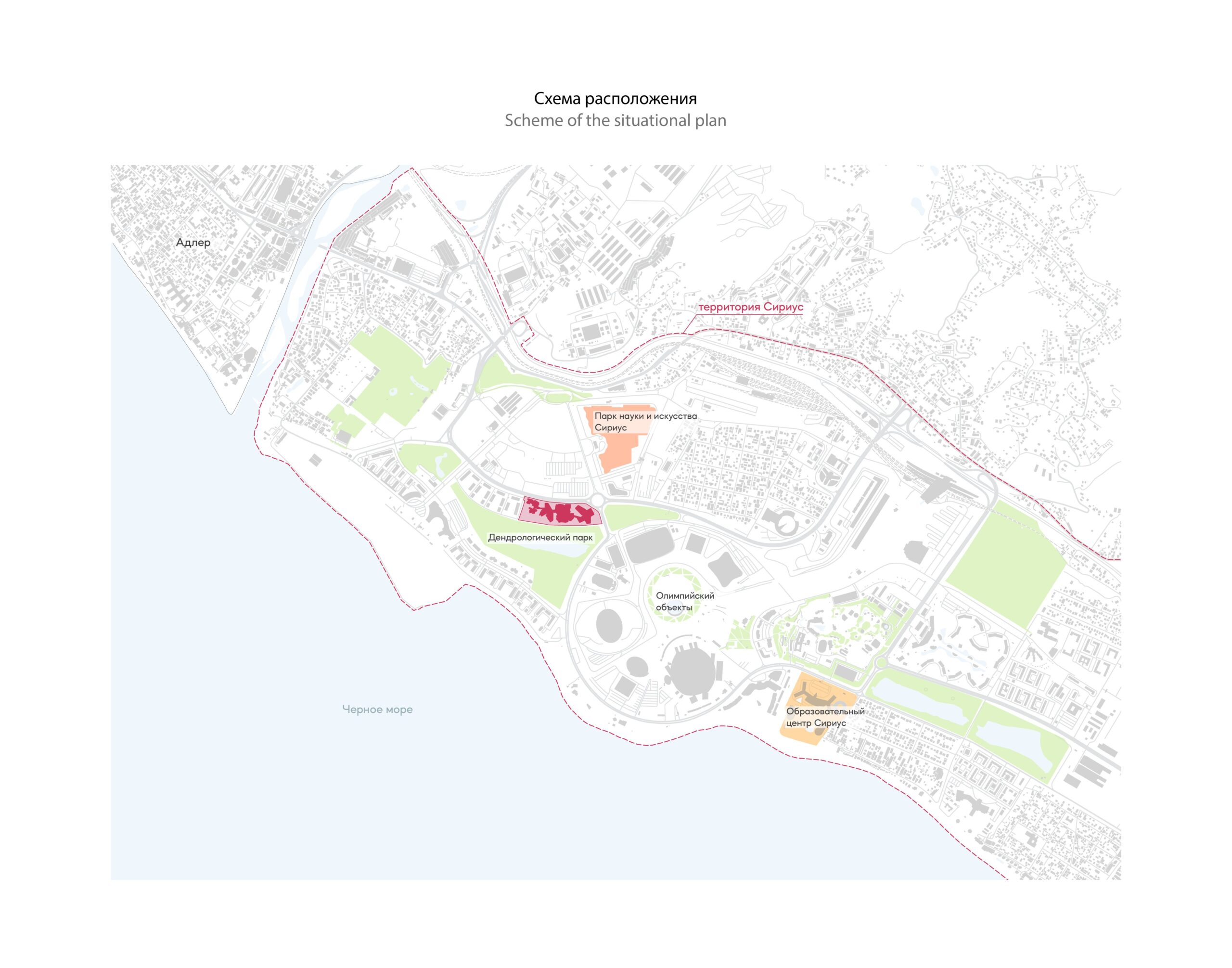
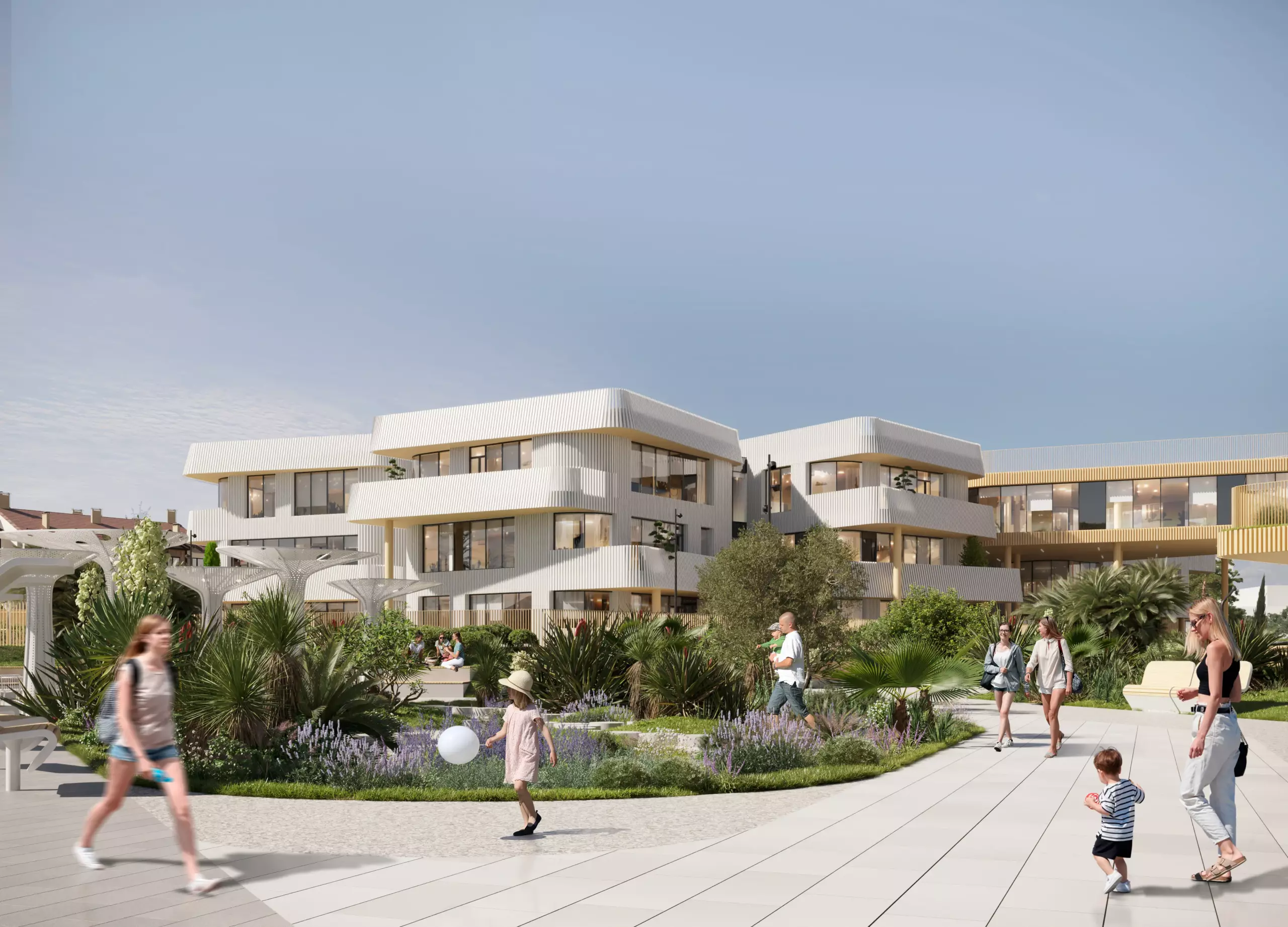
The Sirius Presidential Lyceum is a unique educational project located in the eponymous Sirius federal territory within the Sochi urban agglomeration. This district is being developed as part of a strategy to create one of Russia’s key sports, educational, and scientific-technical centers. The complex includes a school for 2,500 students, a kindergarten for 320 children, and public spaces, forming a crucial element of the territory’s educational and social infrastructure. The ambition to create the best school in Russia has driven us to apply the most advanced pedagogical concepts, sustainable solutions, and tools for fostering urban communities.
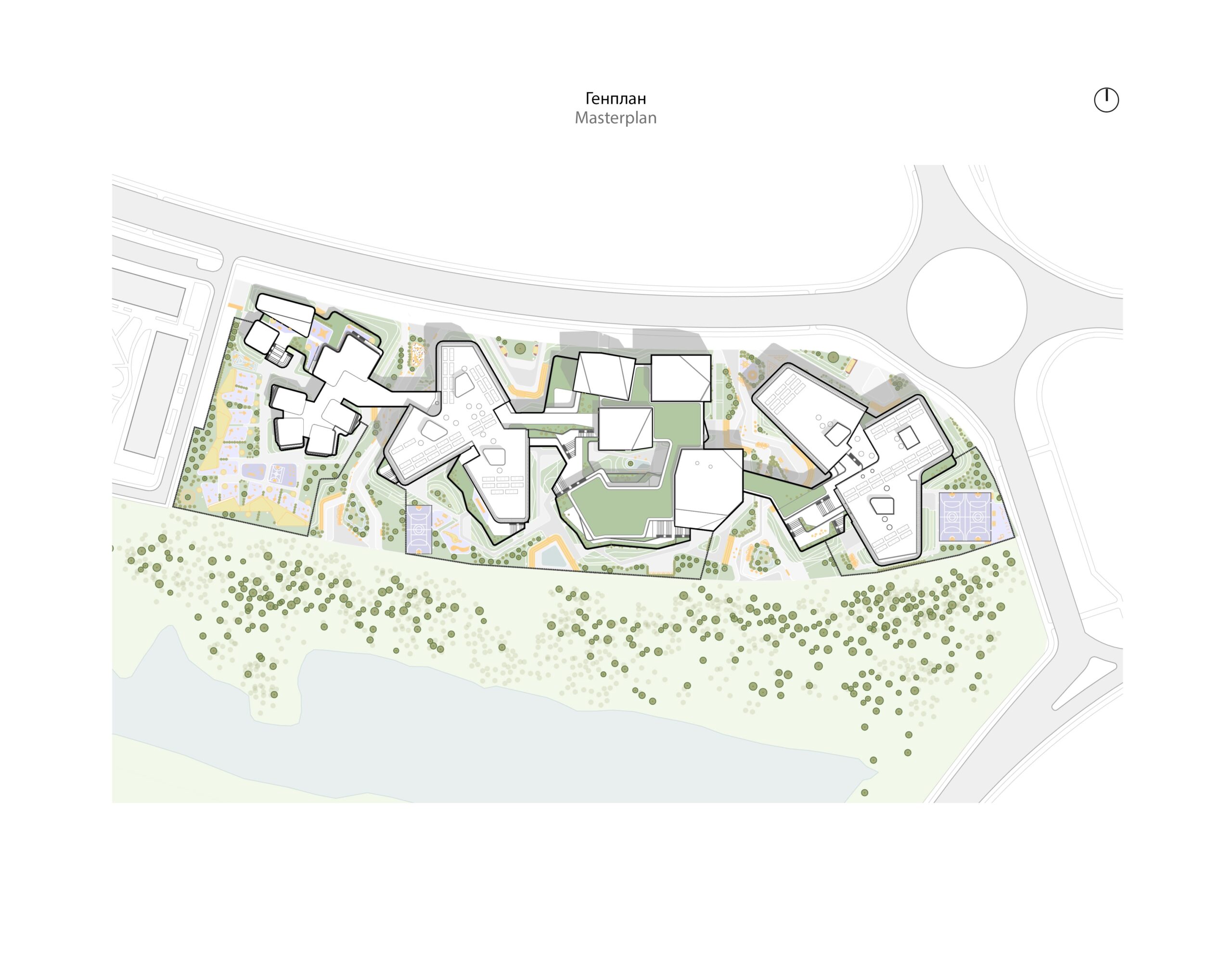
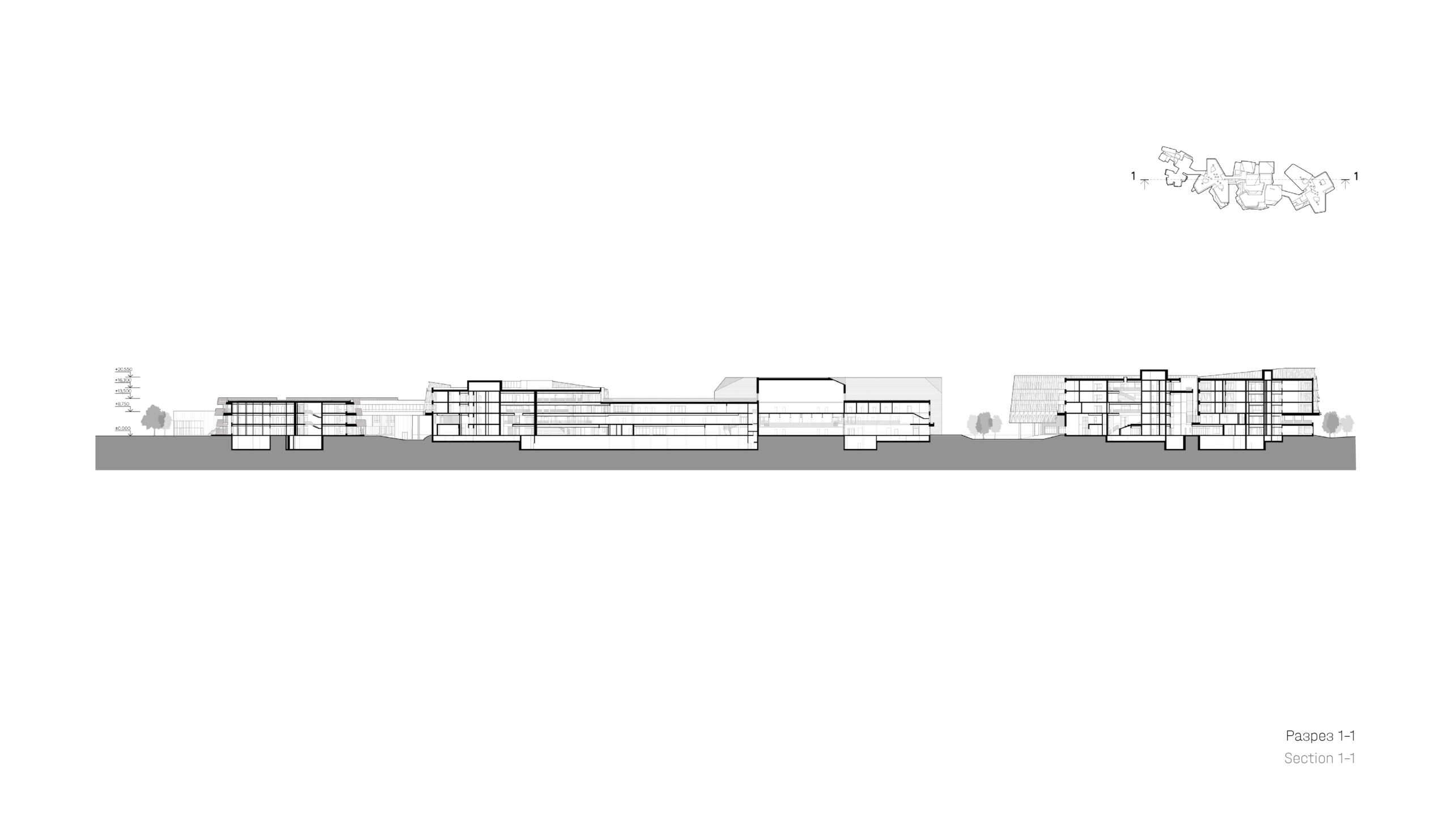
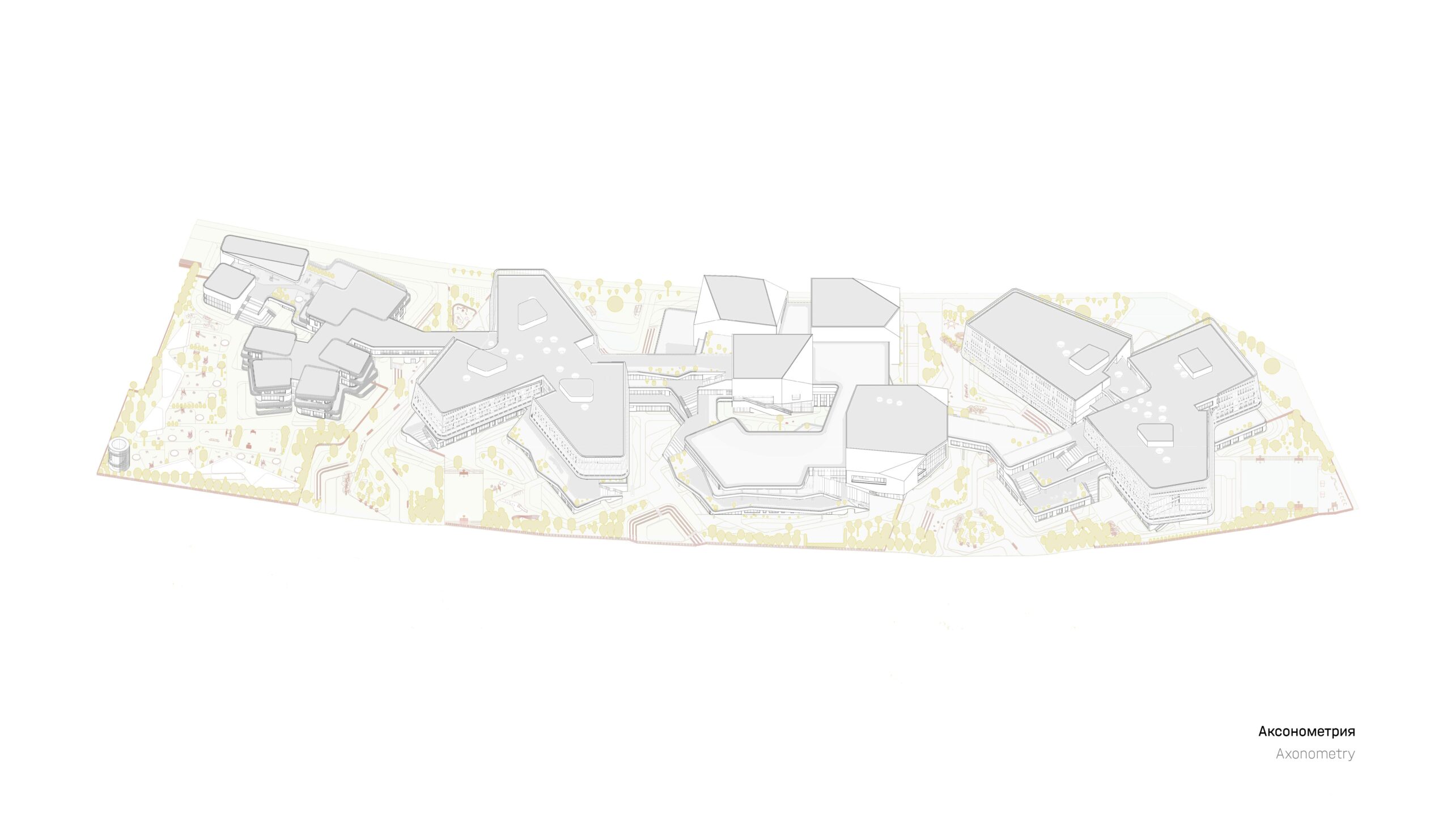
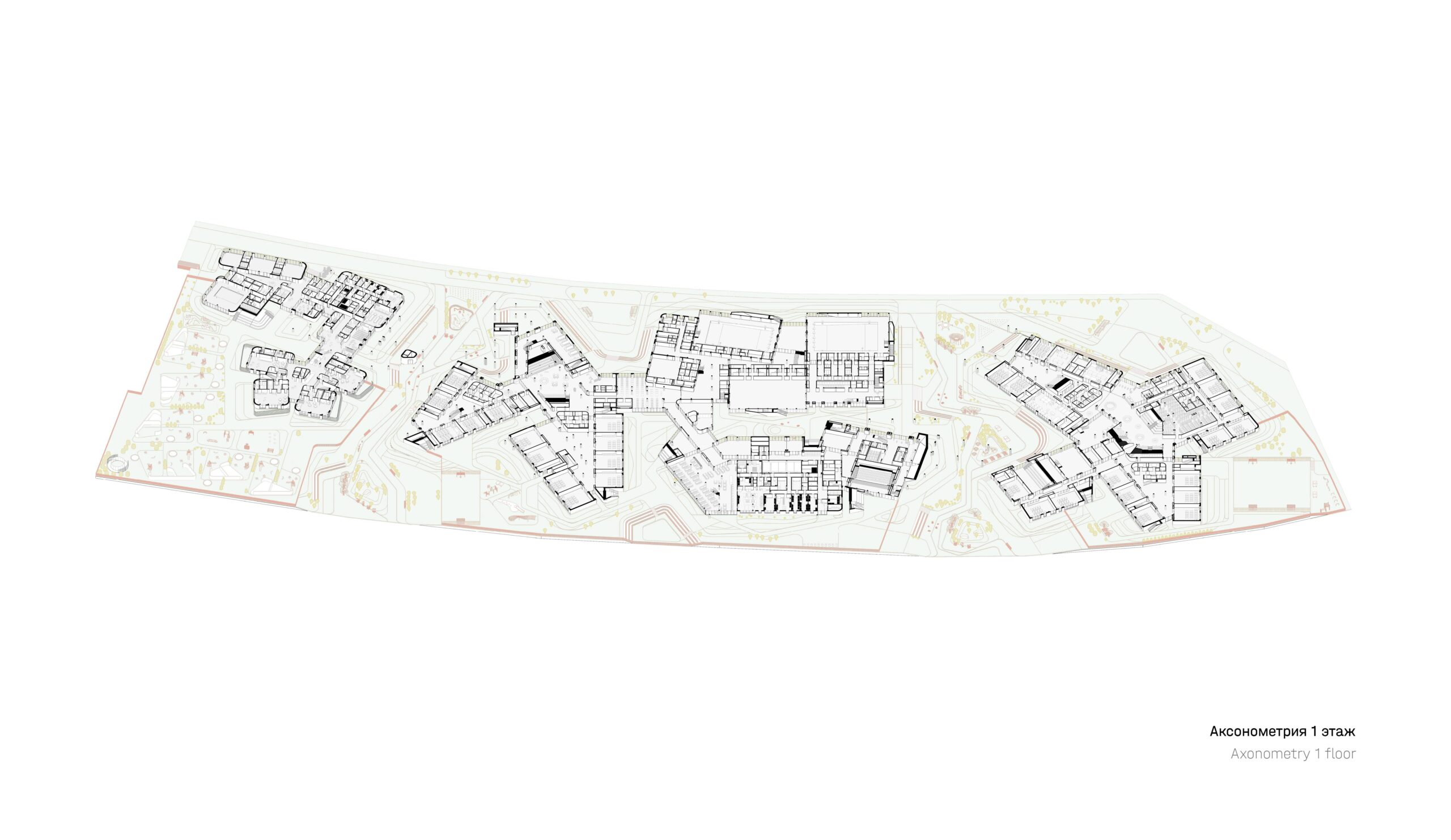
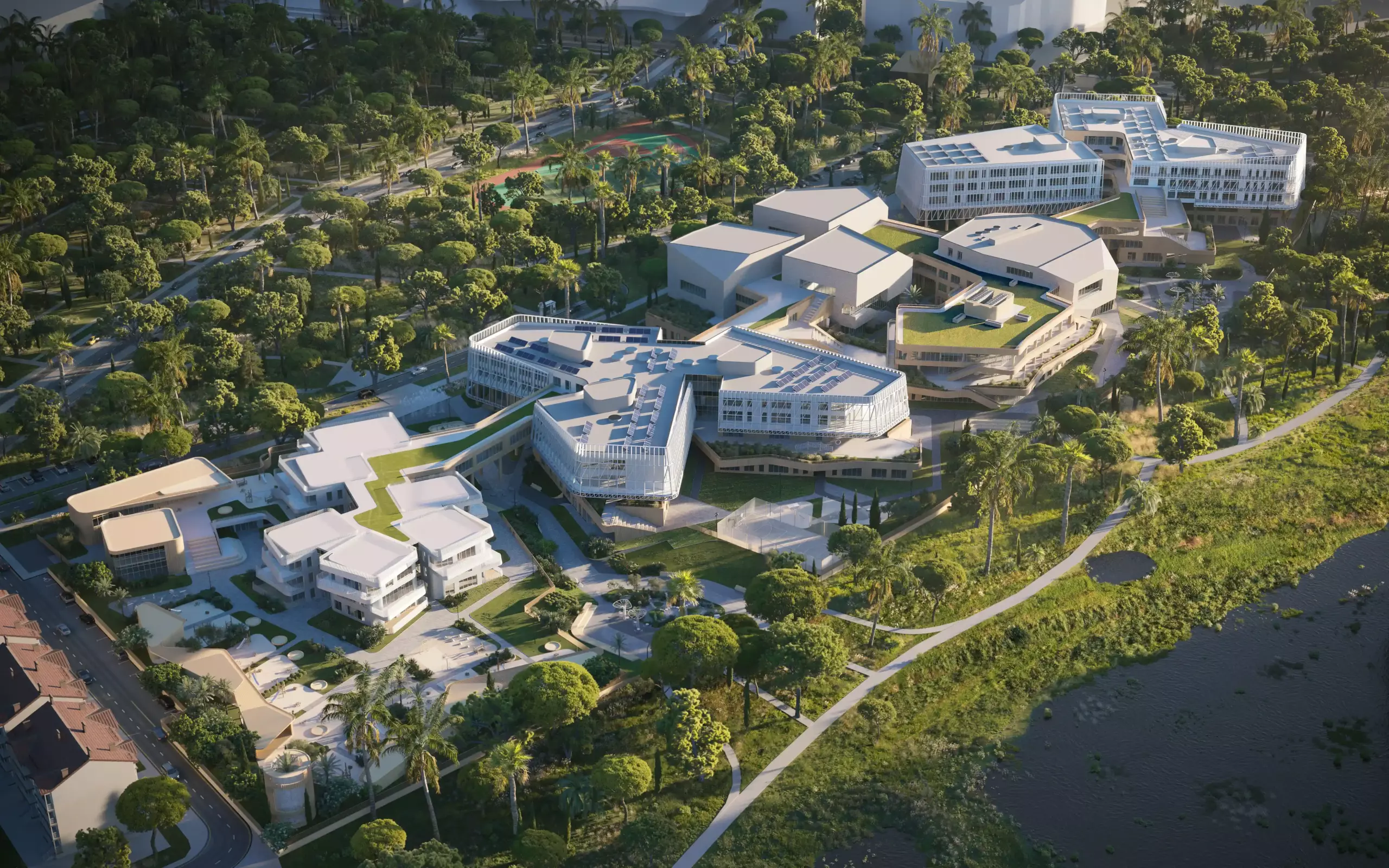
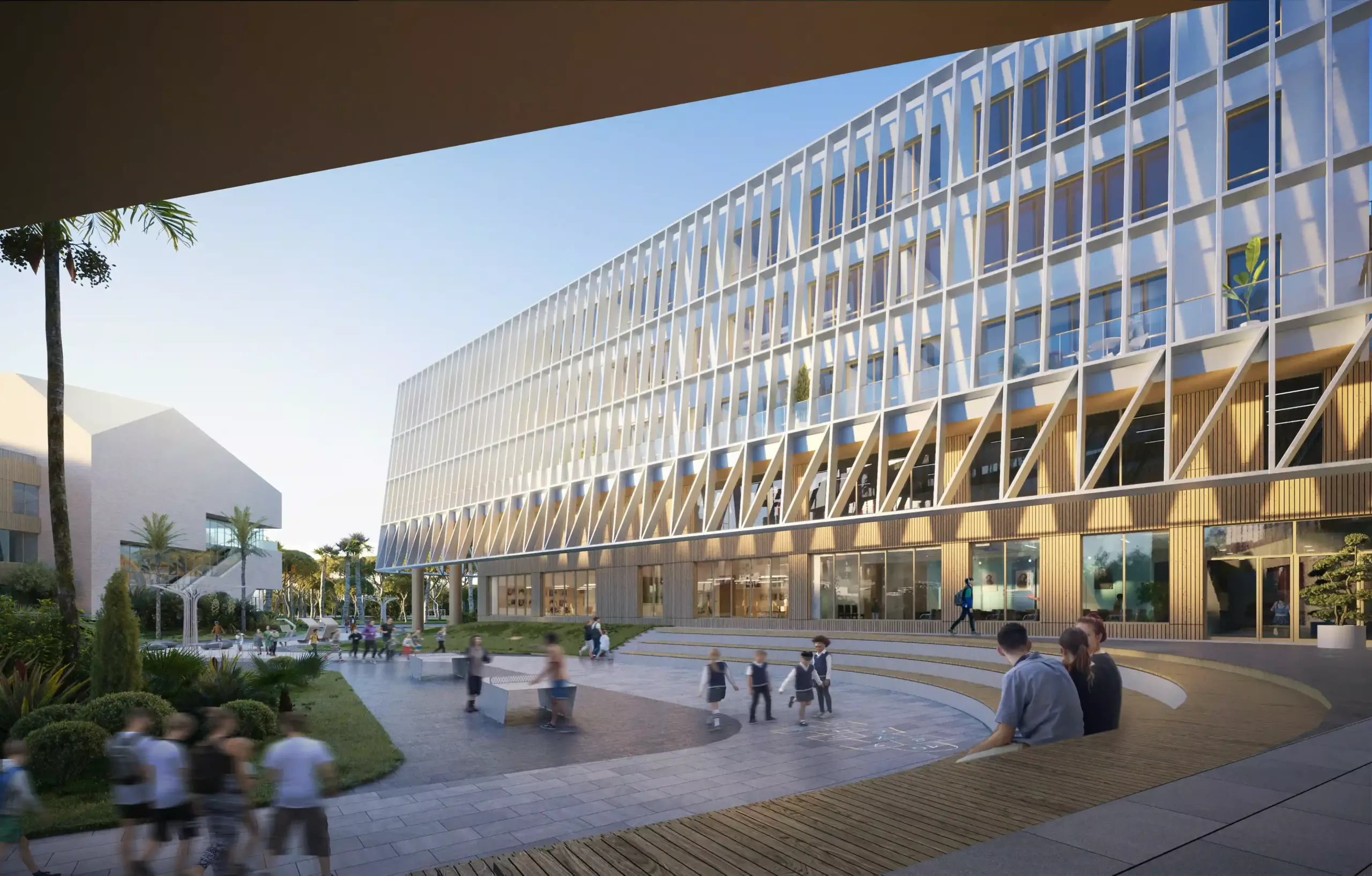
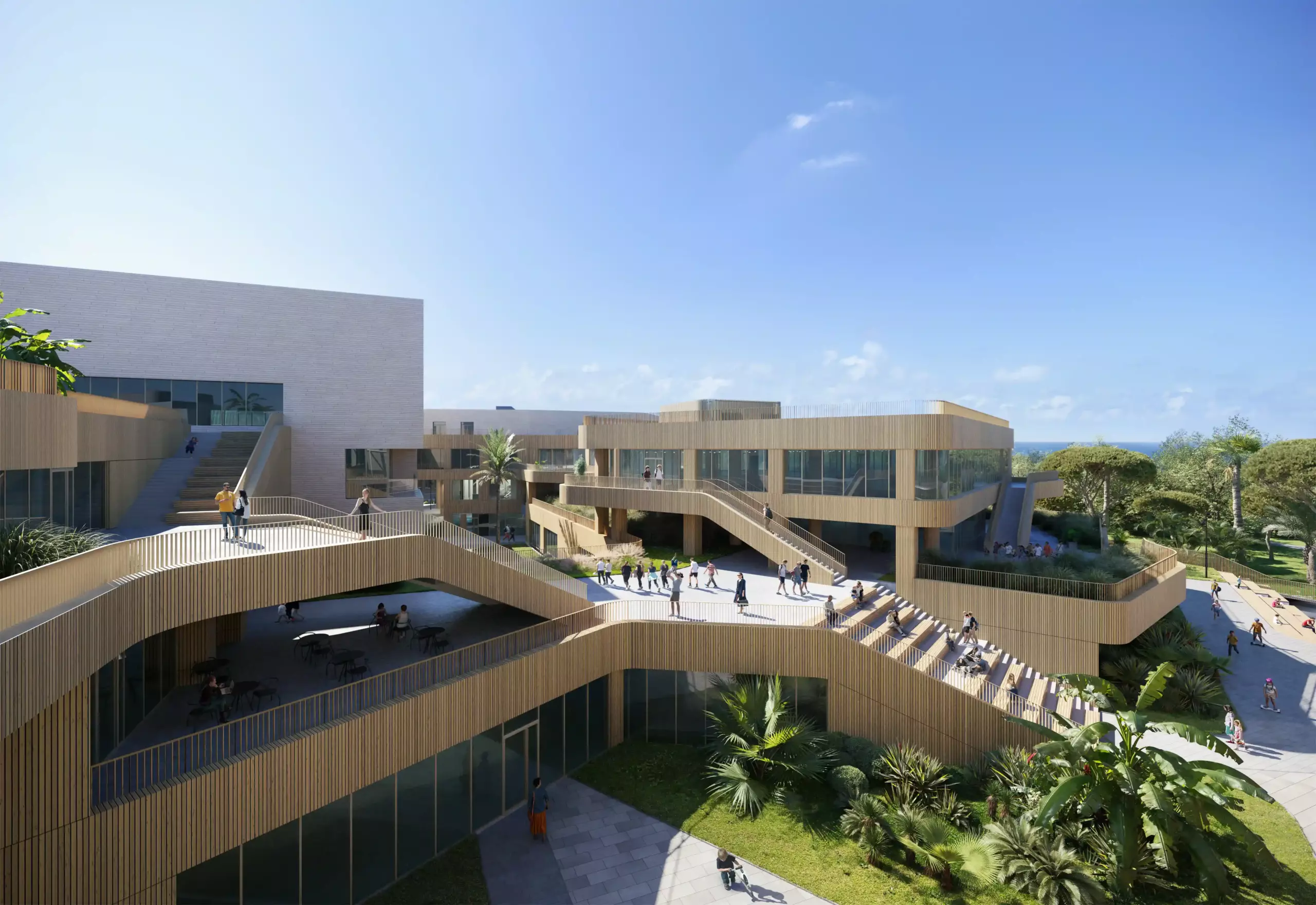
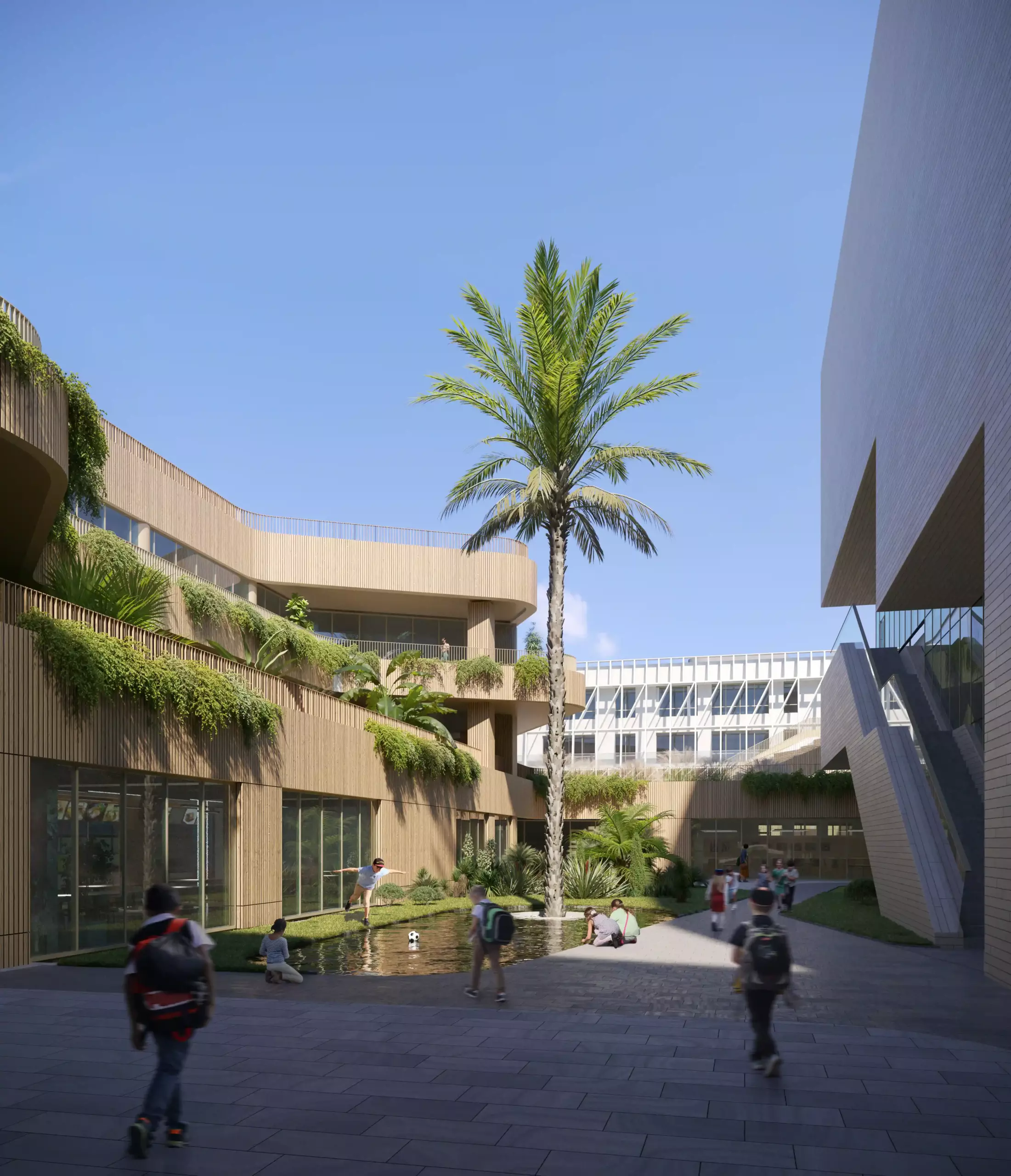
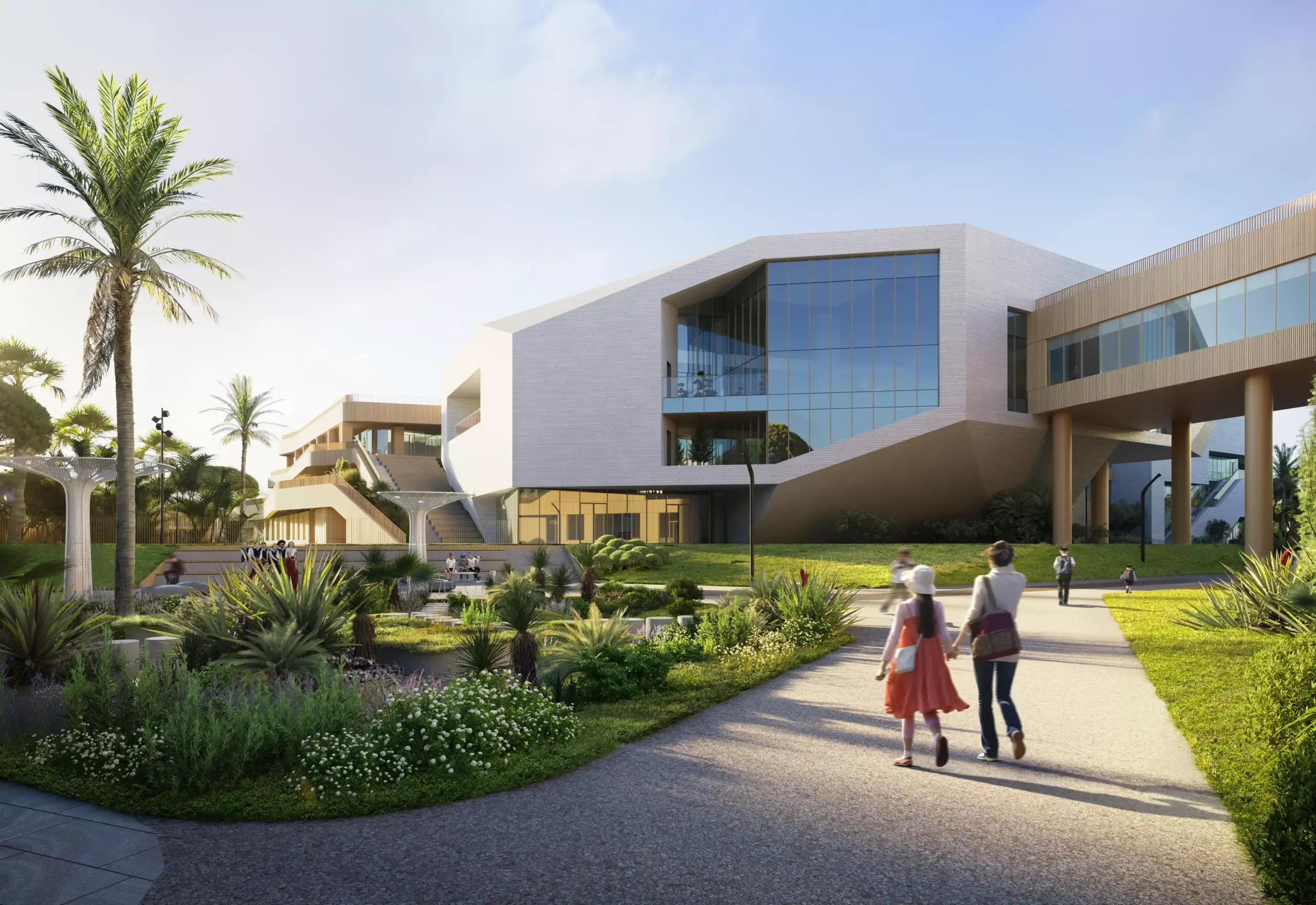
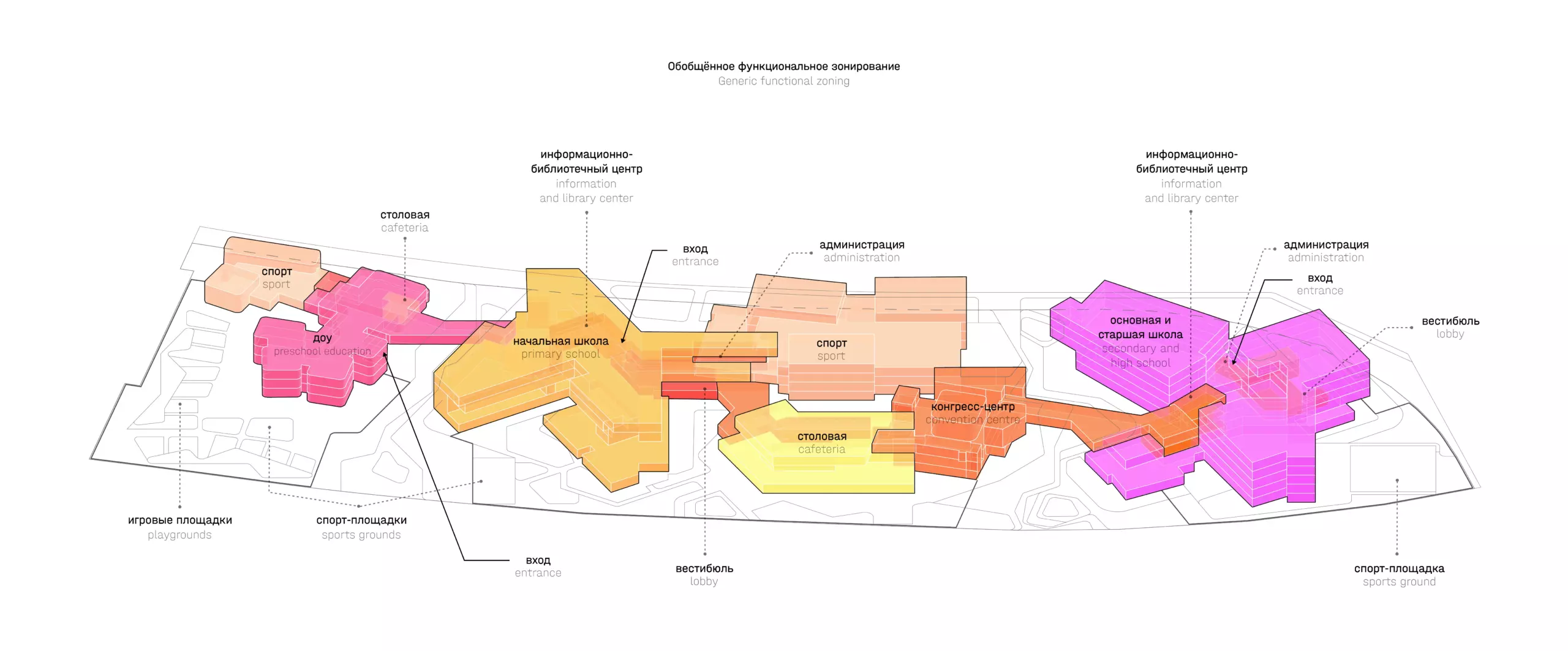
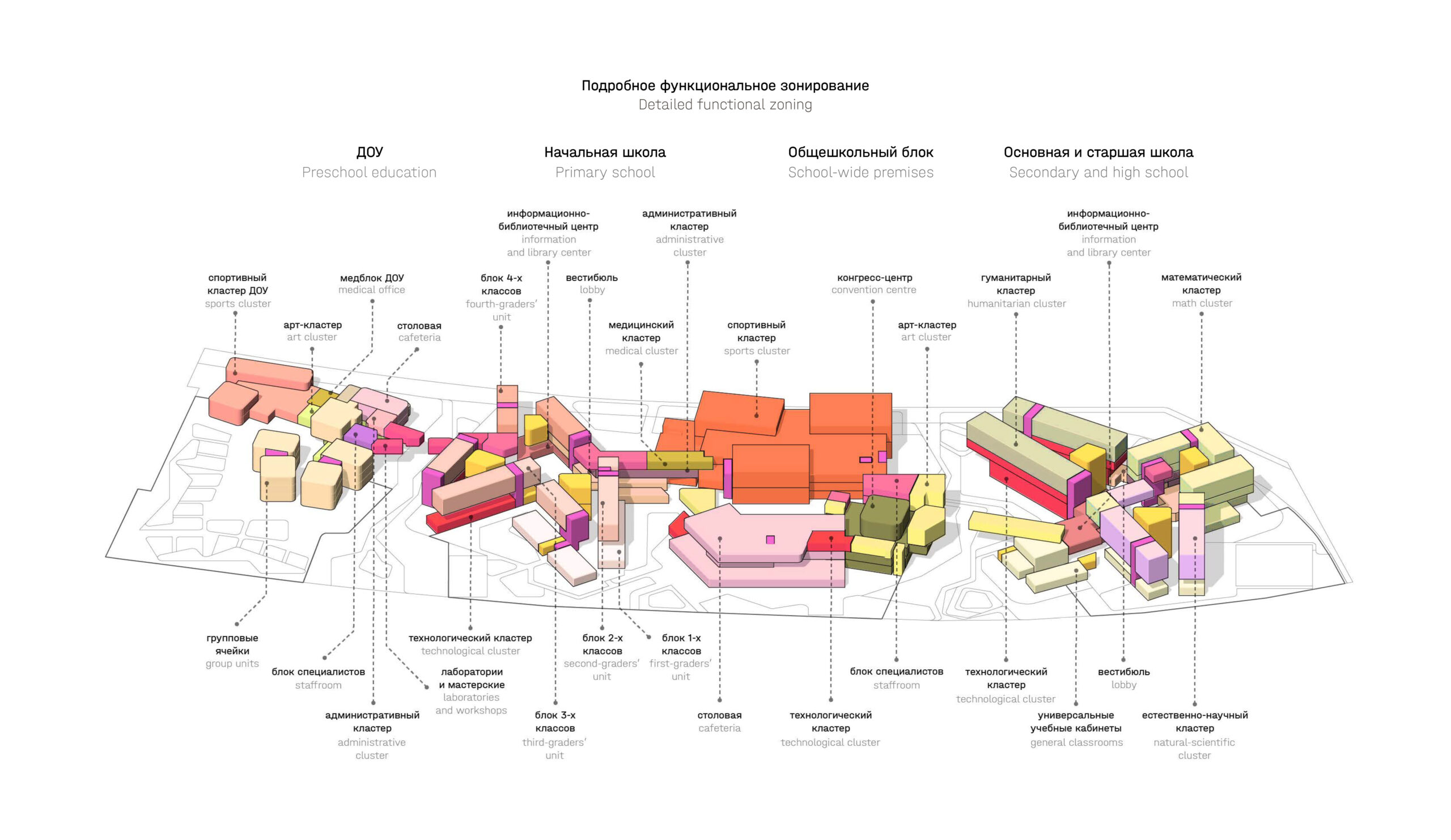
The site’s distinctive features—its elongated shape and immediate proximity to the ornithological park—defined the project’s core concept: the architectural integration of the urban environment with its natural surroundings. Instead of a single, extended building, a cluster structure was chosen, dividing the complex into several functionally specialized volumes: kindergarten blocks, an elementary school combined with a public leisure center, and a high school. These functional zones are interconnected by terraces, bridge crossings, and thoughtful territorial zoning, shaping the school’s image as a miniature city with diverse morphology and intuitive navigation.
The central element of the composition is the public boulevards, which provide open access to the buildings through separate, isolated street entrances, including specialized entrances to libraries and workshops for both elementary and high schools. Entrances from the boulevard are also organized for sports centers, including the swimming pool located within the kindergarten area. This spatial solution unlocks the educational complex’s potential as a new public zone for the district. To ensure a safe infrastructure for younger students, enclosed passages are provided between the elementary school buildings and the detached kindergarten.
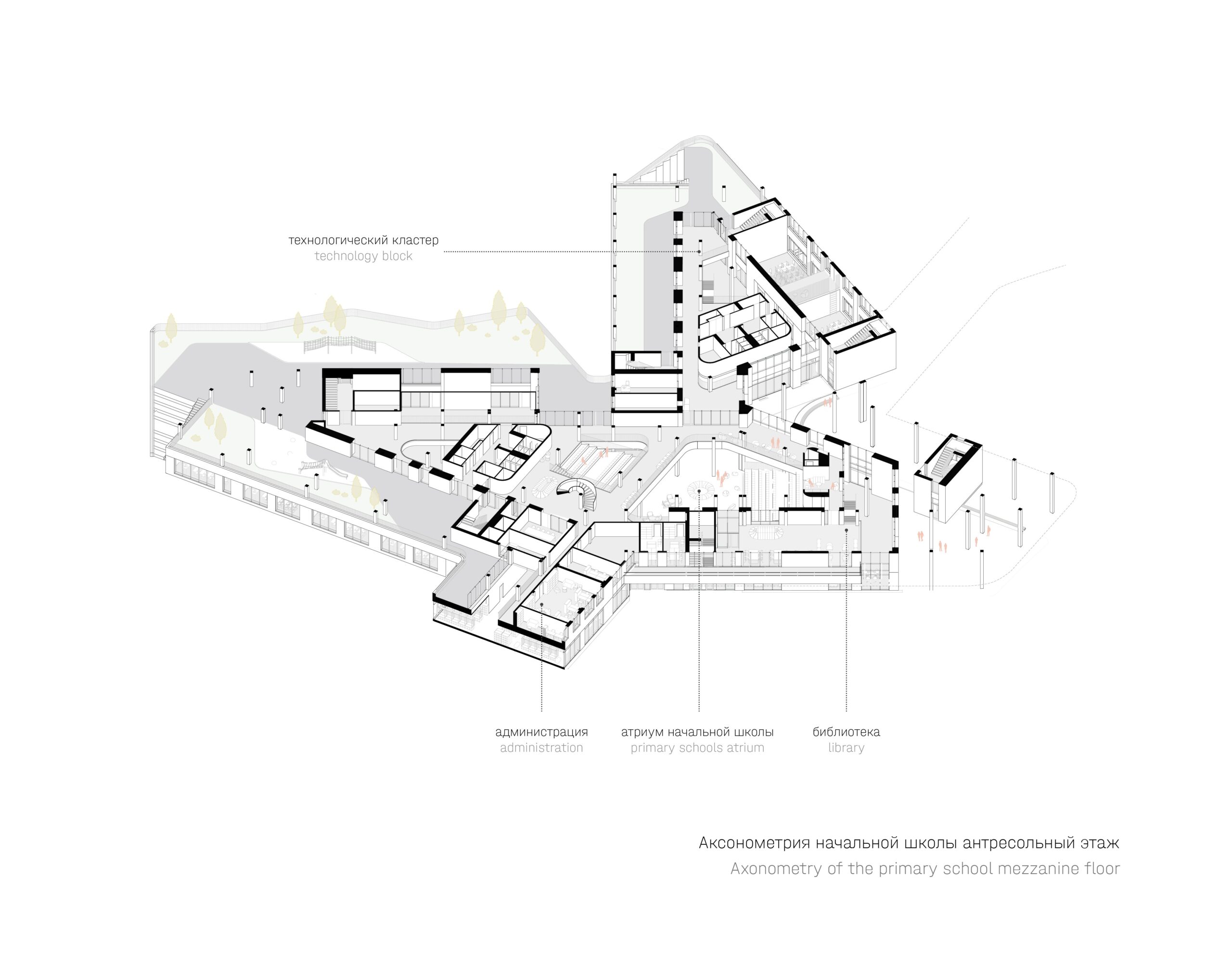
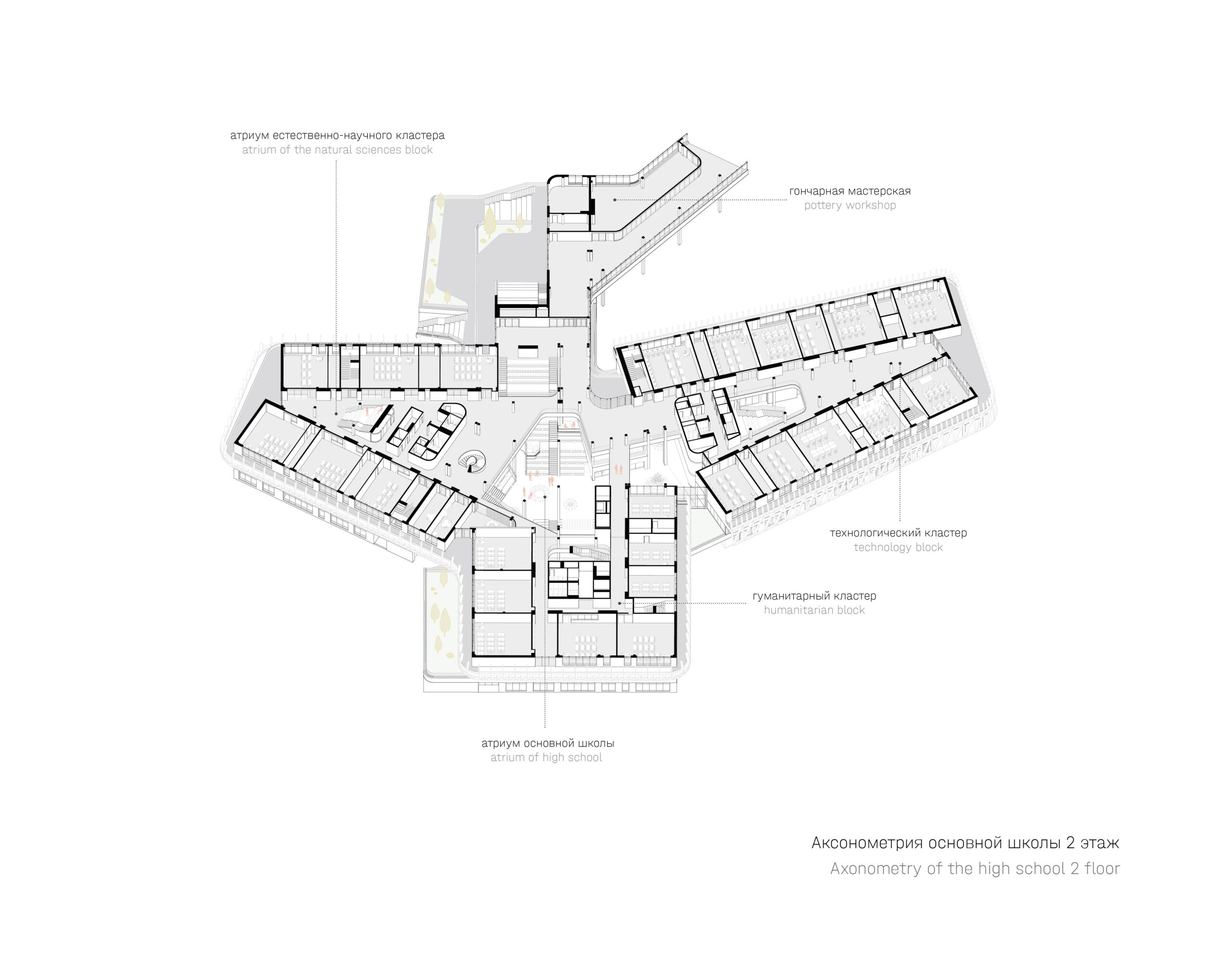
School classrooms and common areas are grouped around central public spaces—multi-story atriums—creating a dynamic and multifunctional environment for communication, learning, and recreation. This architectural solution fosters the subsequent development of internal communities, which is a key factor in stimulating social integration and creative interaction among students in large educational centers. In addition to traditional classrooms, the complex includes specialized technical clusters that support innovative educational scenarios, project activities, and extracurricular pursuits.
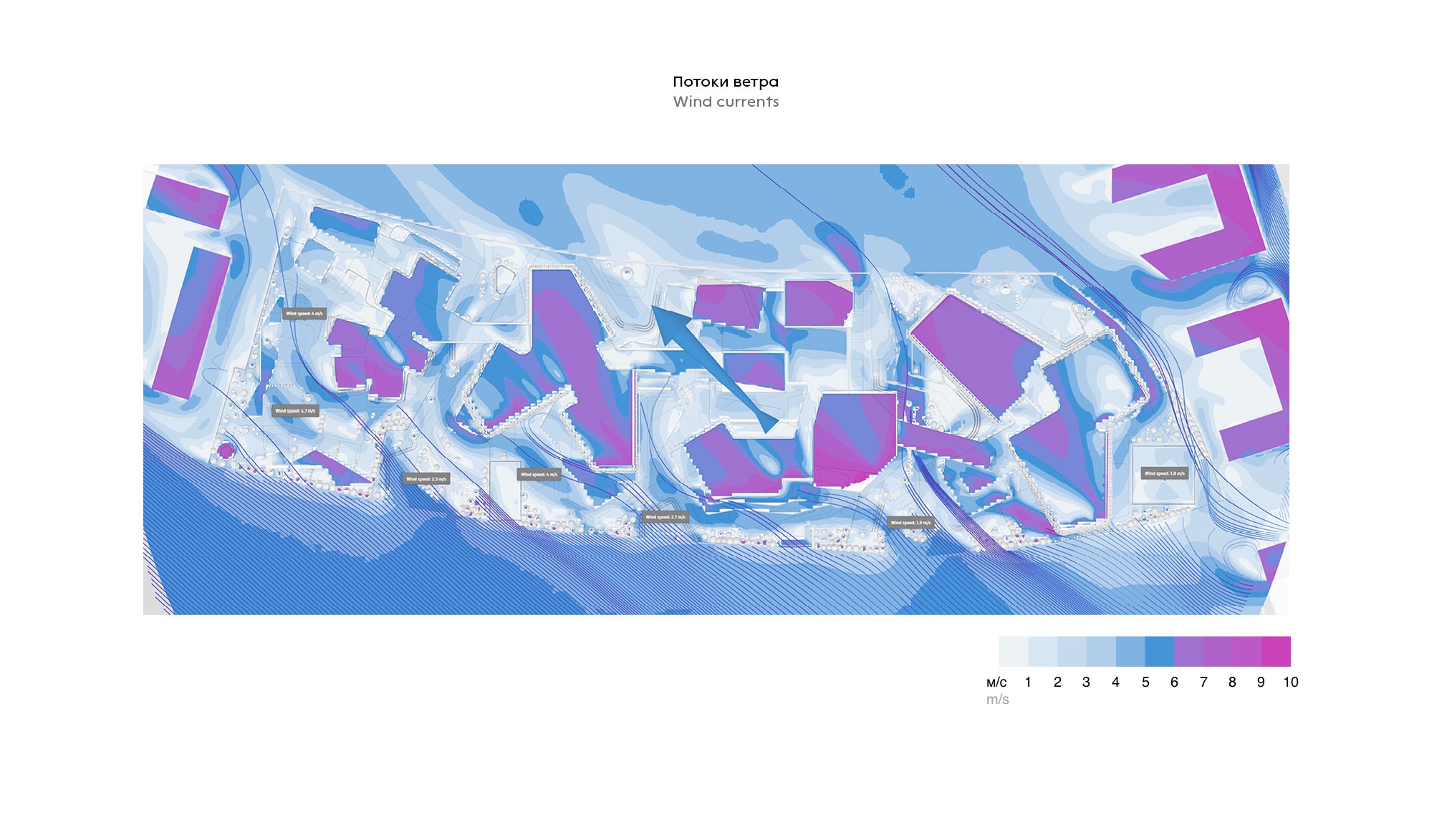
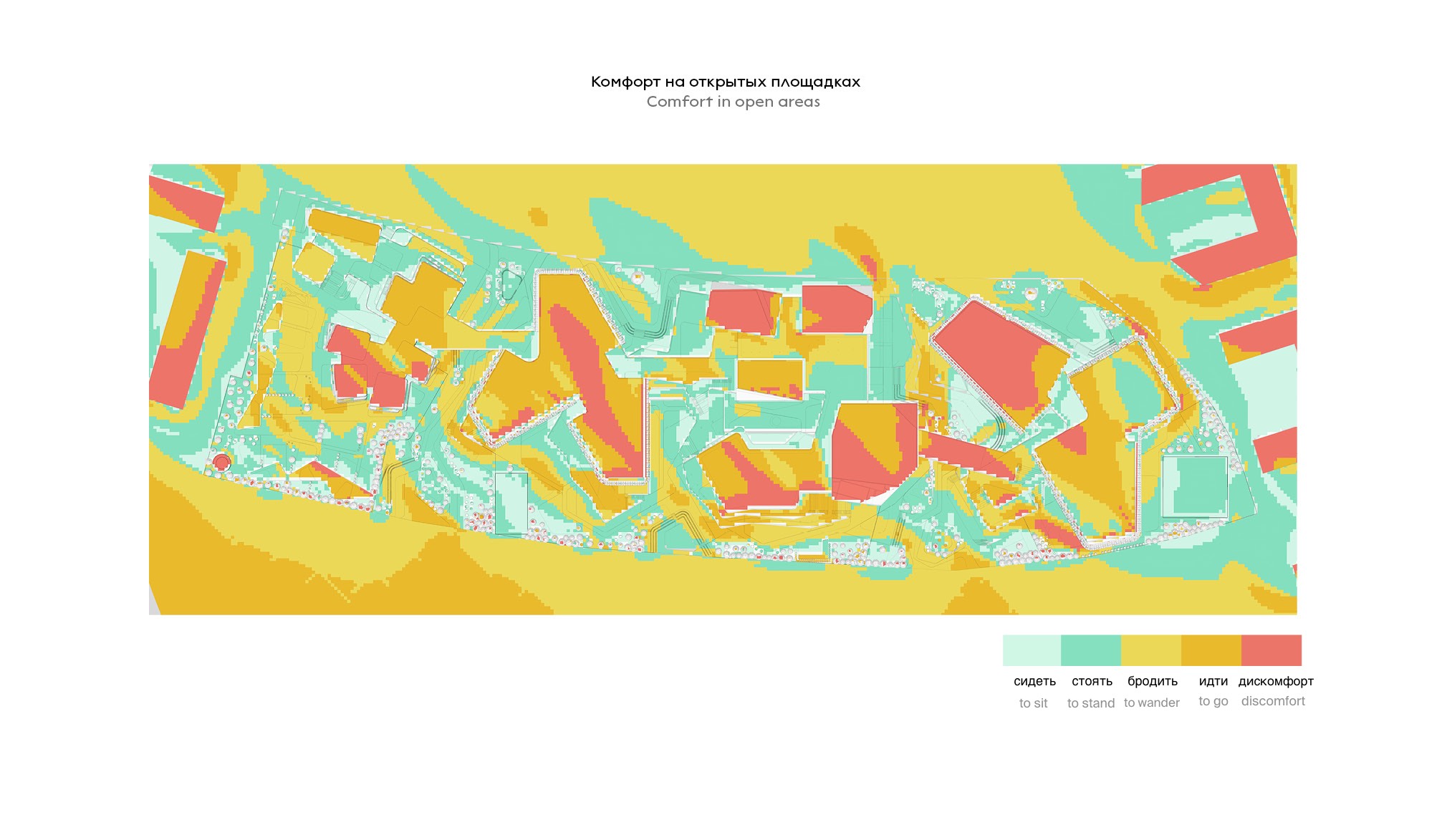
The architectural solutions also account for the region’s climatic and natural-technical specificities: the seismic resistance of the structures is designed for loads up to 9 points, and the site’s relief is adapted to prevent flooding by raising the development level. Special attention has been paid to the project’s environmental sustainability, implemented through the use of terraces that compensate for the limited site area and create additional play and educational zones. The orientation of the buildings and their volumetric-spatial composition are optimized considering insolation and wind patterns, which contributes to student comfort and expands their learning opportunities. Among other things, the complex aims for energy efficiency: sun-shading canopies and a second facade act as screens, solar panels are installed on the roof, and a natural ventilation system reduces energy consumption for microclimate control.
The landscape design includes numerous zones for study, sports, and recreation, as well as extensive landscaping that seamlessly transitions into the adjacent park, where educational platforms for studying rare plant species are provided. Wind protection elements, such as bamboo plantings, have been incorporated into the landscape composition to ensure comfortable outdoor stays.
Beyond its educational function, the complex serves as a major public center for the district, offering diverse spaces for exhibitions, public events, workshops, and laboratories. The flexible layout allows for space transformation to accommodate various usage scenarios, ensuring the building’s functional sustainability in the long term. Of particular importance is the 800-seat conference hall with a separate entrance, designed for scientific conferences, lectures, and large-scale events.
The Sirius Educational Complex reflects the latest global trends in designing modern educational spaces: the creation of open public zones and multifunctional infrastructure, consideration of the southern region’s climatic features, and the use of environmentally sustainable technologies, including detailed insolation analysis, renewable energy sources, and seismic-resistant construction. The project is intended to be a catalyst for the development of the entire district, strengthening its position as a promising center for science, technology, and education.
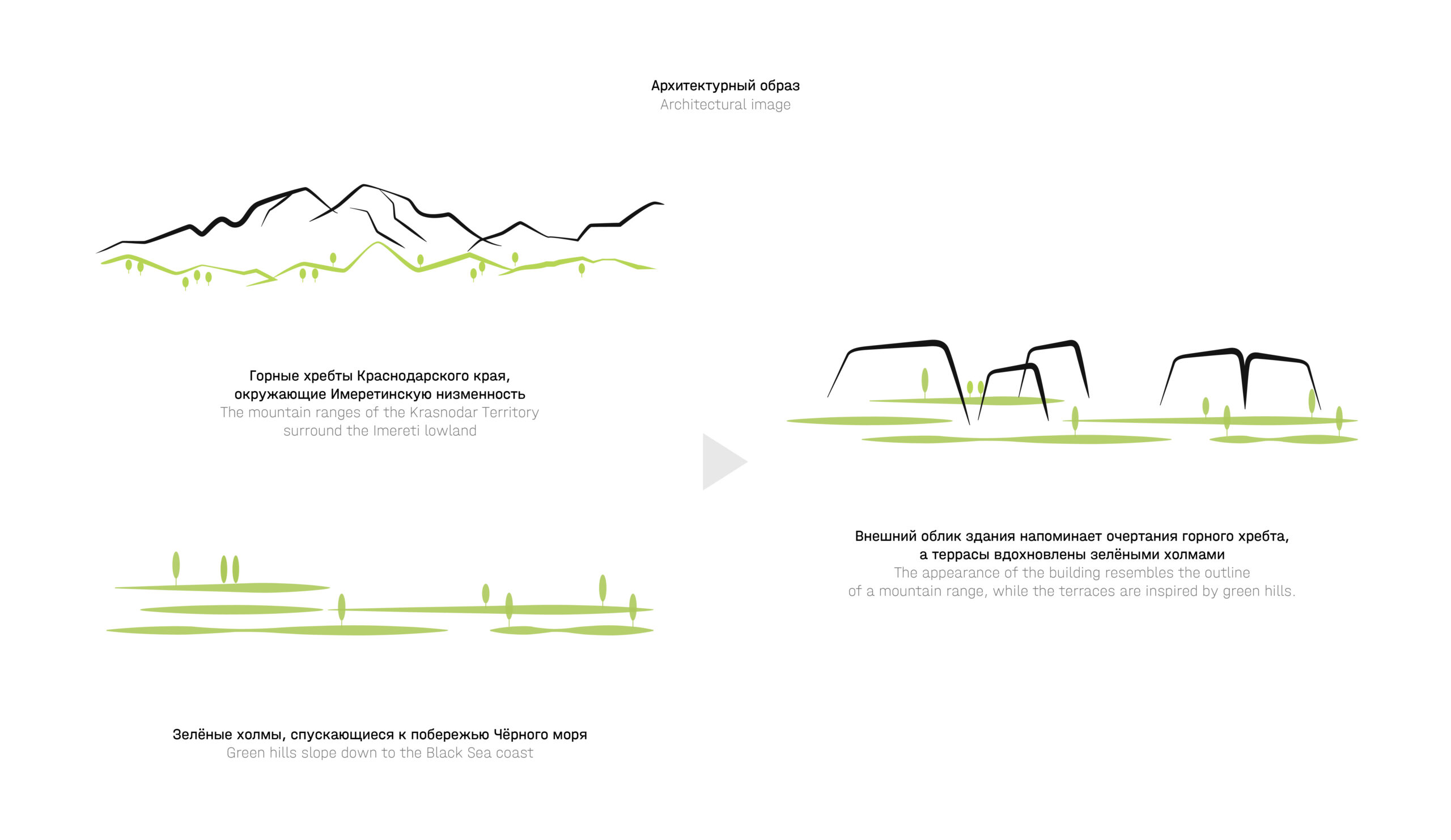
idea
drawings