


Land of Olonkho Complex in Yakutia
- location
- Russia, Yakutsk
- competition
- 2014
- site area
- 47 ha
- area of the park
- 39,2 ha
- total area
- 250 600 m²
- client
- Land of Olonkho Complex Project Company Foundation
- architects
- Anton Nadtochiy, Vera Butko, Anna Shapiro, Danila Gavrish, Pavel Volkov, Dmitry Zrazhevsky, Petr Alimov, Timur Cherkasov, Natalia Sablina, Ekaterina Trosman, Ivan Khripkov, Olga Romanova
- landscape design Project
- LAP Landscape & Urban Design
- engineering
- WERNER SOBEK Engineering and Design
- lighting
- Lichttechnische Planungsign
- awards
- Winner, ARCHNOVATION 2015
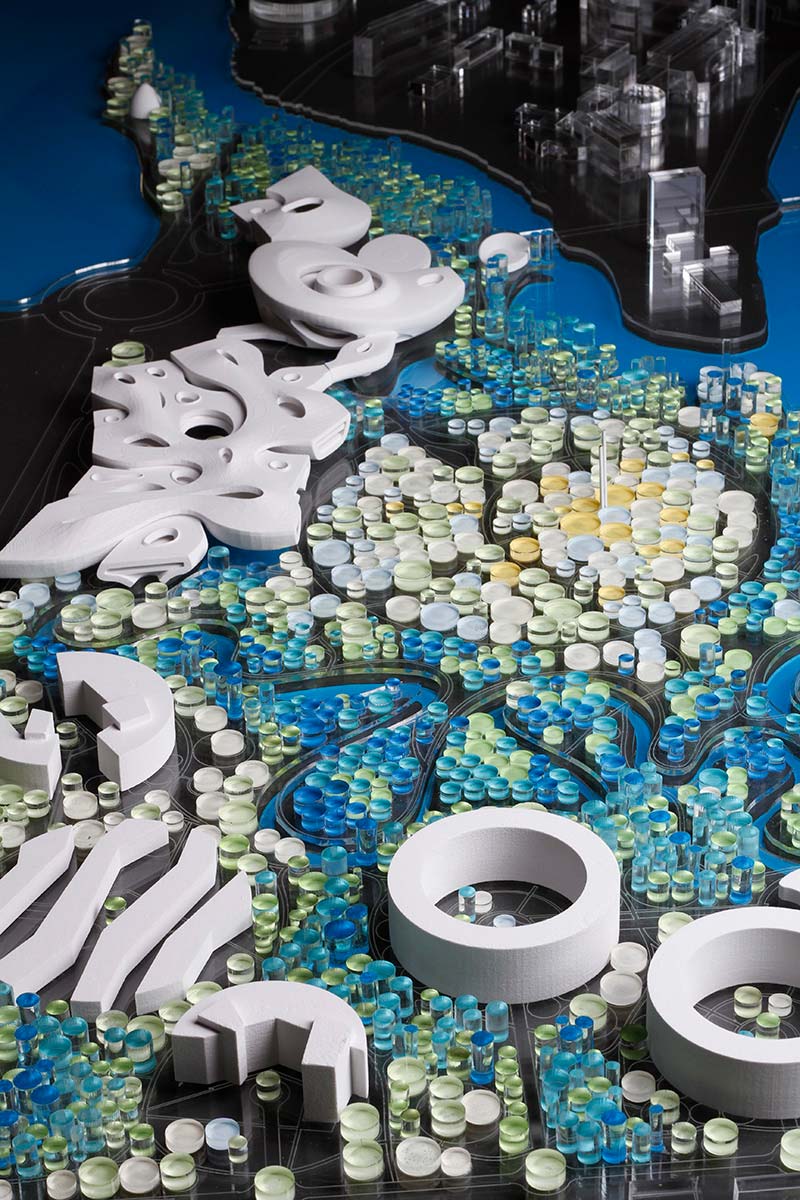
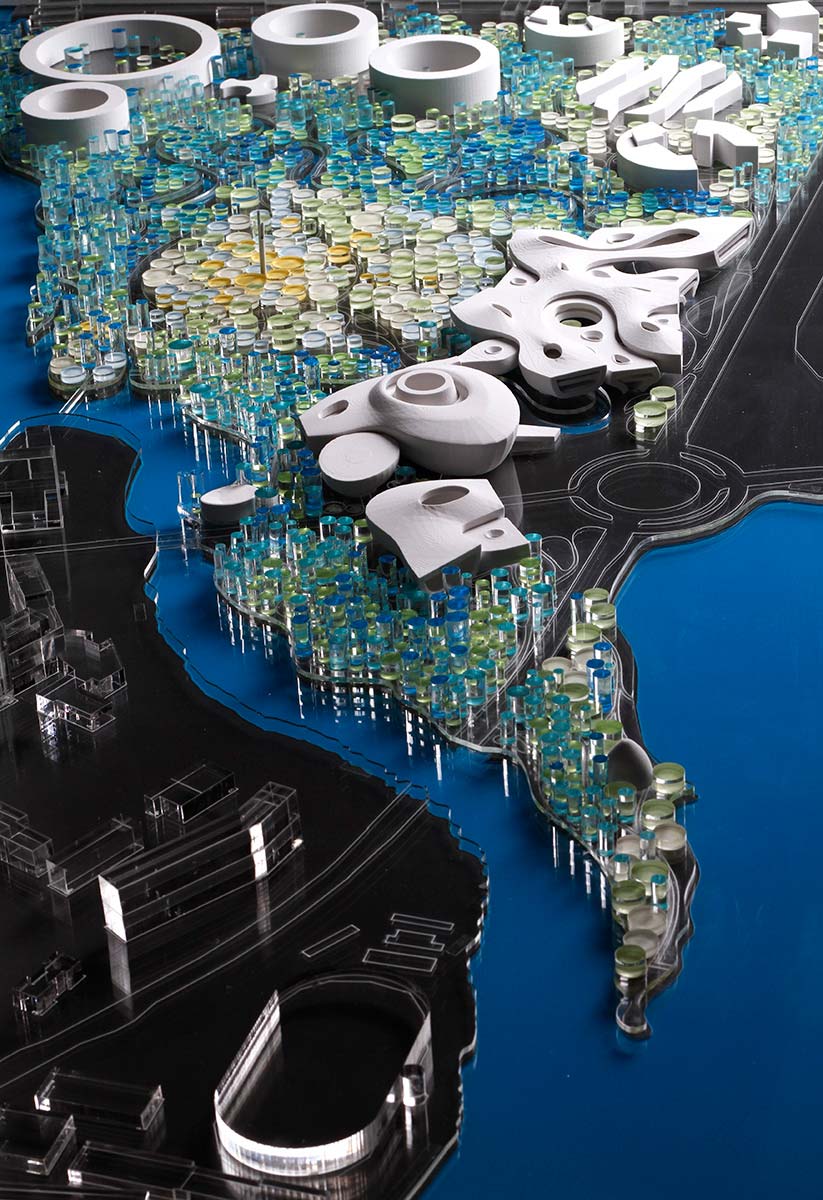
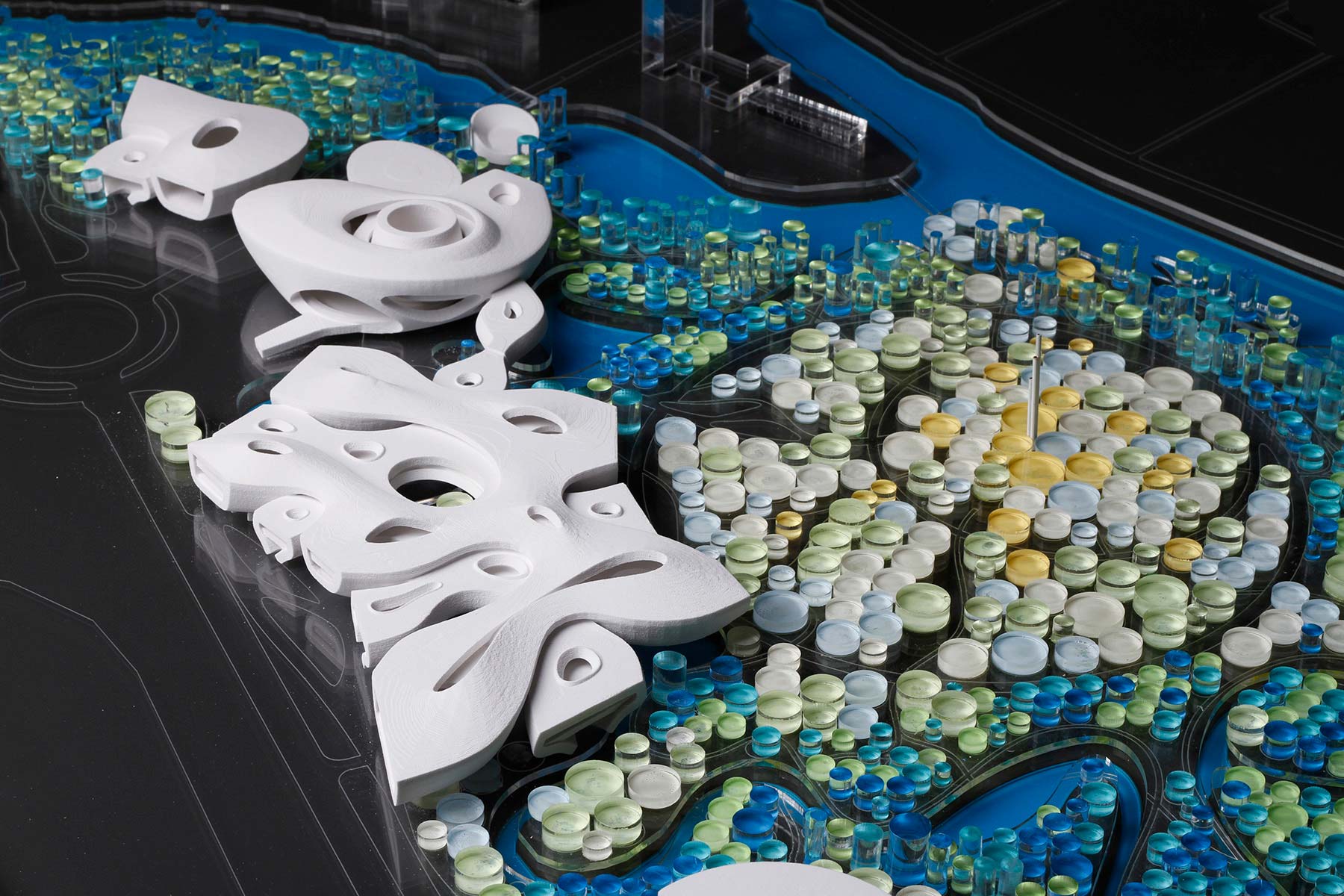
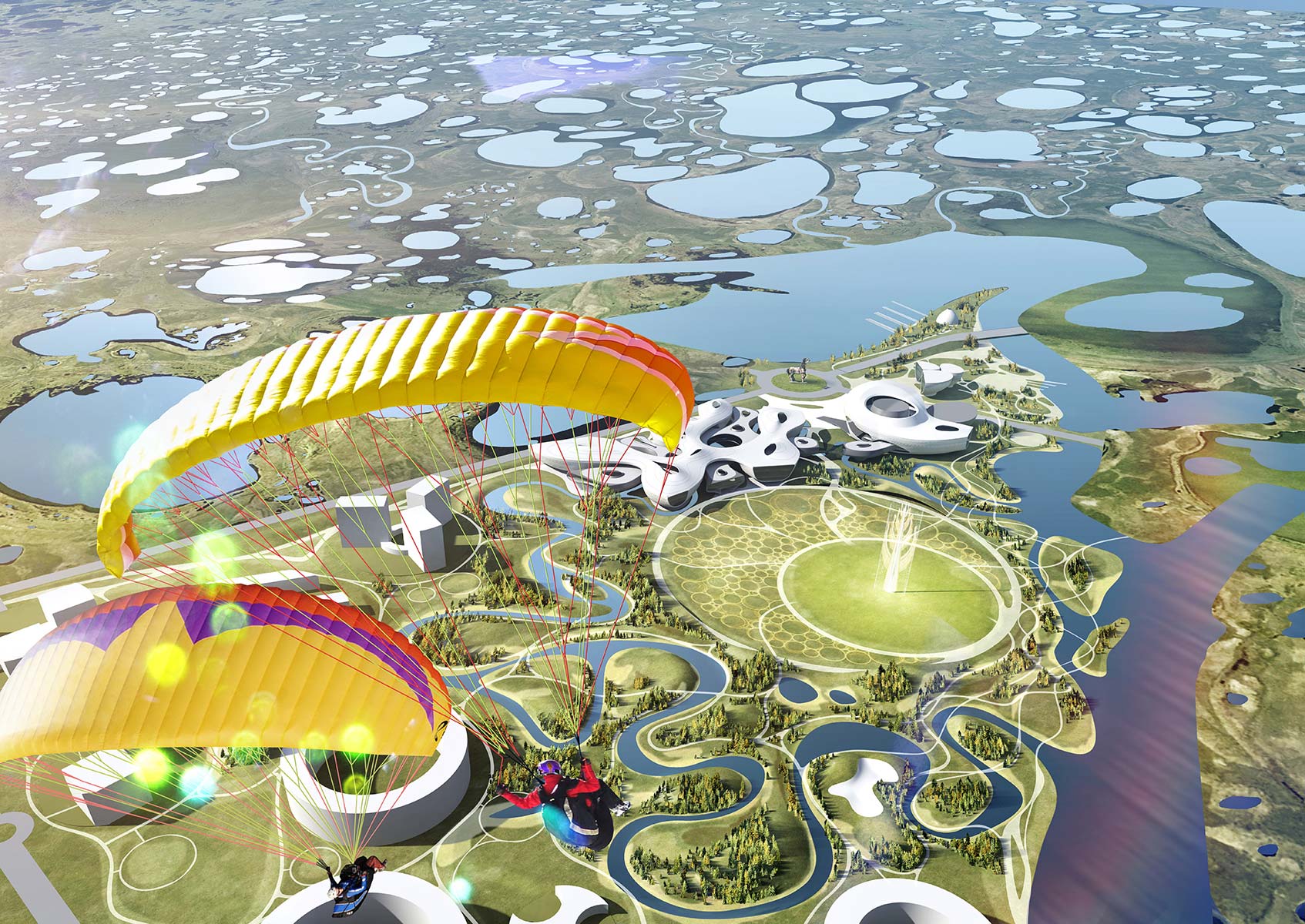
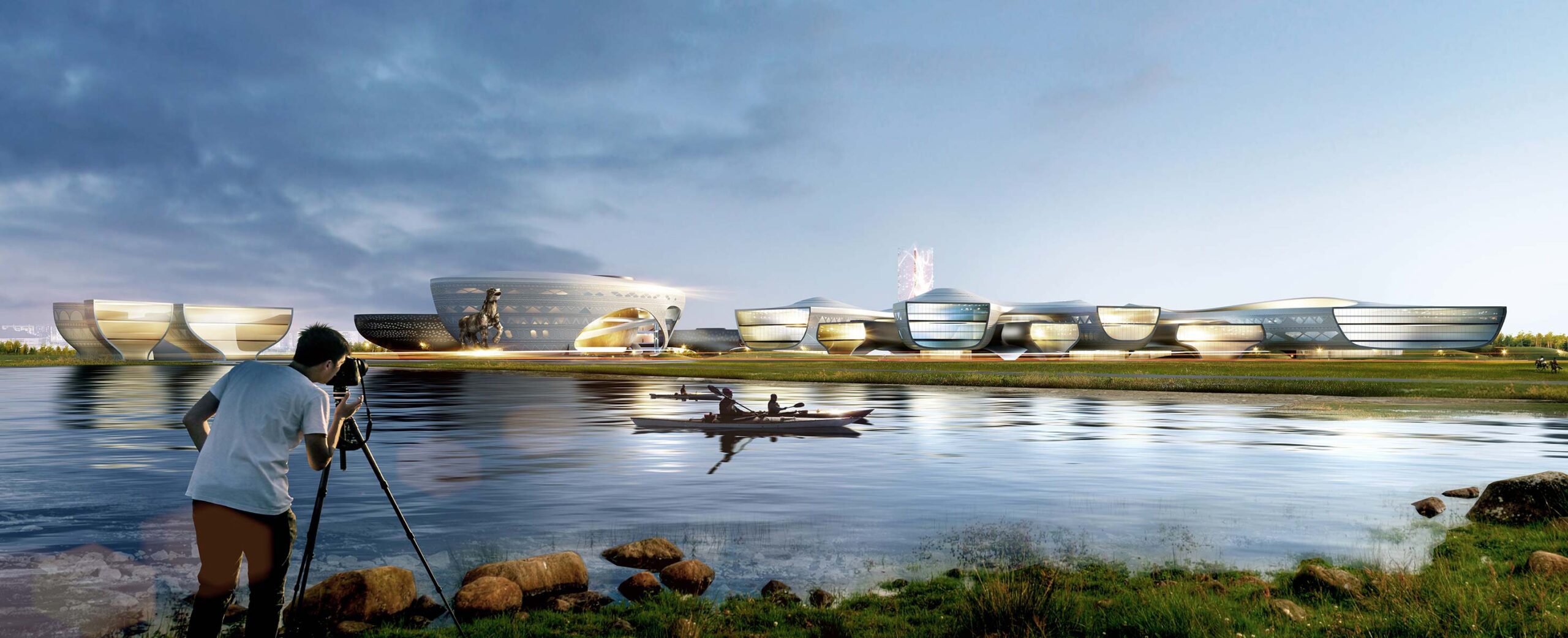
The Land of Olonkho project was developed for a site located on the shore of Lake Saysary, sacred to the Yakut people as the place of life of the ancestors and founders of the Sakha nation. The proposal also includes the International Olonkho Centre, comprising museum, theatre and public entertainment facilities.
The 47-hectare site is located within the coastal zone of the Teploye channel. To the west of the park lies the ипподром? translate hippodrome/racecourse. It had until the 1990s been used annually as the venue for Ysyakh, the principal Yakut festival of the year. Today, the project site is the largest vacant tract in the heart of Yakutsk, although its location has considerable development potential thanks to its advantageous position within the city and its symbolic value for local residents.
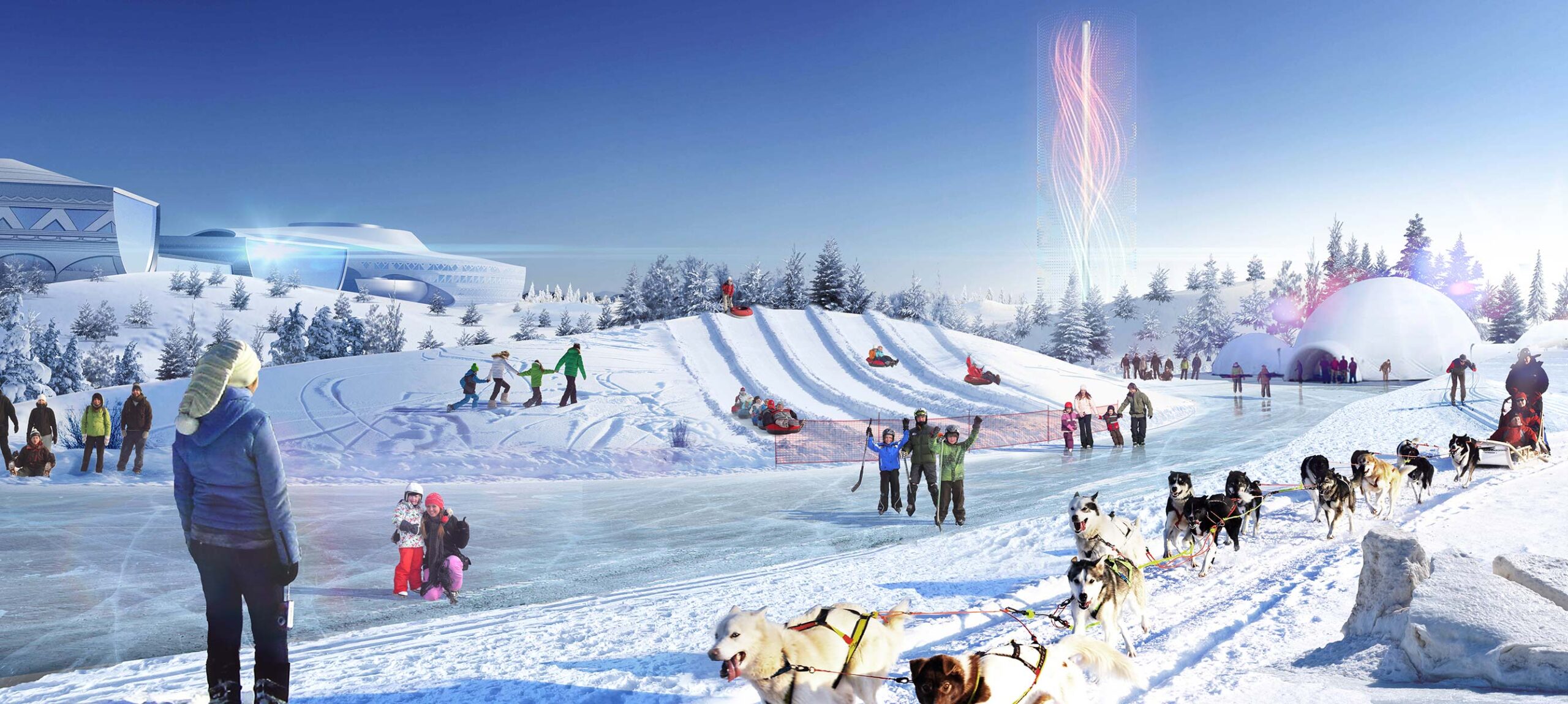
The landscape and architectural concept is shaped by the specific character of the local climate — this is a permafrost region with an annual temperature range of 100°C — as well as by the landscape and the national culture, most vividly expressed in the heroic epic Olonkho.
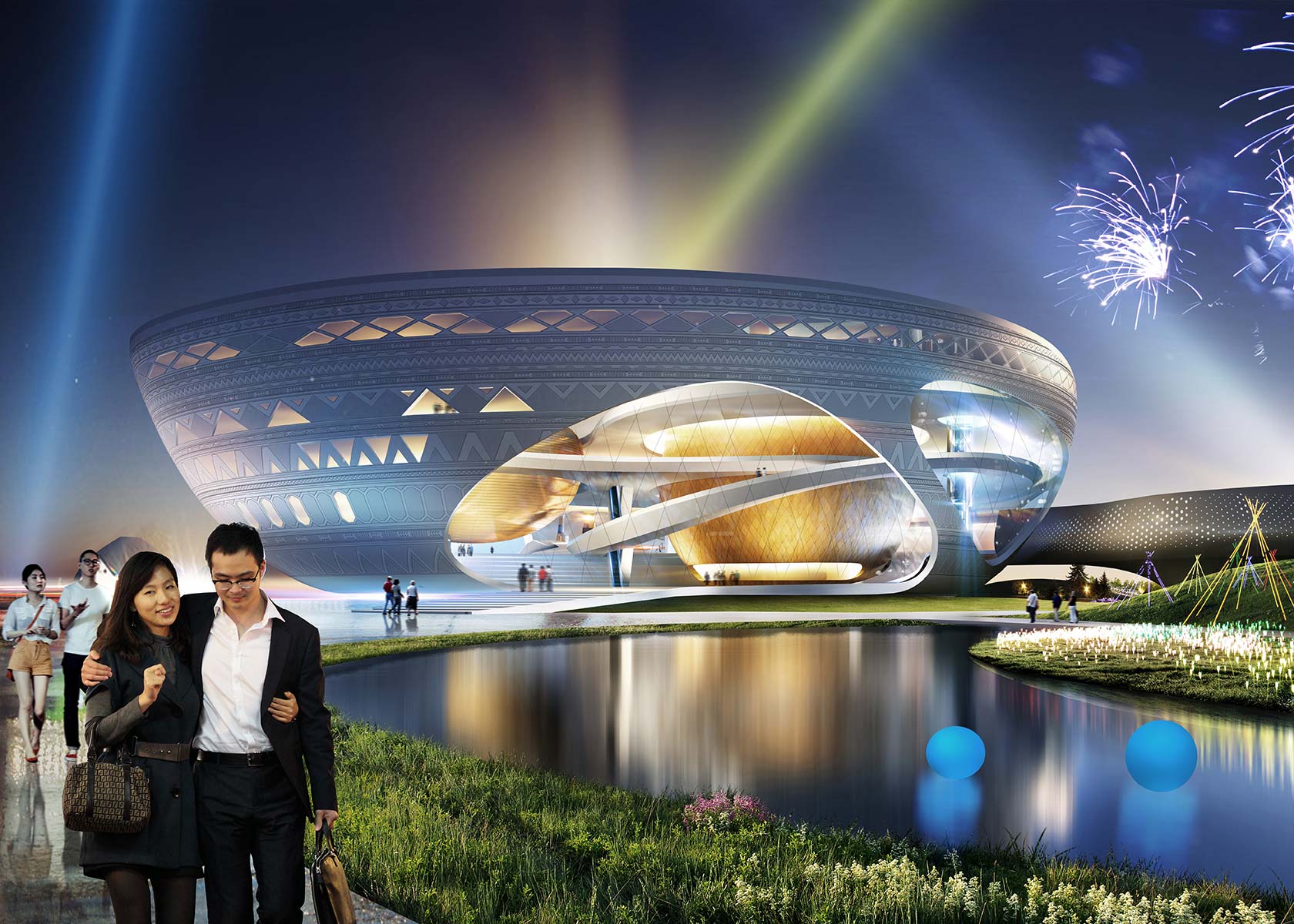
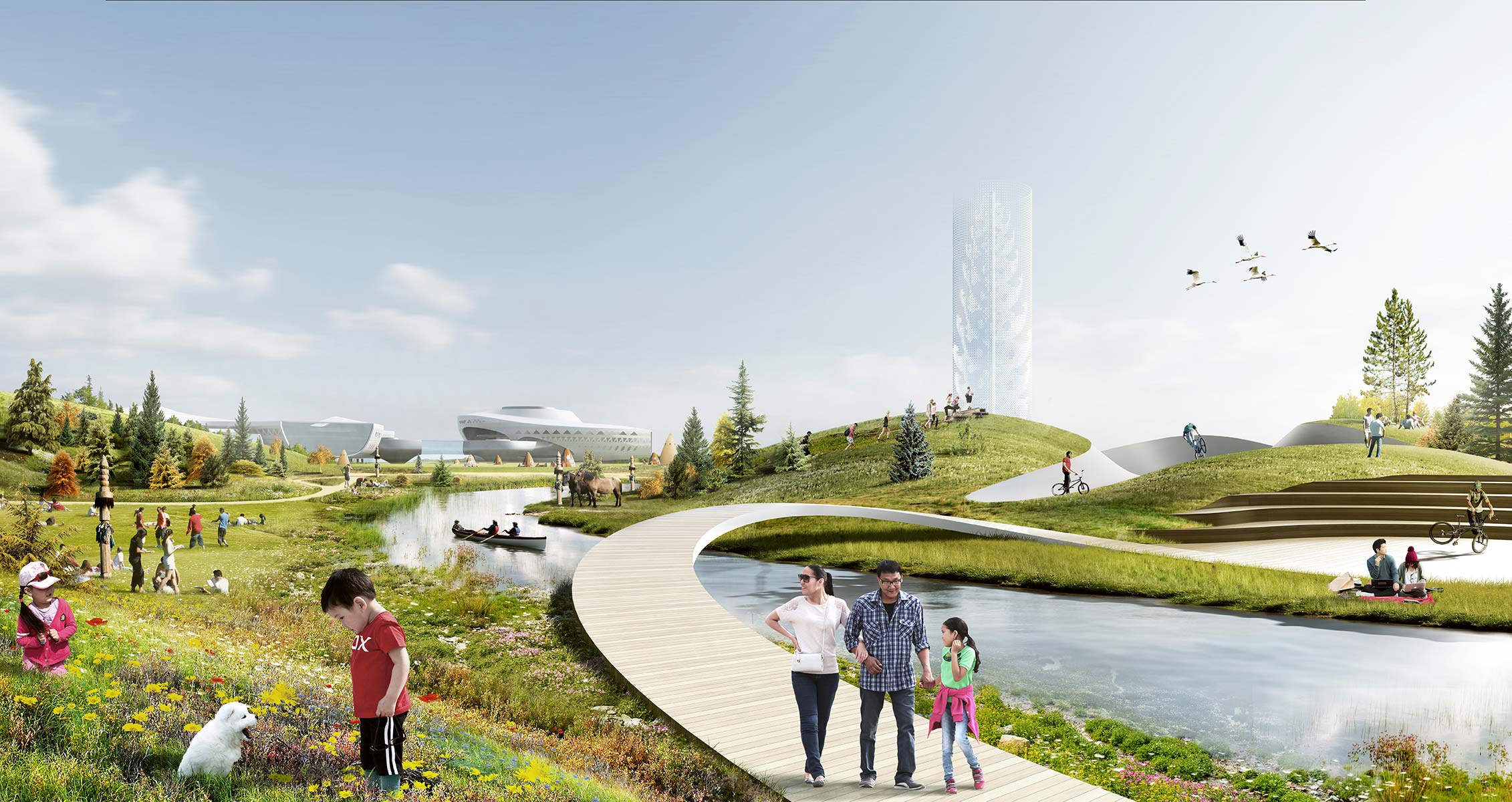
The functional zoning is based on a gradation from quiet natural spaces intended for walking and sacred rituals to a denser, urbanised city environment. Alongside the new buildings, the site introduces a ceremonial square, an additional canal and a complex network of pedestrian routes. The national and geographical specificity of the project is reflected in the architectural image of futuristic buildings with a minimal footprint — an important requirement in permafrost conditions. The architects reinterpret the choron, the ceremonial cup used for drinking kumis, transforming it into a module from which the building is composed.
In accordance with the competition brief, the project included engineering substantiation of the proposal and its energy efficiency, a cultural programme for the use of the park and buildings, and a phased implementation plan.
The park and large-scale cultural centre were intended to become one of the most significant projects in the Republic of Sakha (Yakutia), both in terms of reactivating national heritage and in the broader transformation of Yakutsk.
idea


drawings


mock