Primavera Club City
- location
- Russia, Moscow
- completed
- 2024 – present day
- design
- 2020-2023
- site area
- 4,2 ha
- total area
- 330 000 m²
- area of phases I & II
- 144 058 m²
- architects
- Anton Nadtochiy, Vera Butko, Petr Alimov, Nikita Rybin, Daniil Gavrish, Alexander Dietrich, Marina Ilyazova, Nikita Kuchinsky, Adel Khakimullin, Olga Romanova, Alexander Komissarov, Ilya Kondratiev, Svetlana Khairova, Akhmet Khakimov, Nikolay Fedotov
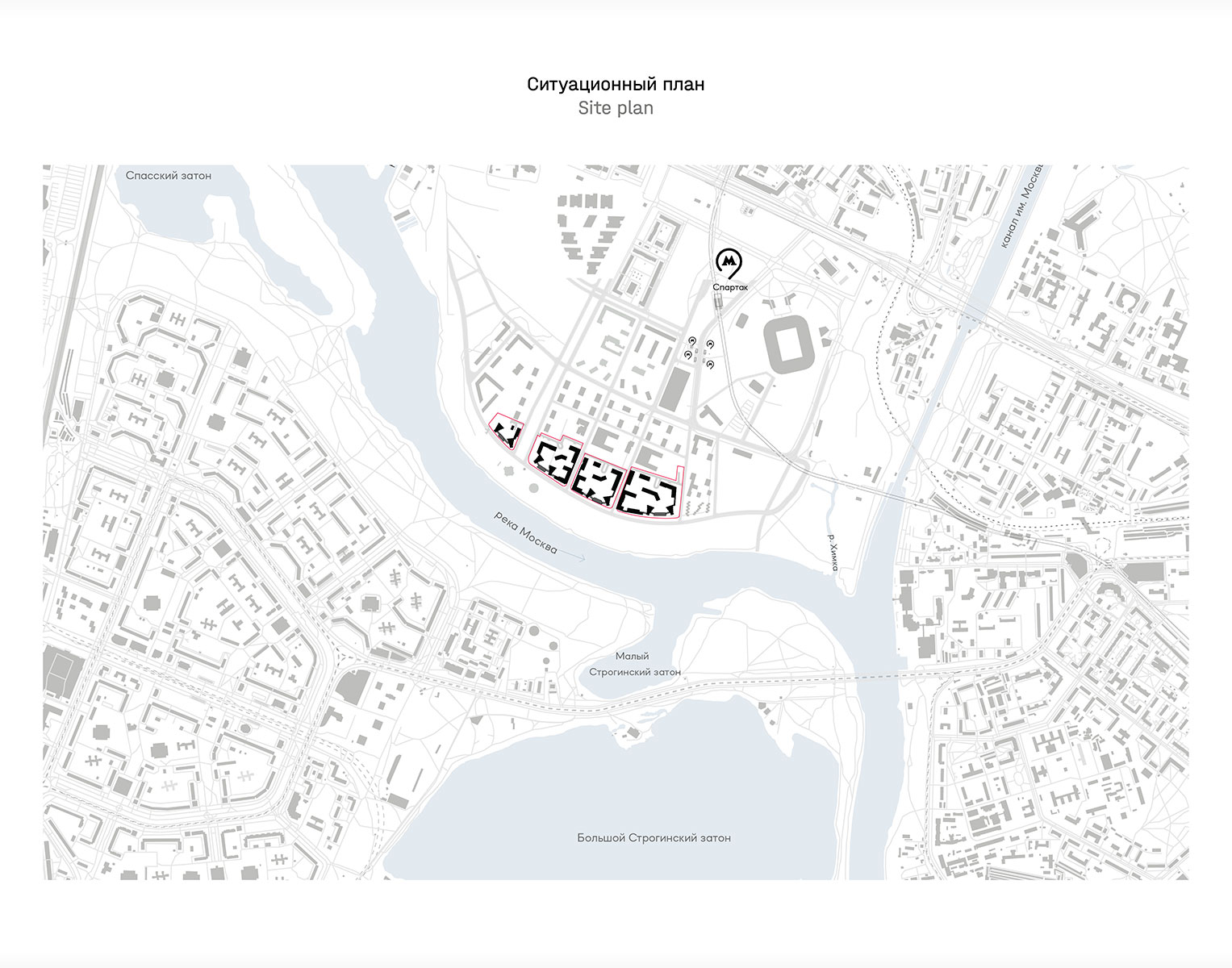
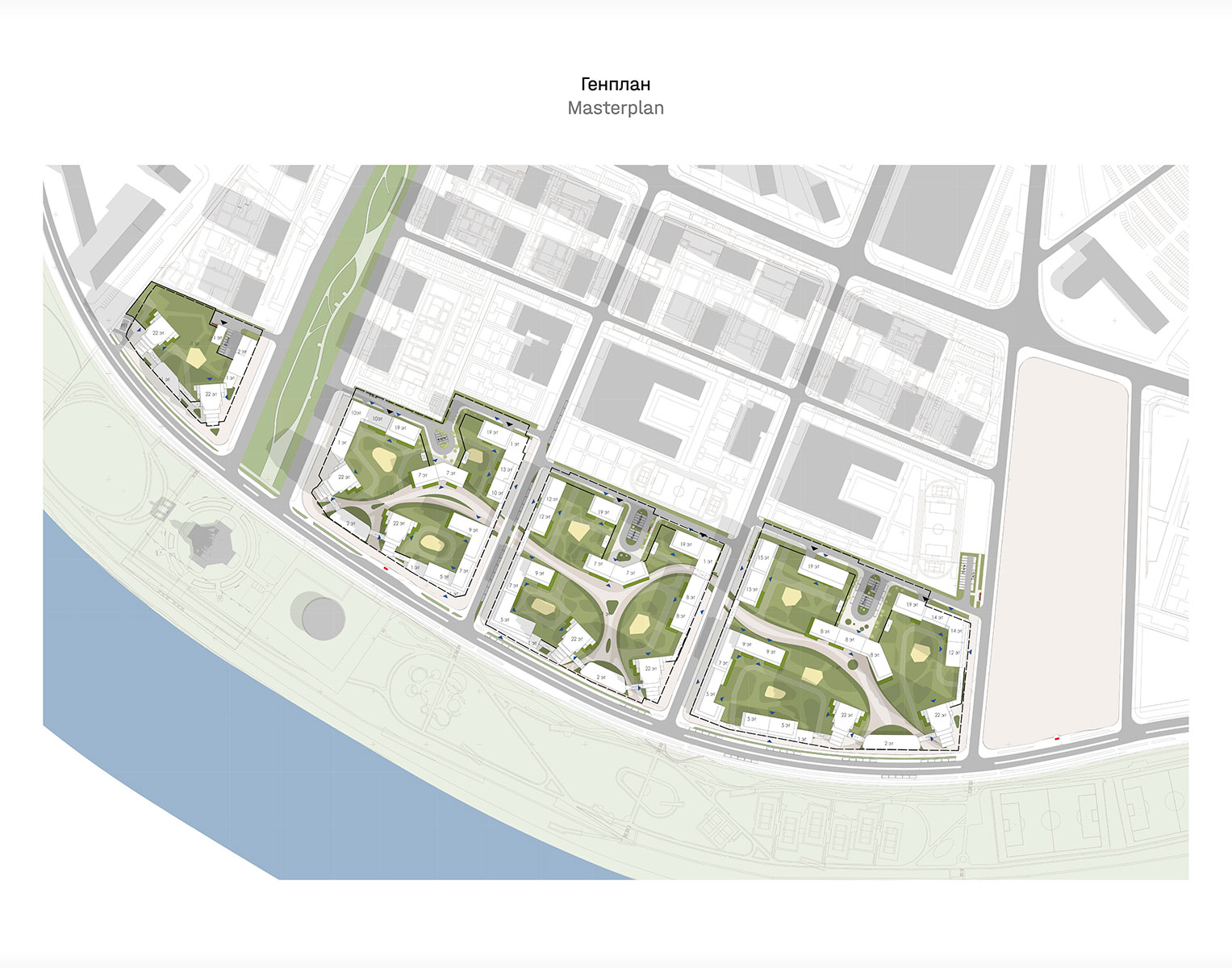
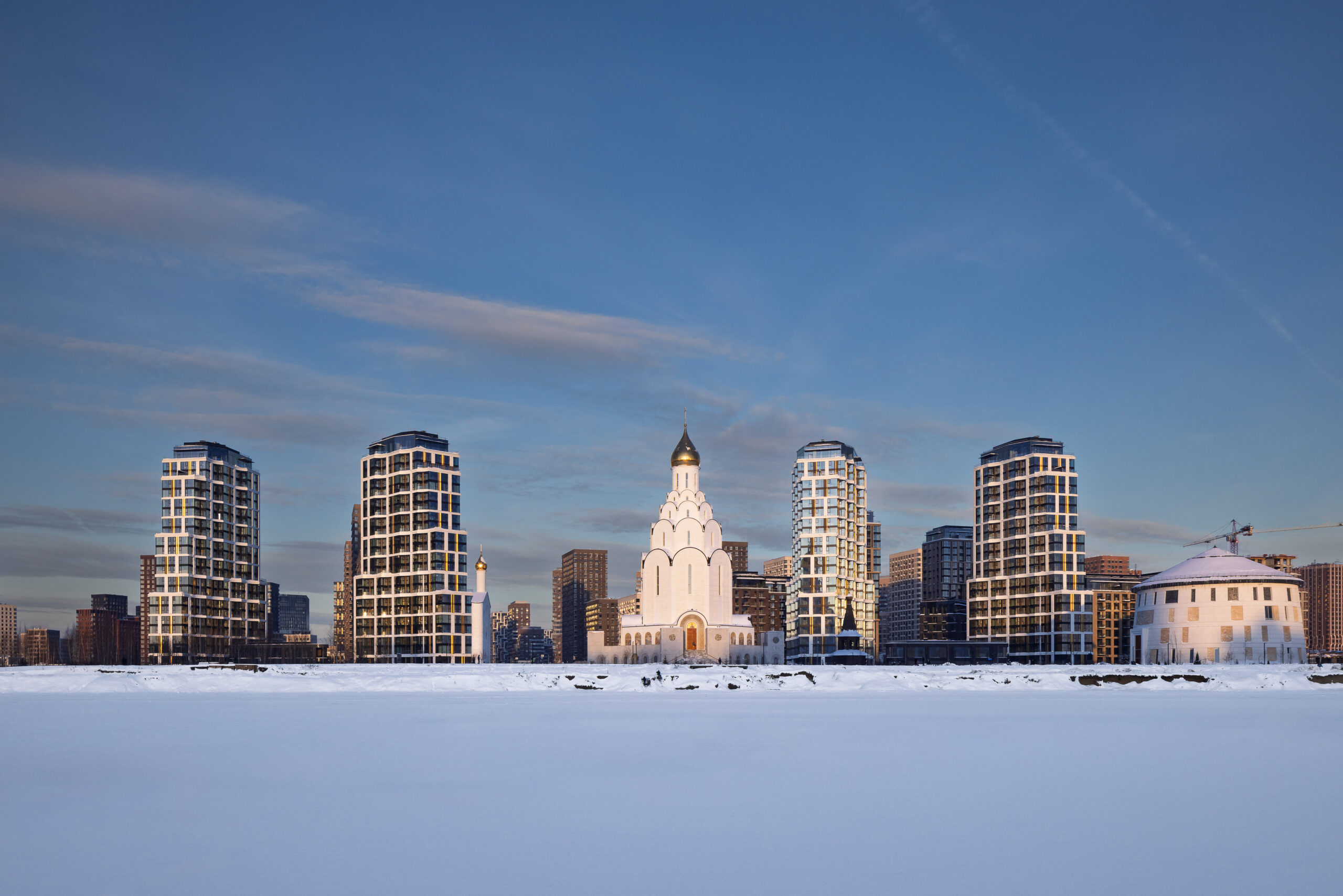
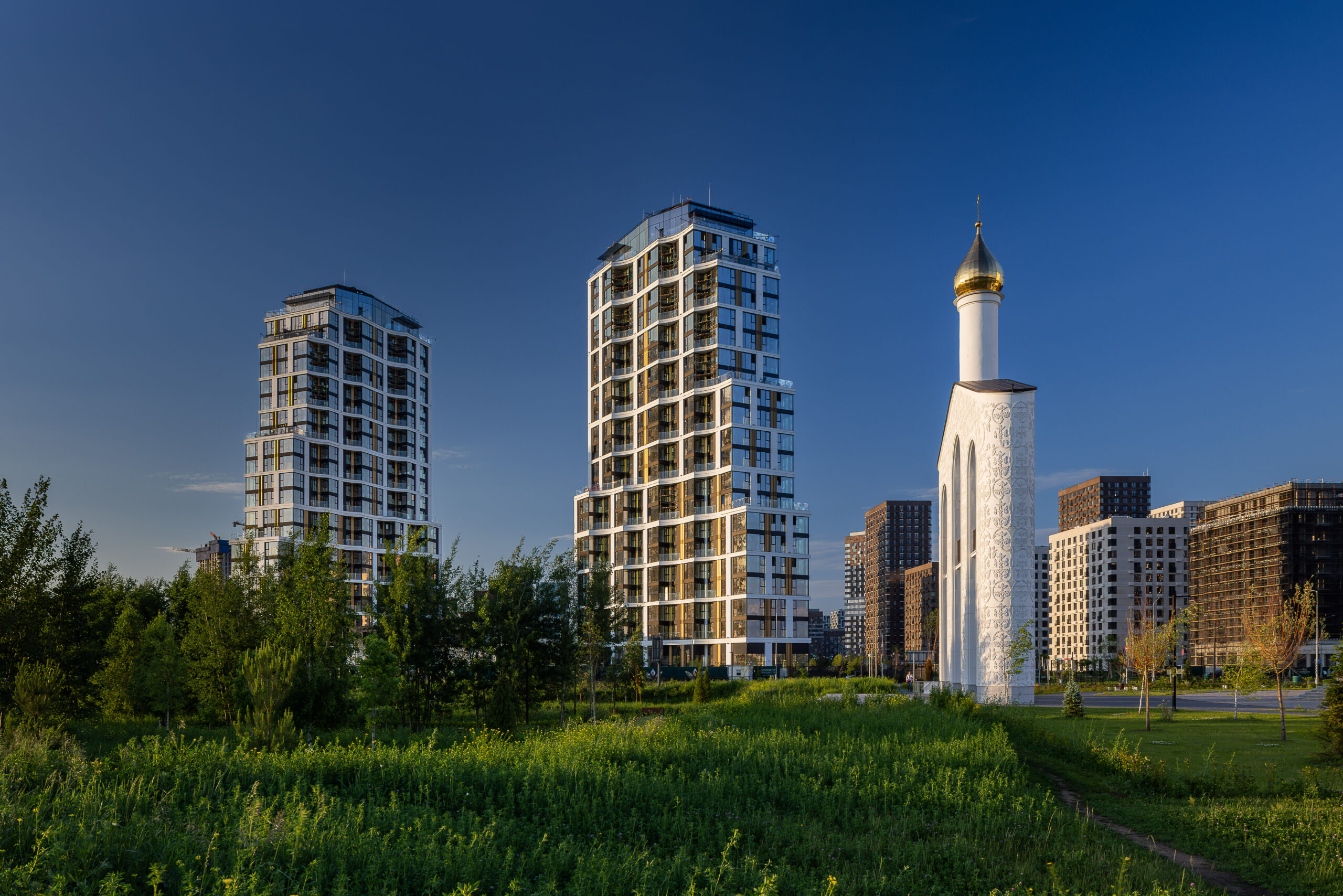
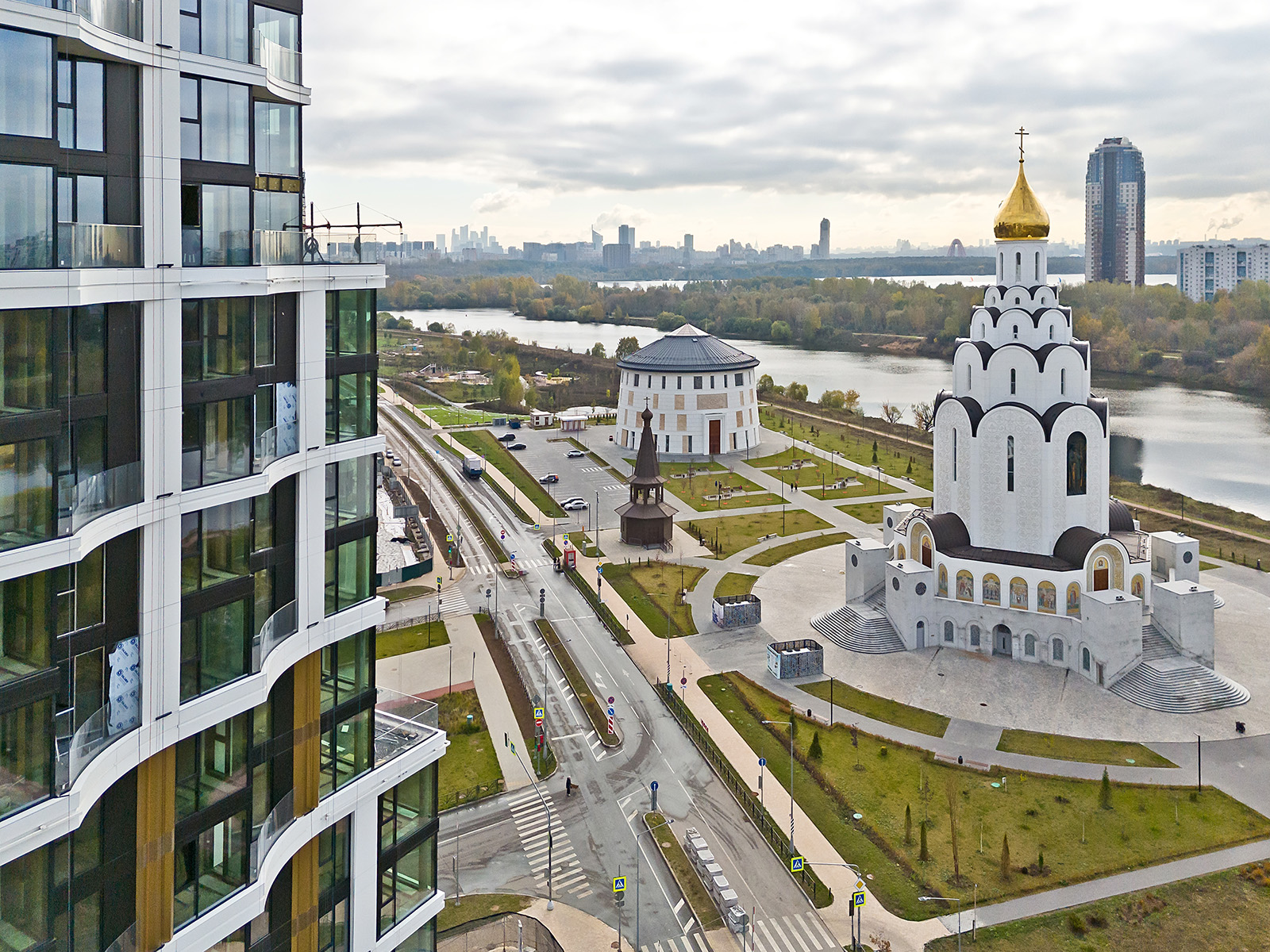
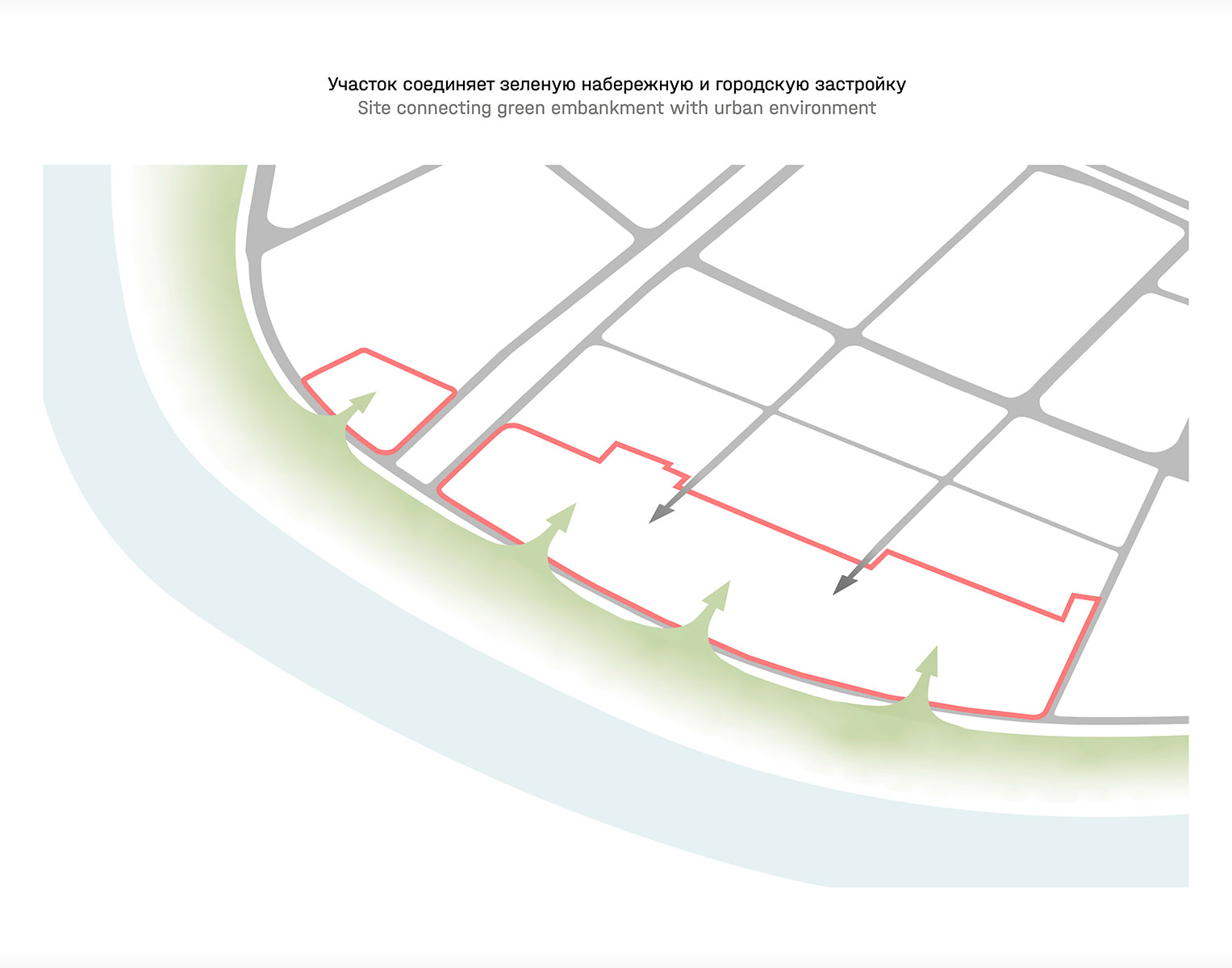
The new premium residential district is located on the bank of the Strogino floodplain and occupies an extensive 12.14-hectare site on the former Tushino airfield. The history of the project began in 2020, when our architectural practice, ATRIUM, developed and won an invited competition for the concept of the entire district along the embankment. The scale of the development and its proximity to the water called for a comprehensive approach. Our architectural solution envisaged not only the creation of a residential district with the most spectacular views over the water, but also the formation of a полноценная urban environment. The new quarters connect the existing development deeper within the area with the park running along the embankment and form a unified ensemble with the Church of Saint Vladimir Equal-to-the-Apostles, located there.
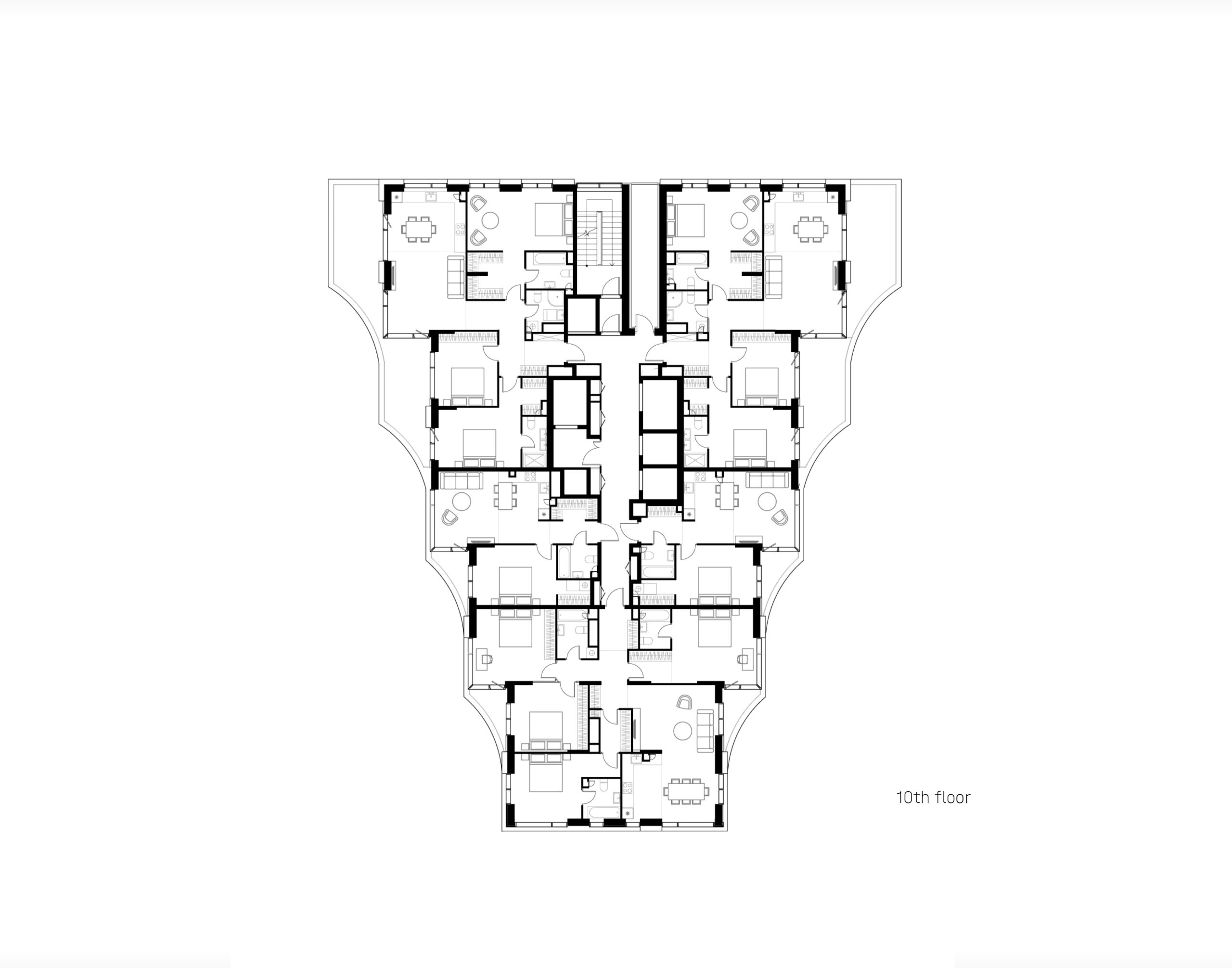
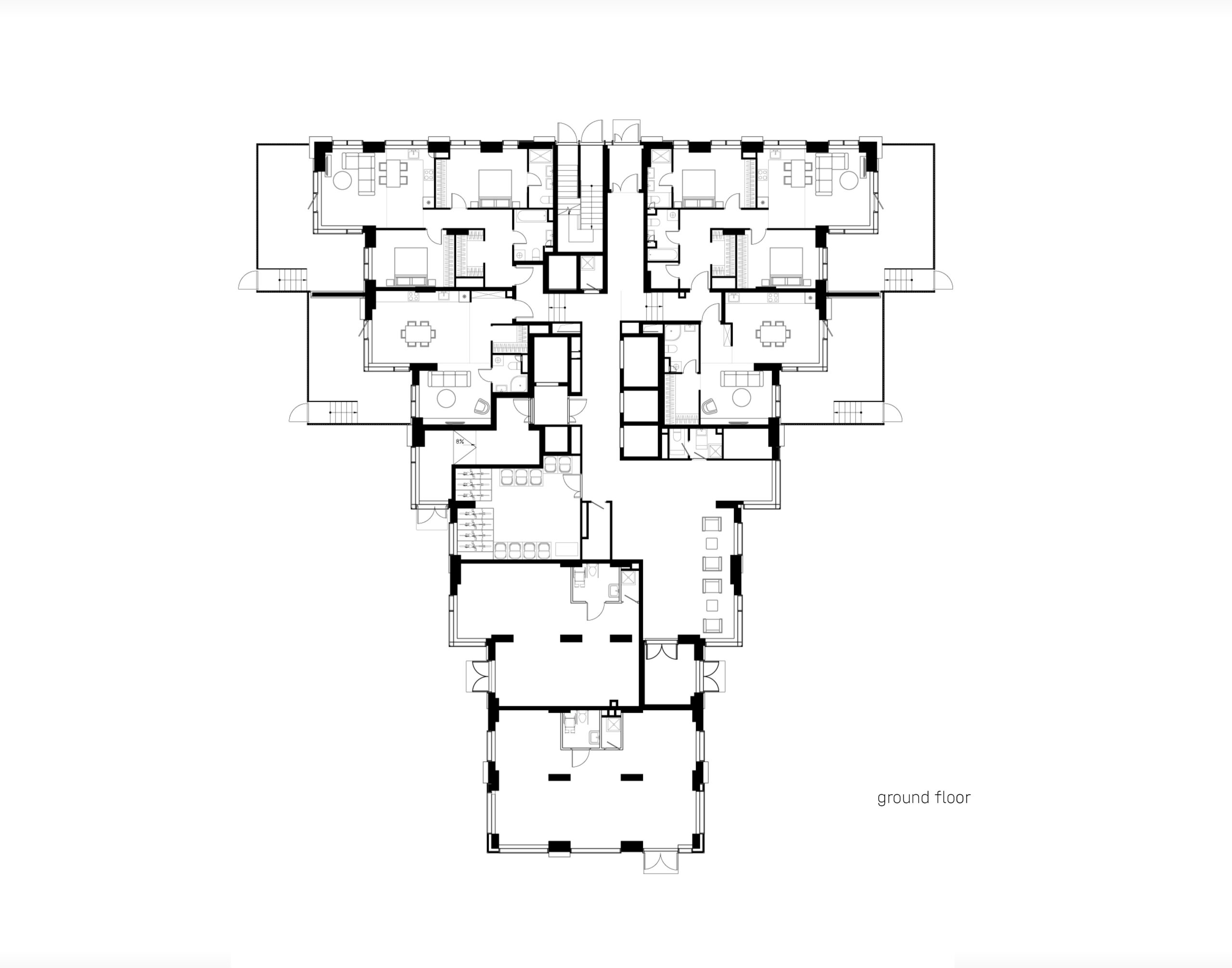
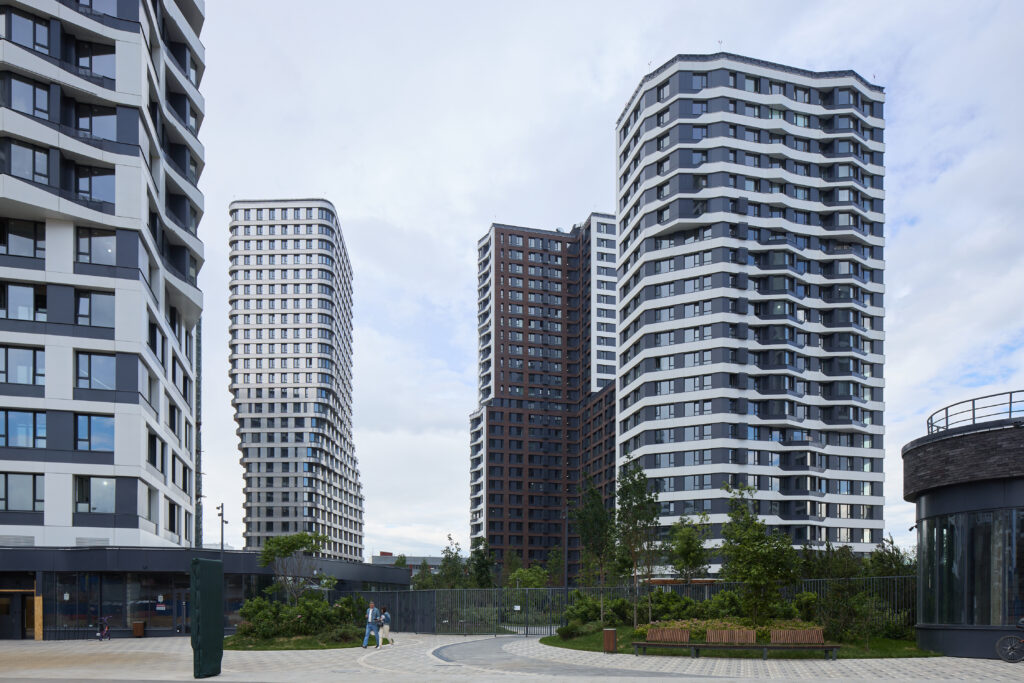
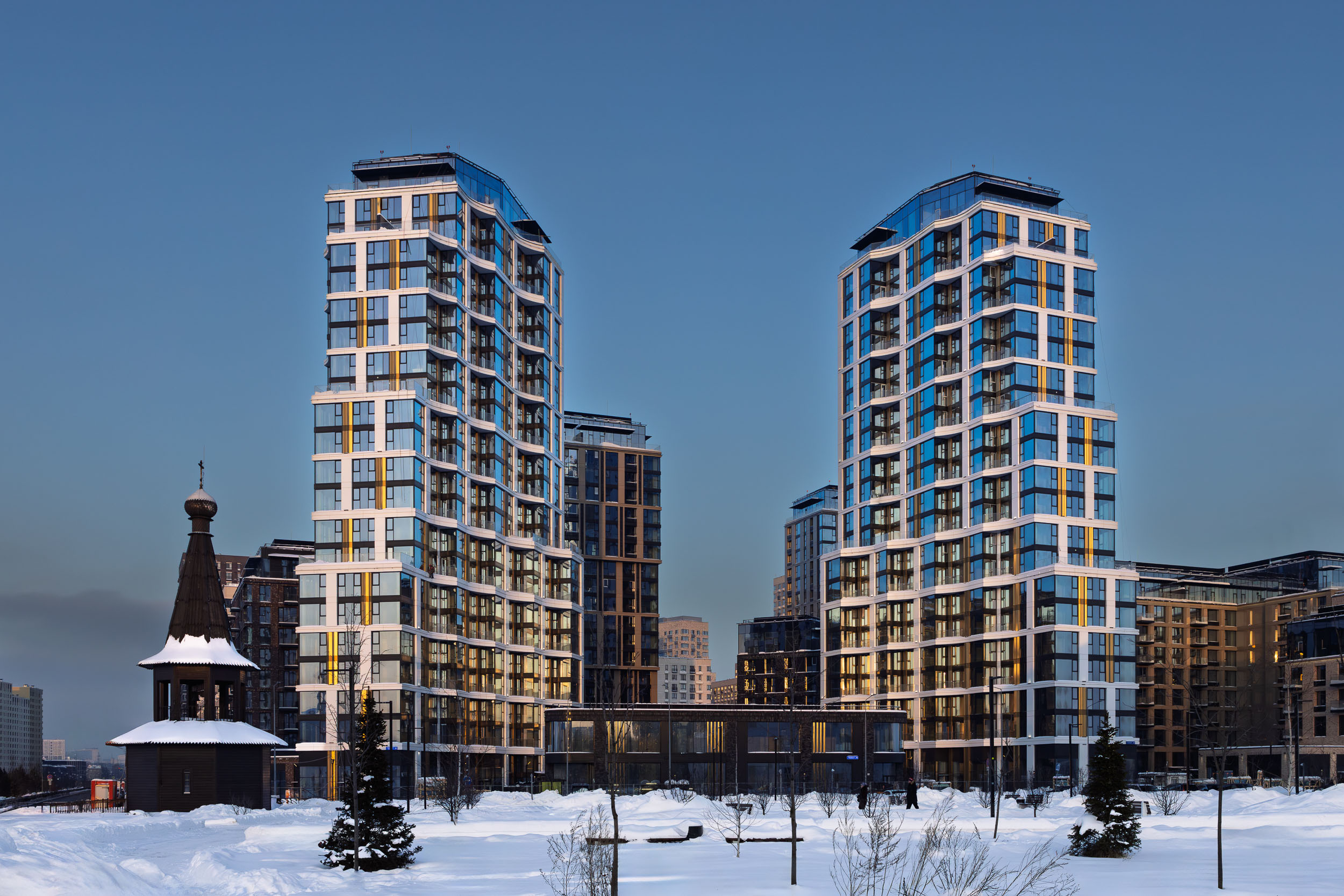
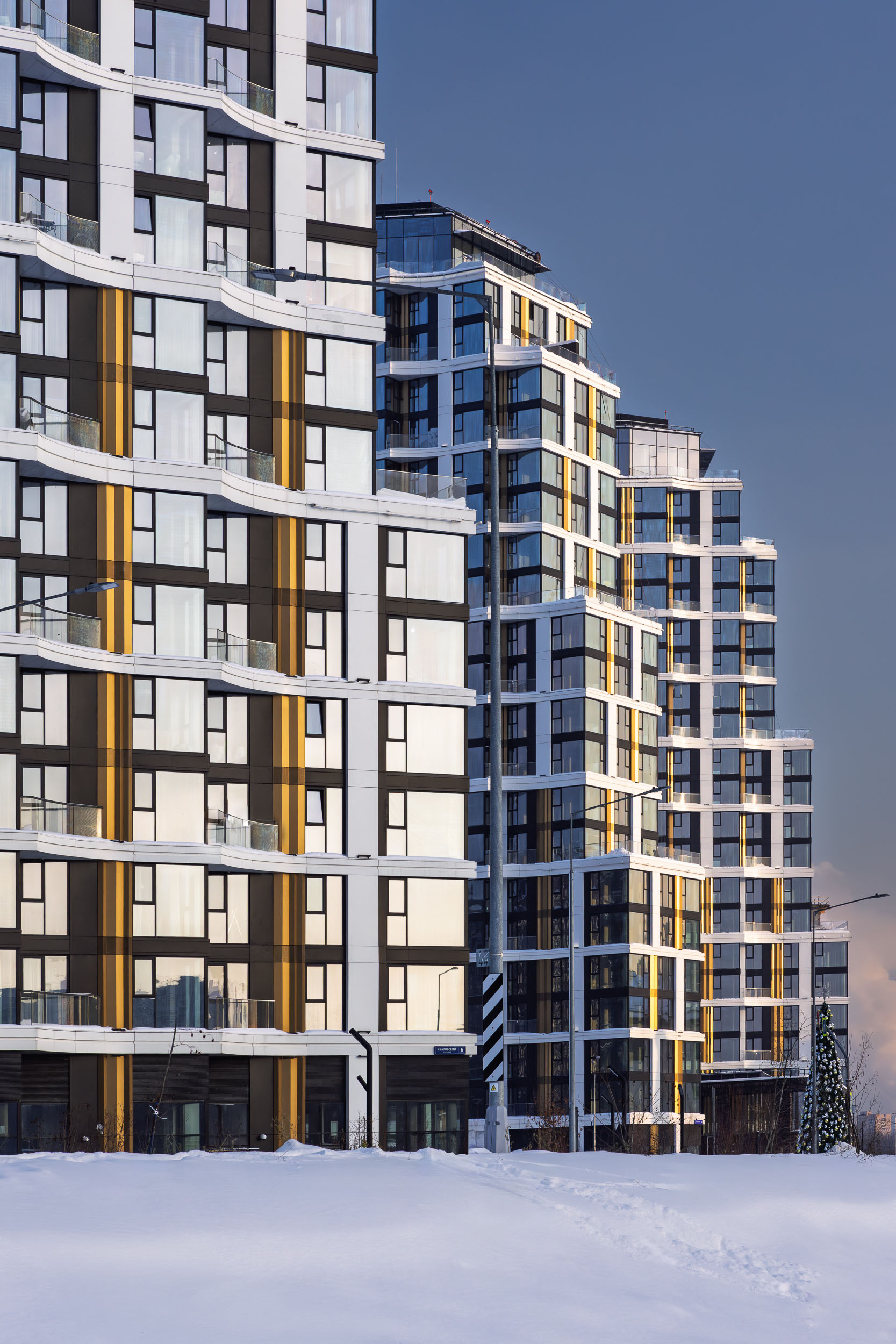
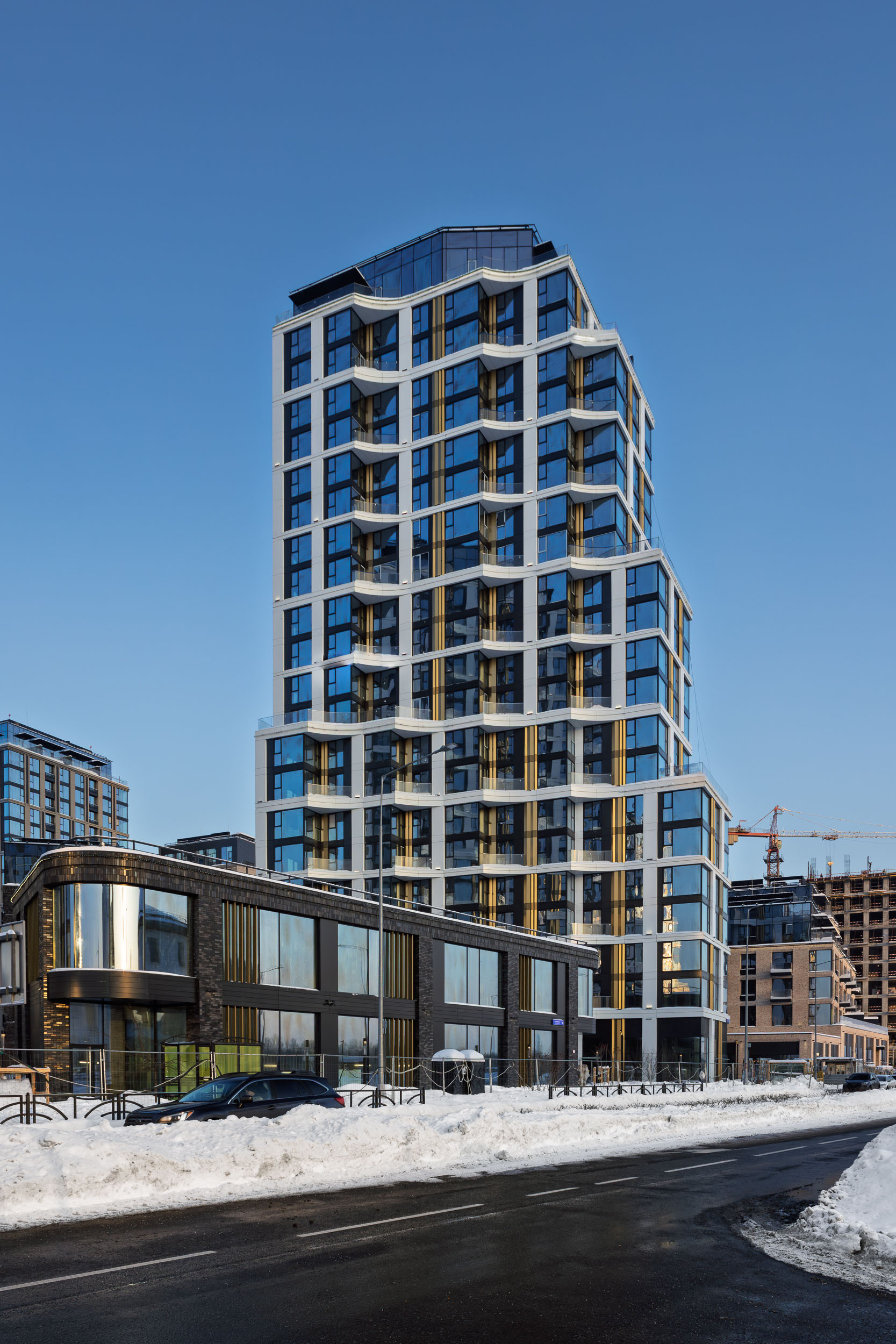
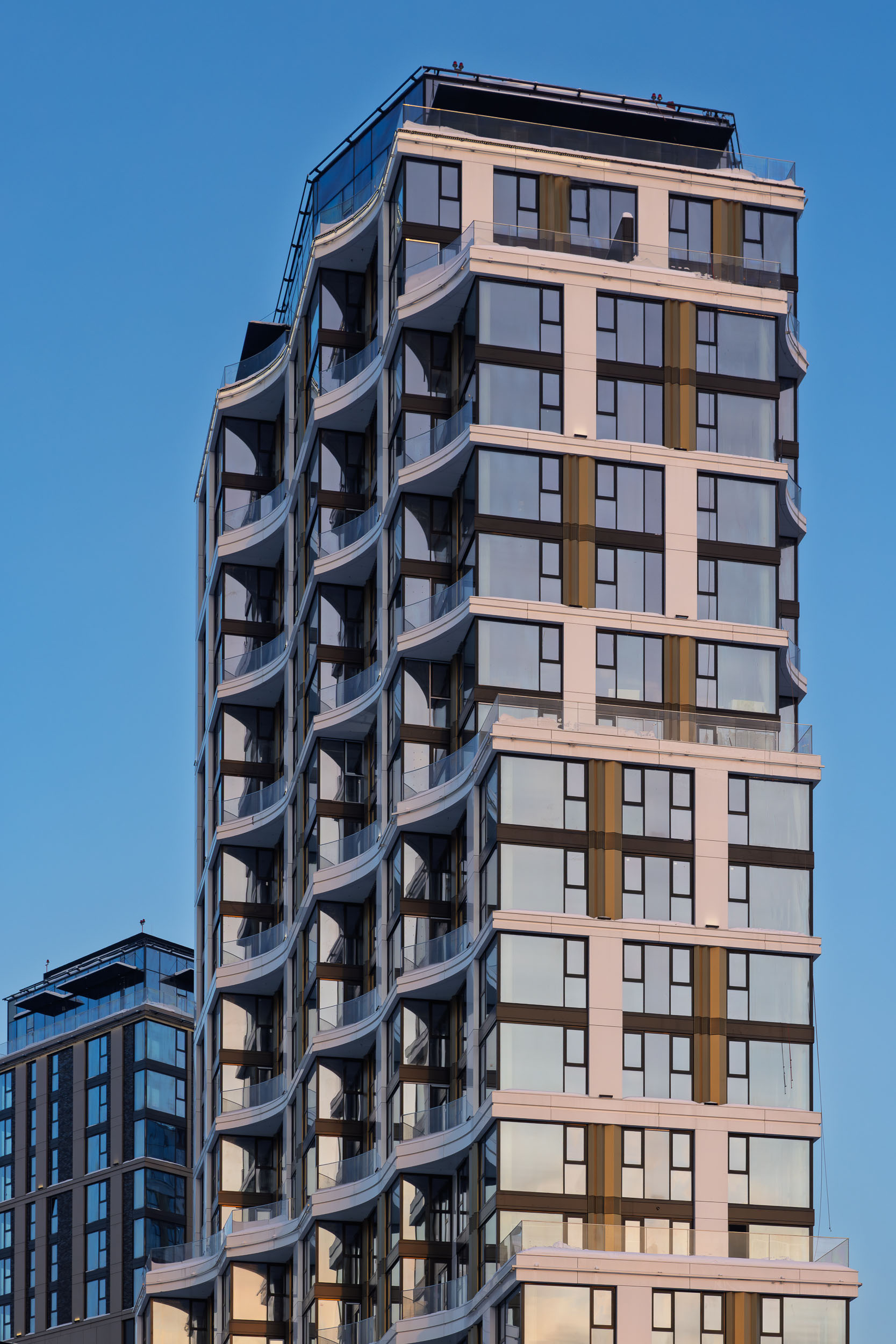
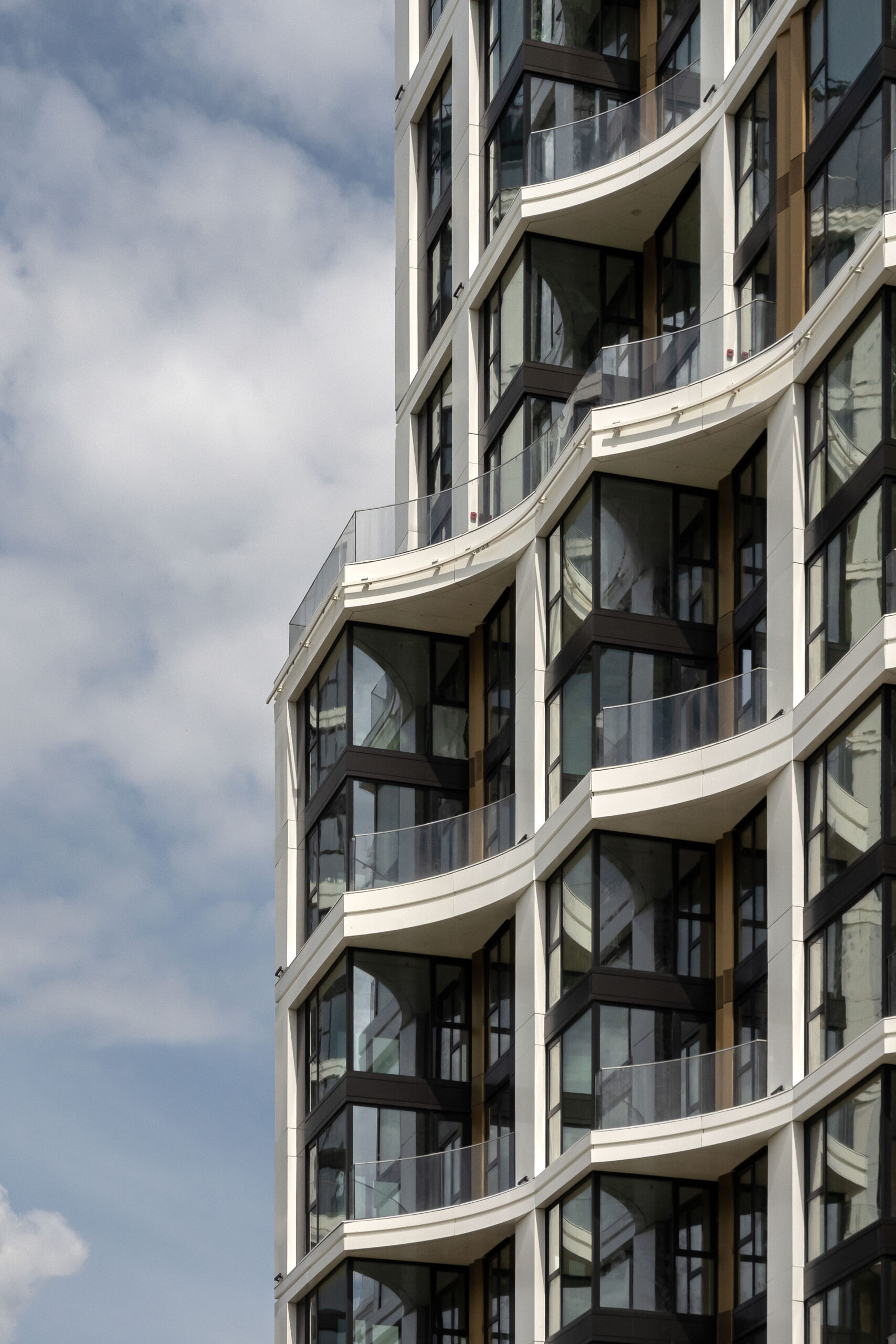
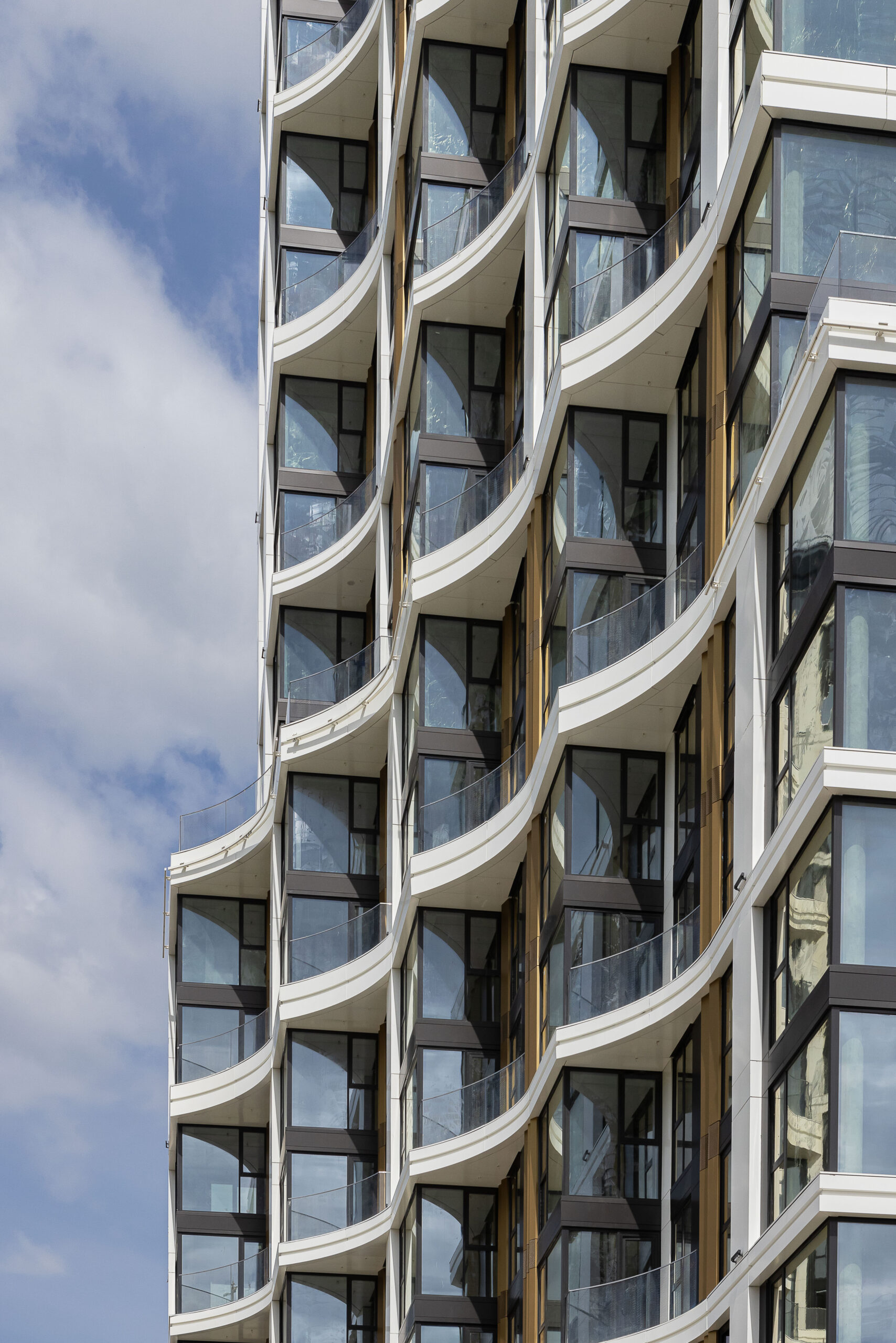
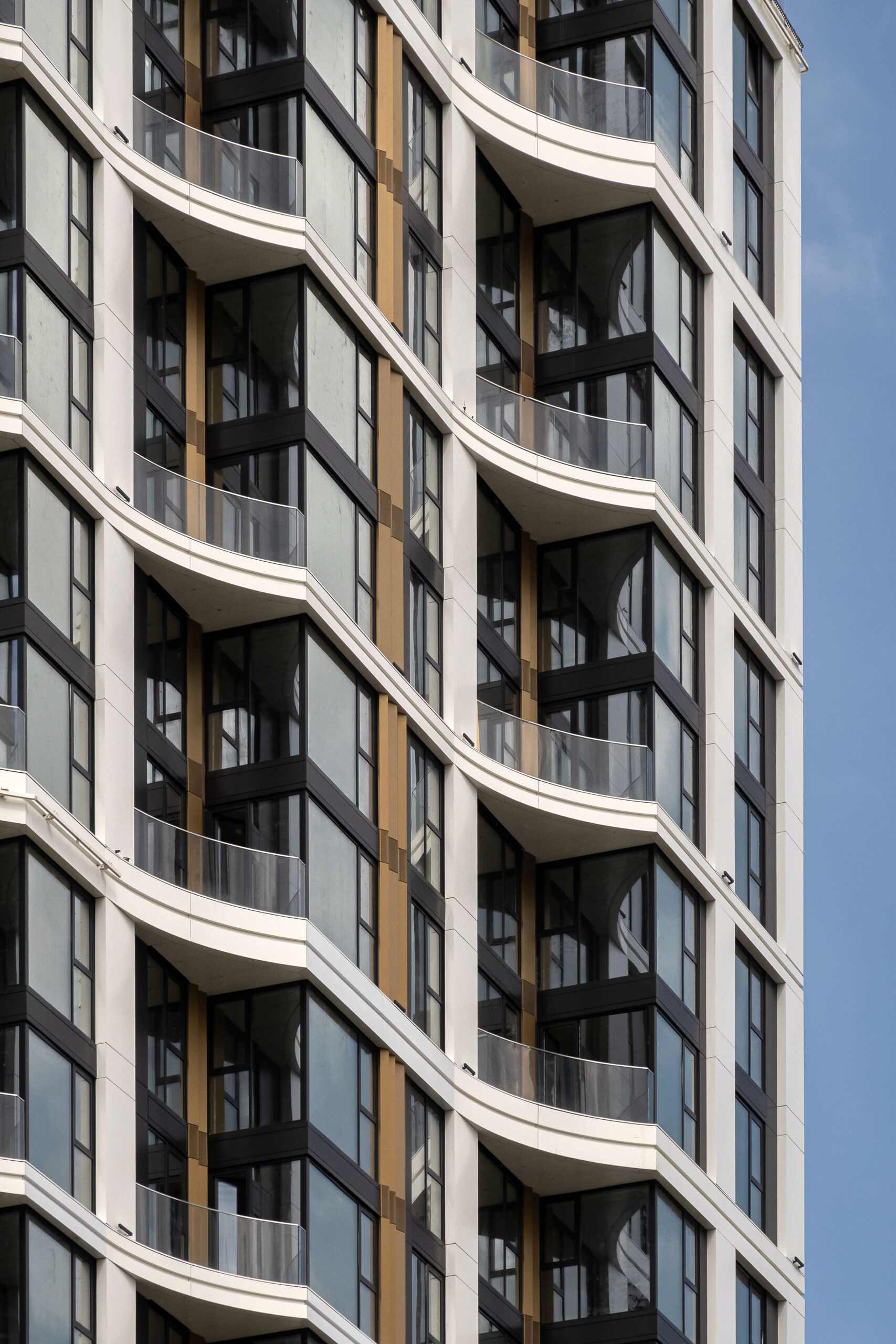
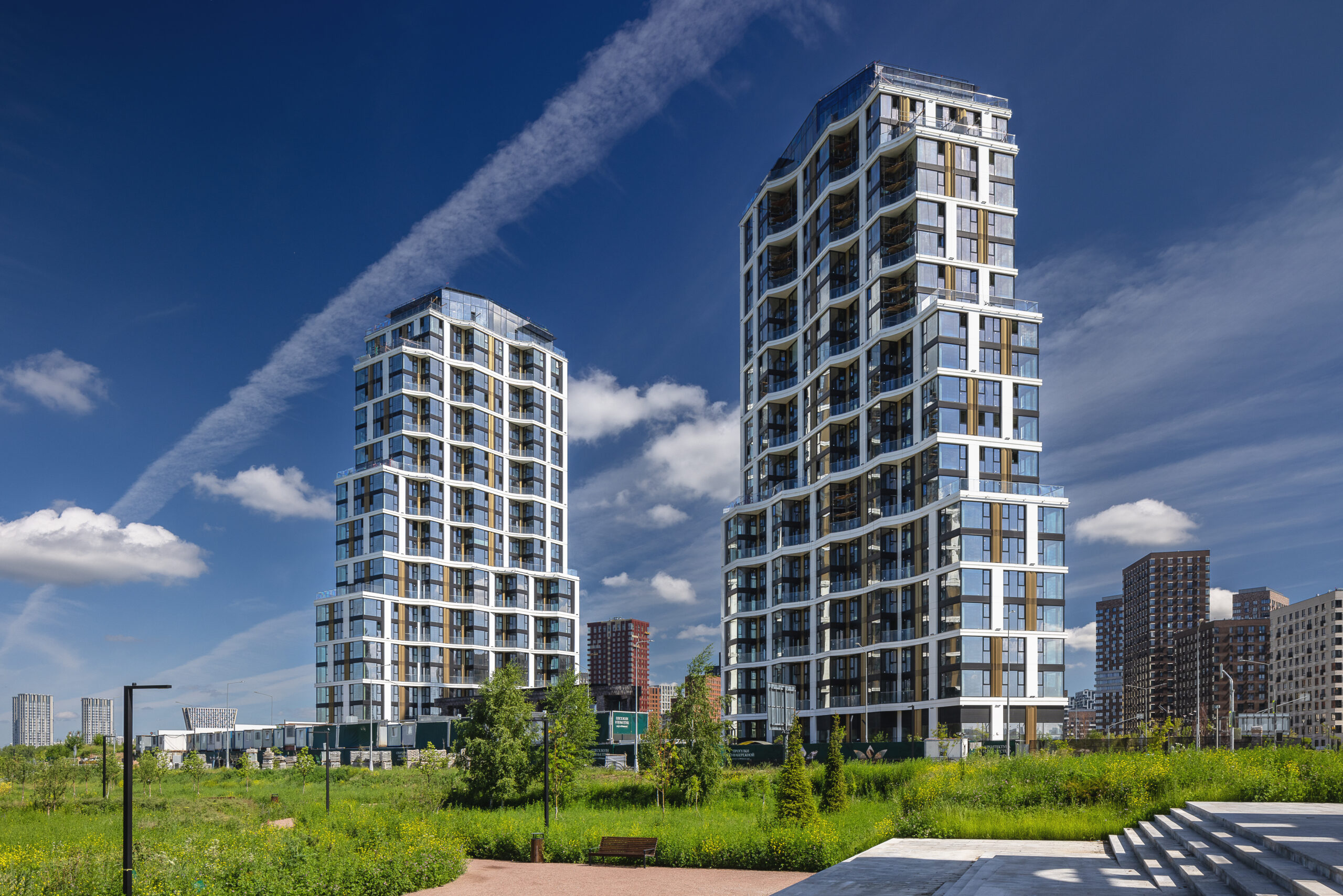
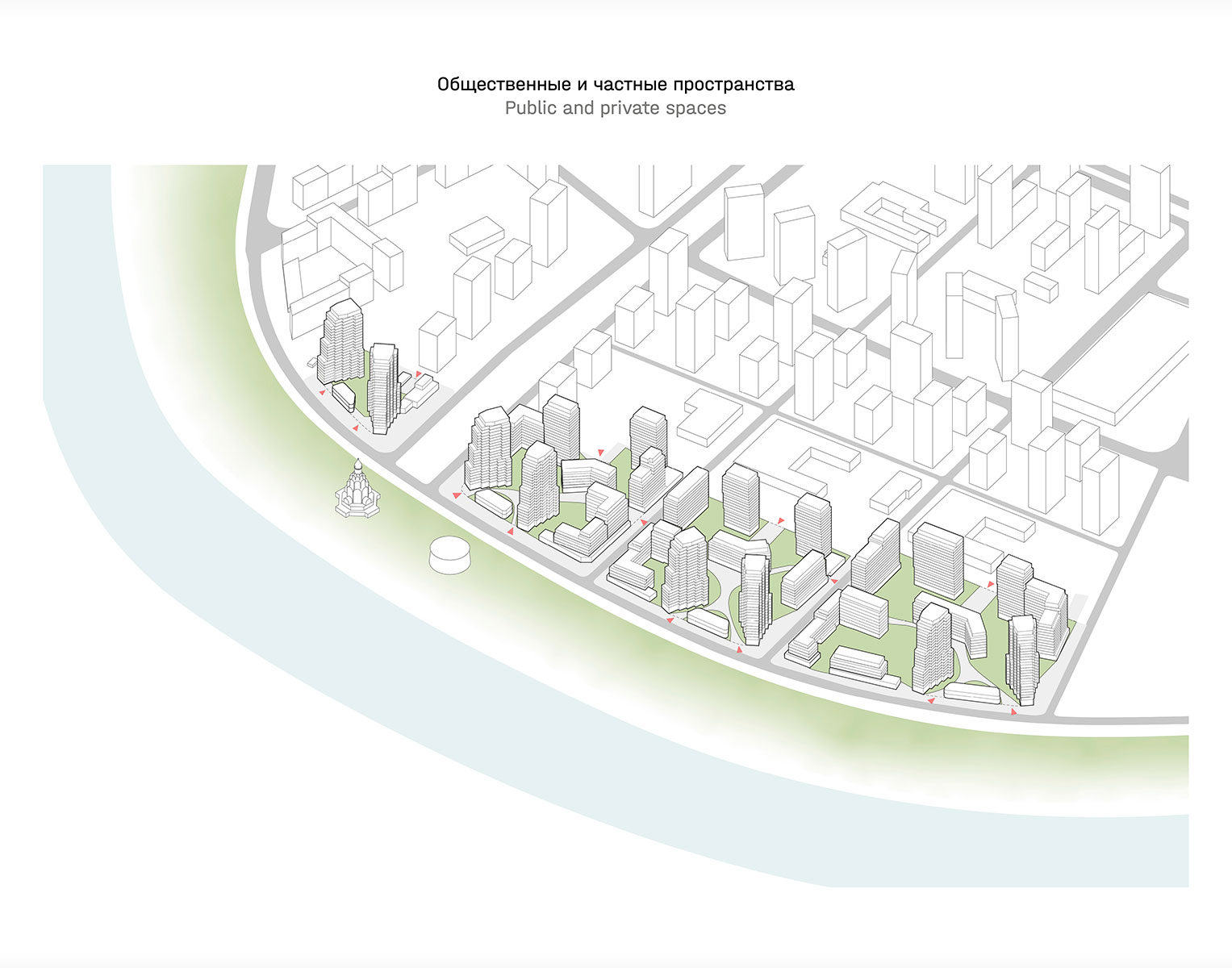
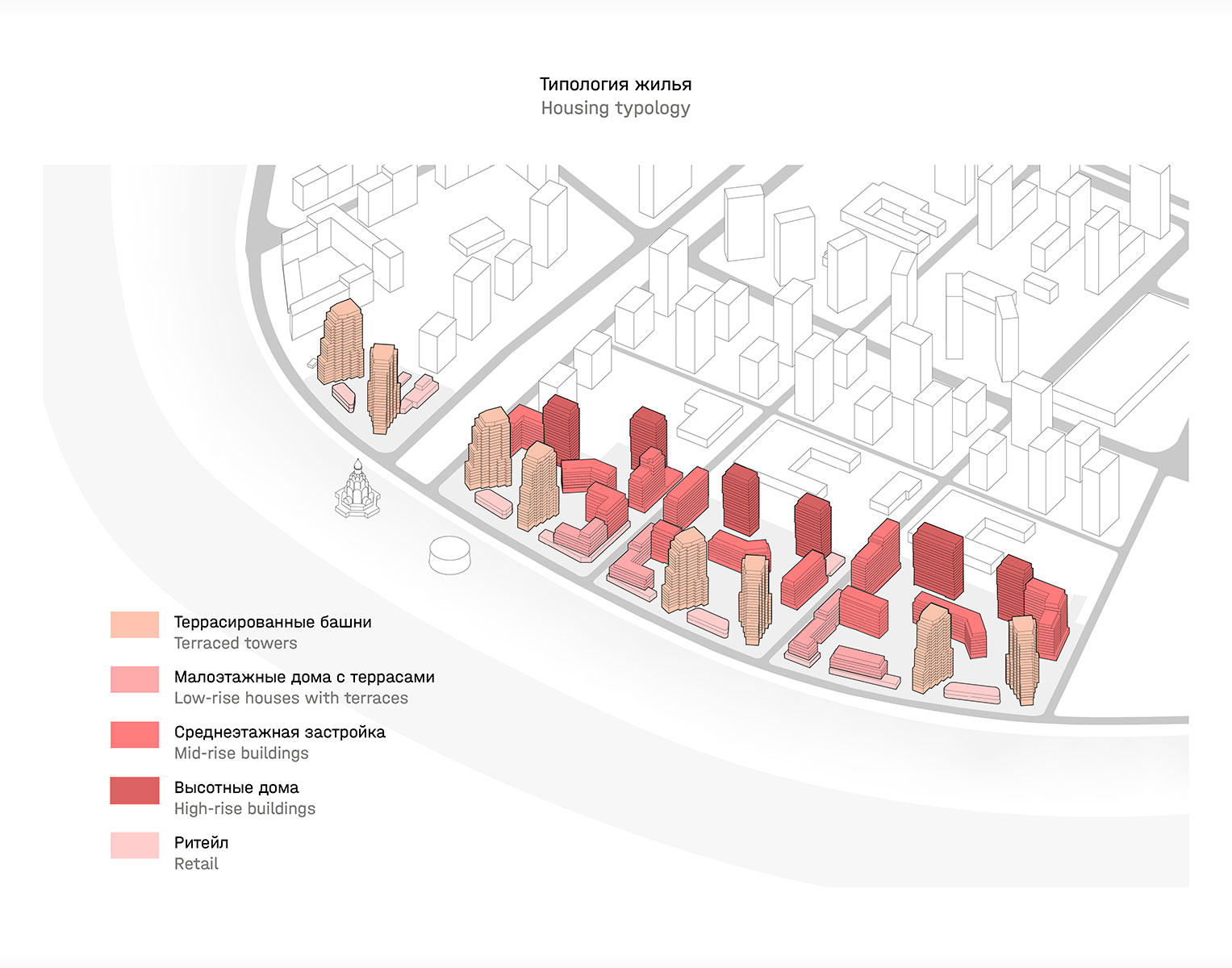
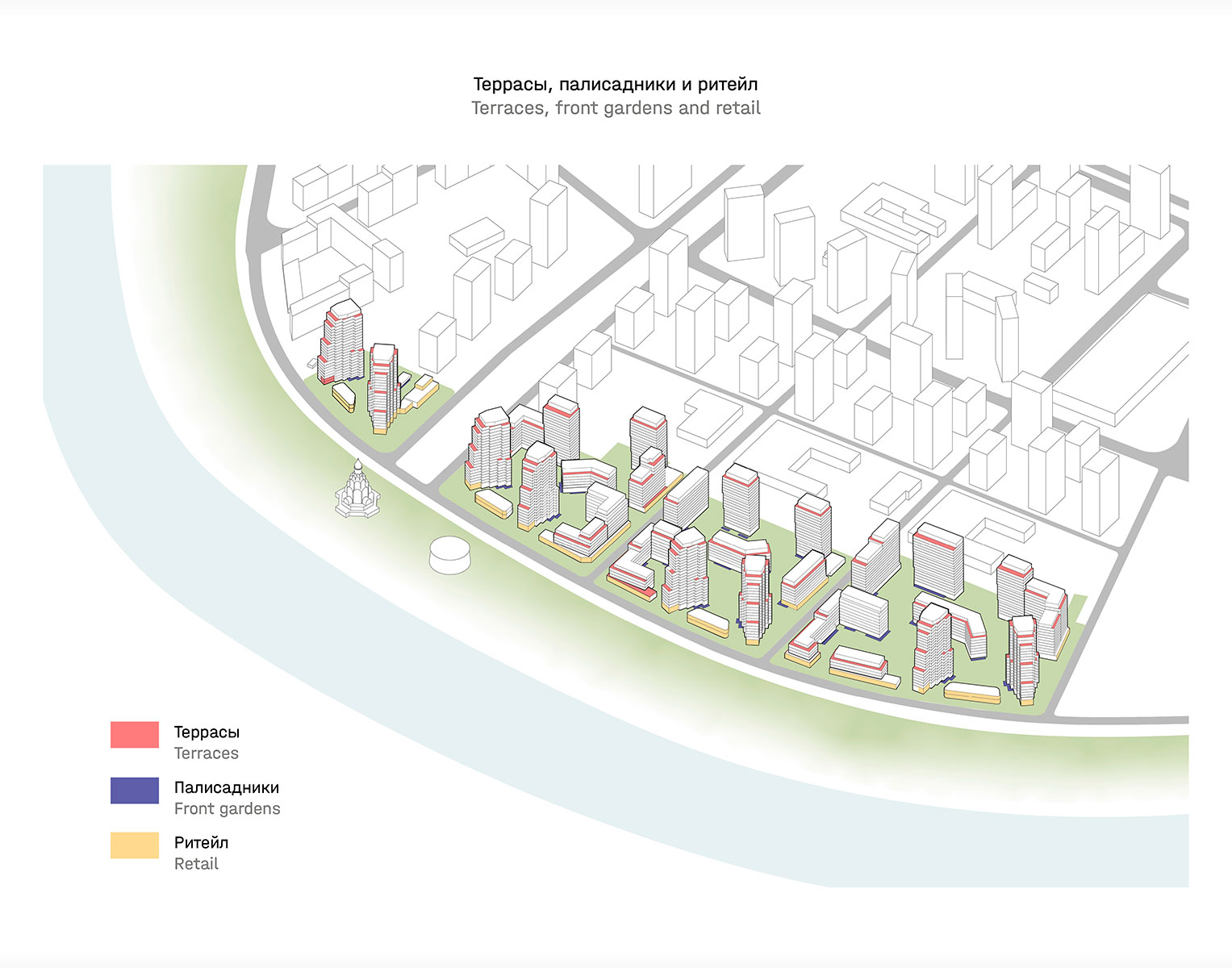
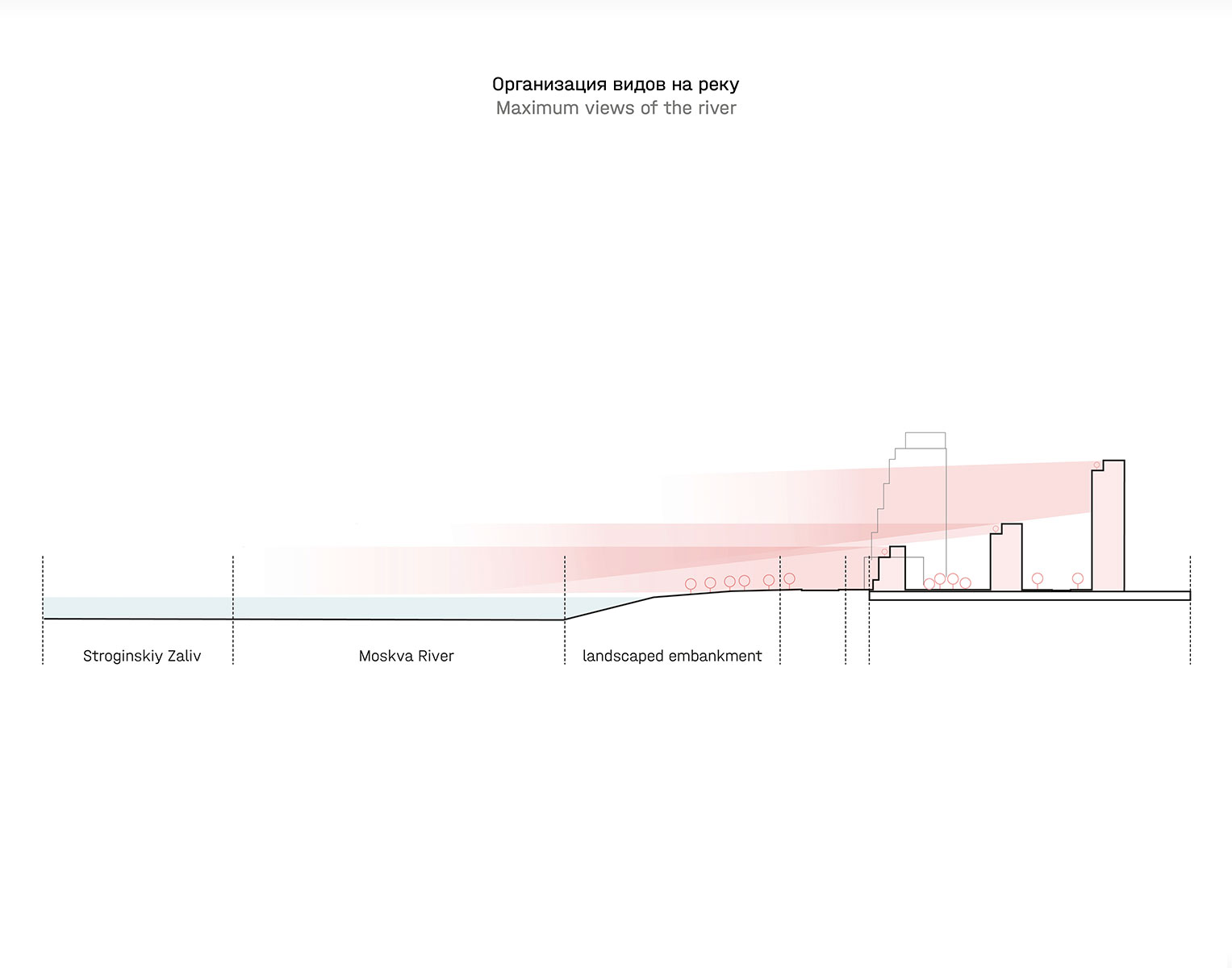
The stepped residential towers are positioned on the first line. Their structure allows for a wide variety of planning solutions and makes it possible to provide the maximum number of apartments with views over the floodplain and the bend of the Moscow River. The complex form and the curvilinear pattern of the balconies, arranged on alternating floors, create a striking and memorable silhouette. In this case, the aesthetic qualities were particularly important, as the towers are clearly visible from the river and will become the dominant feature of the entire district. Behind the high-rise volumes lies a low-rise development that shapes an urban environment of quarters and streets. The one- and two-storey buildings are intended for retail use. The northern edge of the residential district is formed by another row of high-rise towers whose architecture echoes the rest of the development. The result is a multifaceted, varied-height landscape with a relatively low density, creating the impression of an environment that has evolved gradually and emerged naturally. The variety of apartment layouts, including a large number of units with balconies, terraces and front gardens, as well as unique penthouses, reveals the exceptional qualities of the site and recalls the development patterns of resort towns.
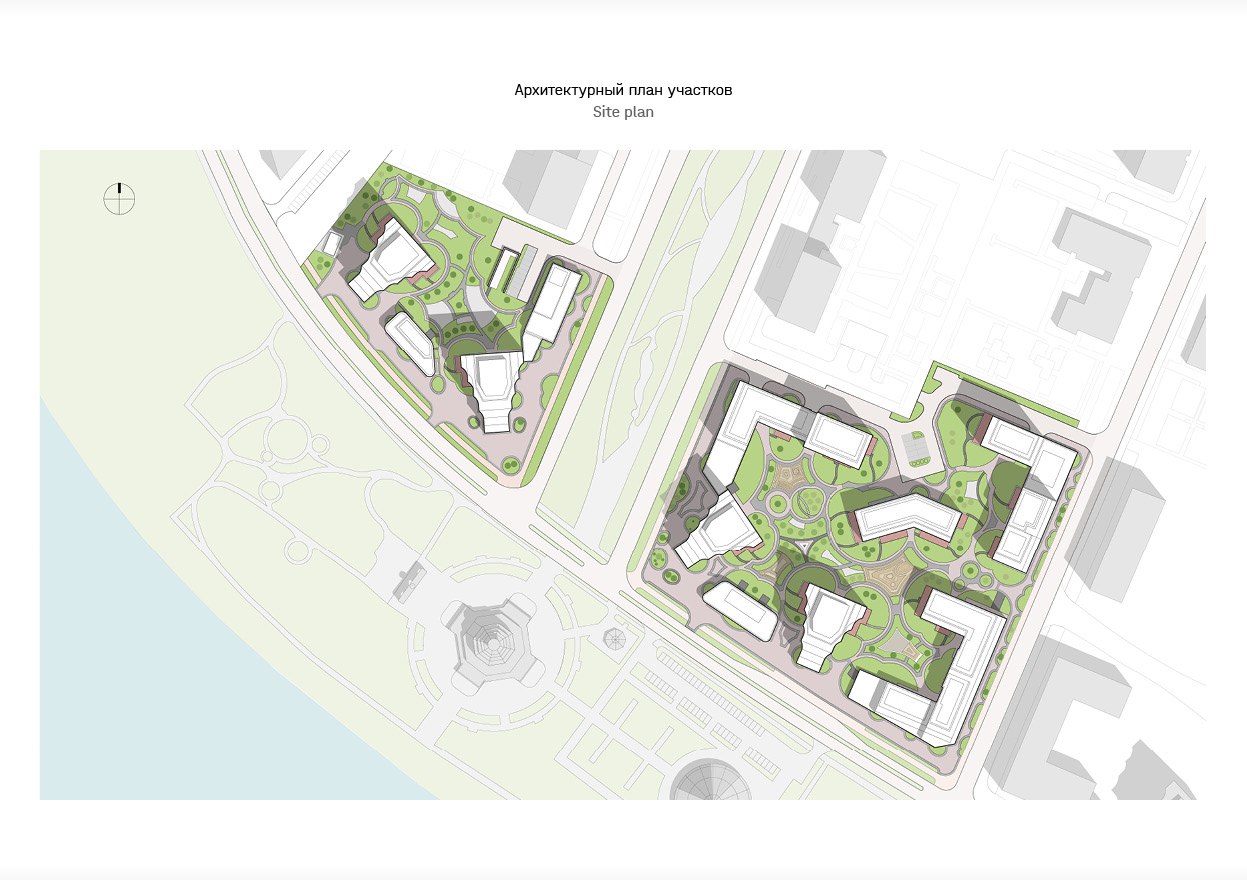
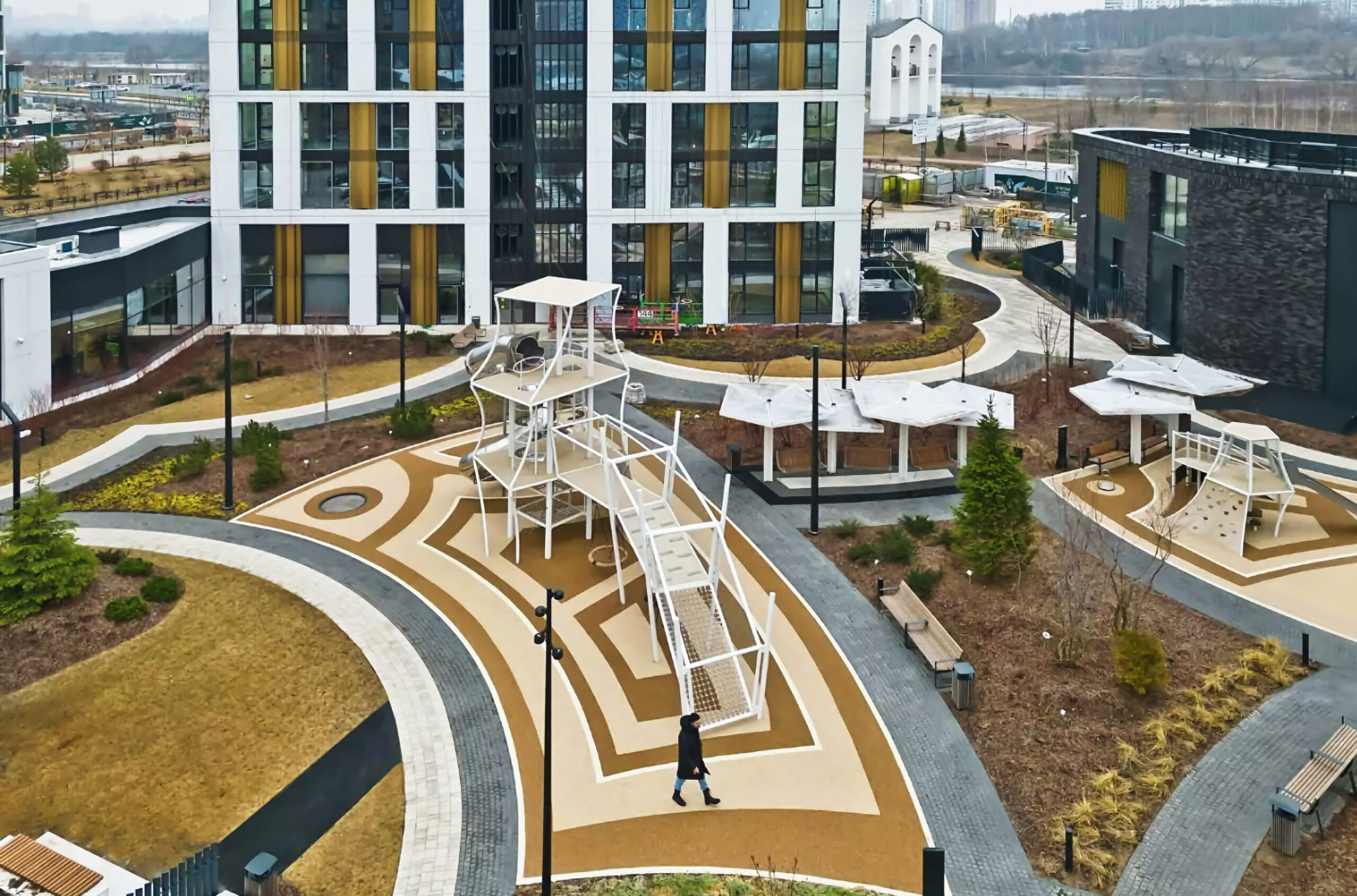
Construction of the district began with the two western quarters, for which our architects developed the design of the buildings, the landscape and the interiors of the public areas. The design of the courtyard spaces and playgrounds became a natural continuation of the overall architectural concept of the complex. We chose a motif that is repeated in both the facades and the landscape: a wave-like line created by the intersection of circles with elegant curves. Our aim was to create a variety of spaces for children of all ages, taking their needs into account. The concept therefore includes play areas for younger children, spaces for older children, co-working zones and aromatic gardens for adults. Every corner of the courtyard is designed as a place for relaxation, play and social interaction.
The interiors of the buildings became a continuation of this architectural statement. The public areas are designed in a contemporary style, with an emphasis on comfort and refined aesthetics. In the Rossini quarter, the concept of the “lobby as an external living room” has been realised, transforming it from a transit space into a point of attraction where residents can hold a business meeting or talk with neighbours. The lobby spaces, with their 6-metre ceilings, are framed by panoramic windows and complemented by soft armchairs and sofas, as well as equipped with storage for prams and lockers for personal belongings. The interior uses warm tones, light stone and golden elements, creating an atmosphere of comfort and sophistication. Decorative lighting and geometric forms give the space a distinctive identity, while carefully planned waiting and work areas ensure comfort for both residents and visitors to the complex.
idea
drawings