



Schoolchildren’s Palace
in Turkestan
- location
- Kazakhstan, Turkestan
- design
- 2019
- site area
- 1 ha
- total area
- 5 000 m²
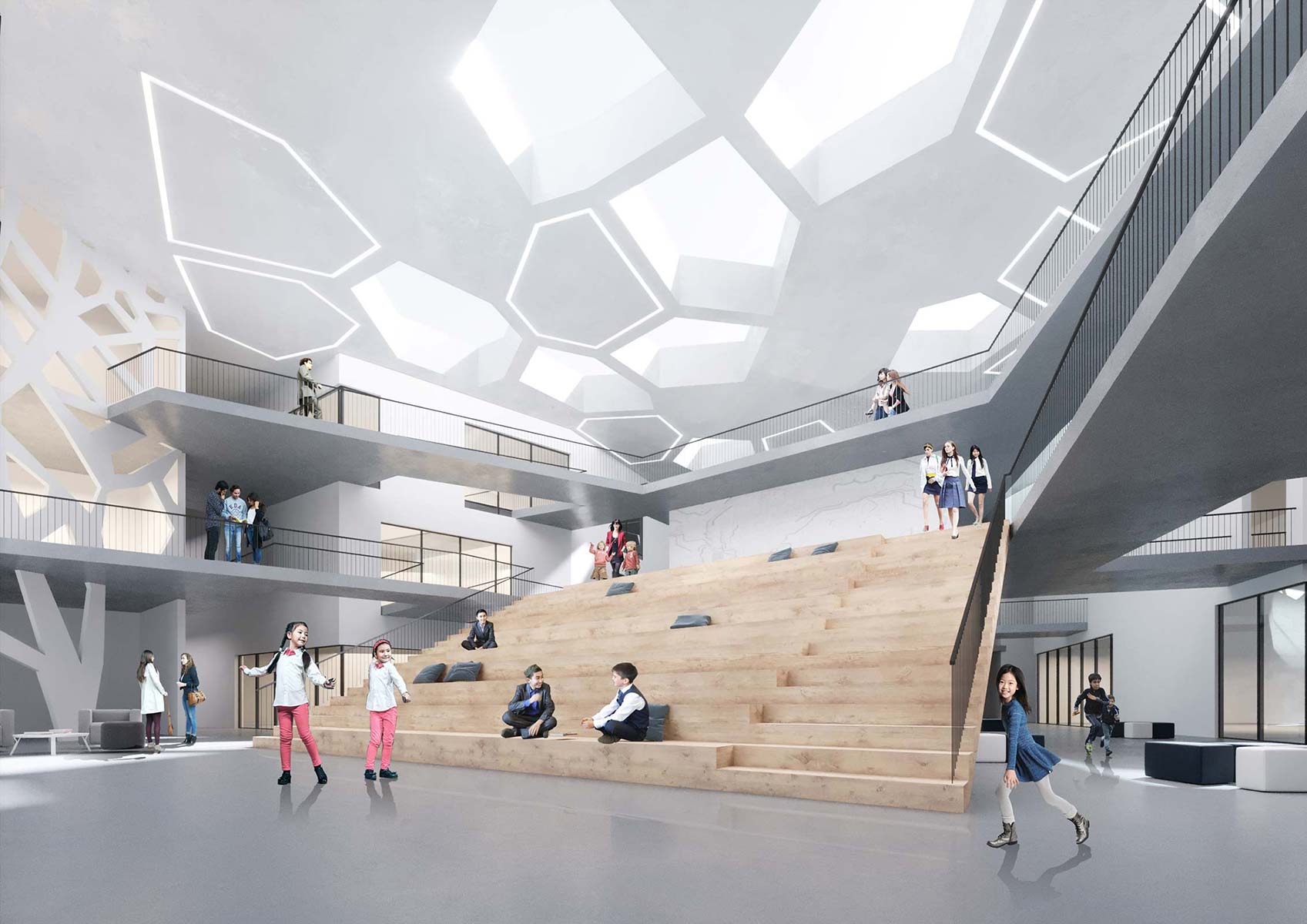
The Schoolchildren’s Palace in Turkestan is based on the traditional spatial structure of the madrasa, reinterpreted in a contemporary form. Traditionally, most Kazakh children had the opportunity to study only in village madrasas. A madrasa is an educational institution that combines the functions of a secondary general school and a Muslim theological seminary. Its building typically had a characteristic planning structure: an internal courtyard at the centre, with residential and educational spaces arranged around its perimeter. In this project, a multi-level atrium becomes the central space linking all parts of the Schoolchildren’s Palace. It is a multi-layered, light-filled and visually interconnected environment that encourages children to communicate and explore.
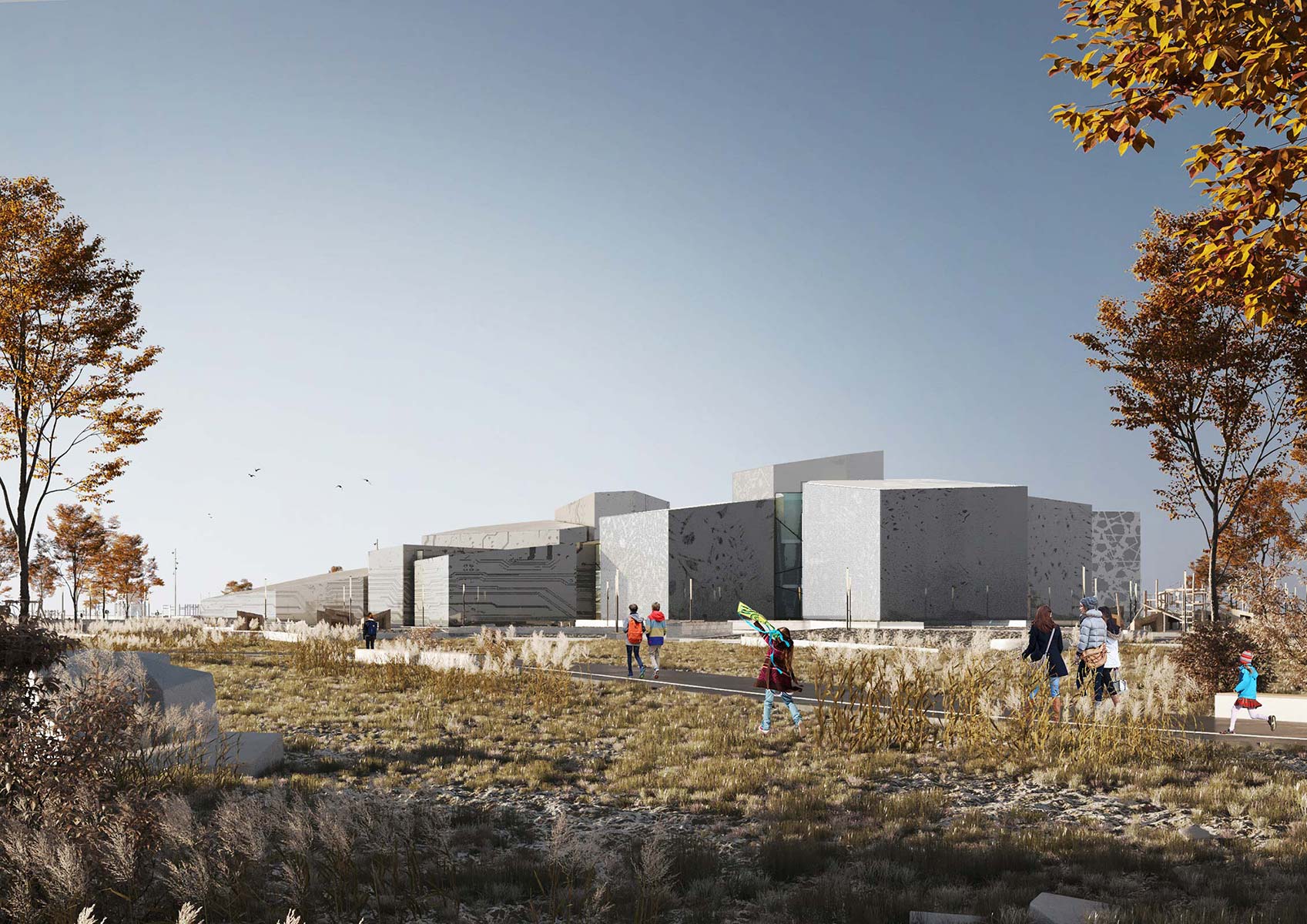
The prototype for the volumetric and planning structure was the unique nature of southern Kazakhstan. In plan, it takes the form of a cellular structure inspired by the Turkestan melon and cotton. Such an organisation makes it possible to give each room in the palace a unique character, allowing maximum flexibility in its use and helping to open up children’s consciousness. The figurative prototype for the Schoolchildren’s Palace was the distinctive landscape of Charyn Canyon — one of the most beautiful places in Kazakhstan. Vertical volumes of varying heights create a unique silhouette for the building and allow the classrooms to receive both top light and additional side light.
The classrooms and laboratories are divided into three blocks according to type of activity: culture, science and technology. In the first block, children can develop their creative abilities and immerse themselves in the culture of their country. It includes art studios, music rooms, modelling and sculpture classes, and more. In the second block, children can engage more deeply with their favourite sciences and languages, solve various puzzles and play educational games. The third block is equipped with the most contemporary and innovative technologies for the development of schoolchildren: robotics and IT classrooms, design studios, laboratories with 3D printers and VR headsets, where pupils can bring their inventions to life and immerse themselves in virtual reality.
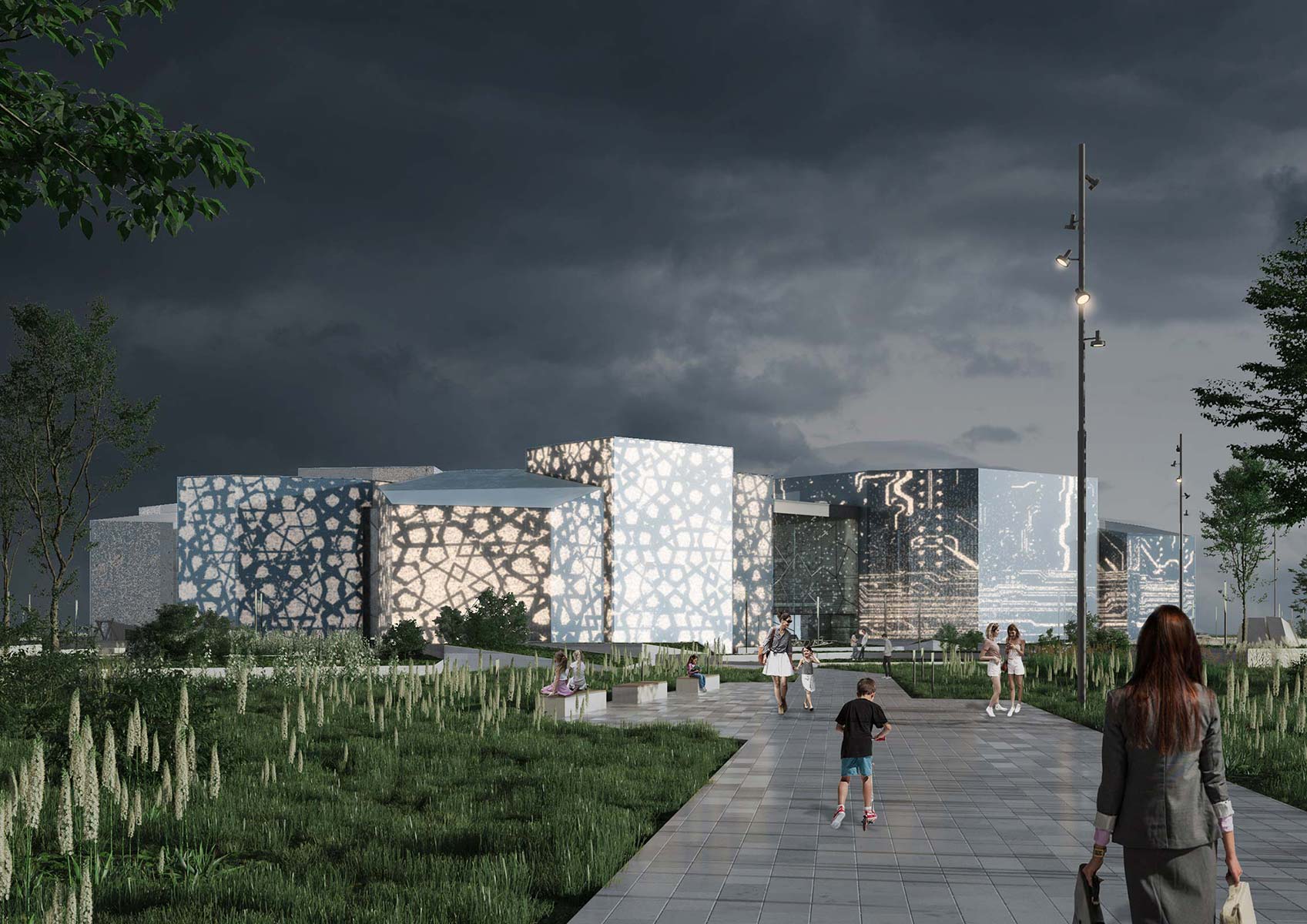
The orientation of each functional block is reflected on the facade through distinct patterns, expressed in the characteristic perforation of composite perforated panels corresponding to each block.
idea


drawings