


Richard Residential Complex
- location
- Russia, Moscow
- completed
- 2022
- design
- 2018-2020
- site area
- 18 471 m²
- total area
- 64 045 m²
- client
- FSK Leader
- architects
- Anton Nadtochiy, Vera Butko, Andrey Sizyuk, Nikolay Zaytsev, Alexander Sechenov, Petr Alimov, Polina Yavna, Ekaterina Zvereva, Ivan Potapenko, Alina Aminova, Alina Klitina, Sergey Ryauzov, Roman Kuzmin, Anna Alenicheva, Olga Romanova, Natalia Zurina, Ivan Khripov, Alexander Plutyakov, Anastasia Galutkina
The new residential quarter in the Khoroshyovsky District is set within a highly diverse urban context. On the one hand, it benefits from excellent transport accessibility and well-developed social, cultural, commercial and sports infrastructure, with three large shopping centres, an ice arena, a stadium and Khodynka Park all located nearby. Part of the site along the eastern boundary is effectively a protected natural zone, and the architects quite rightly allocate it to landscaping and public realm. Yet on the other three sides the quarter is surrounded by garages, warehouses and a power plant, while a neighbouring large residential complex composed of several high-rise slabs is also under construction. This is precisely where ATRIUM’s architecture reveals its strength: it is never straightforward.
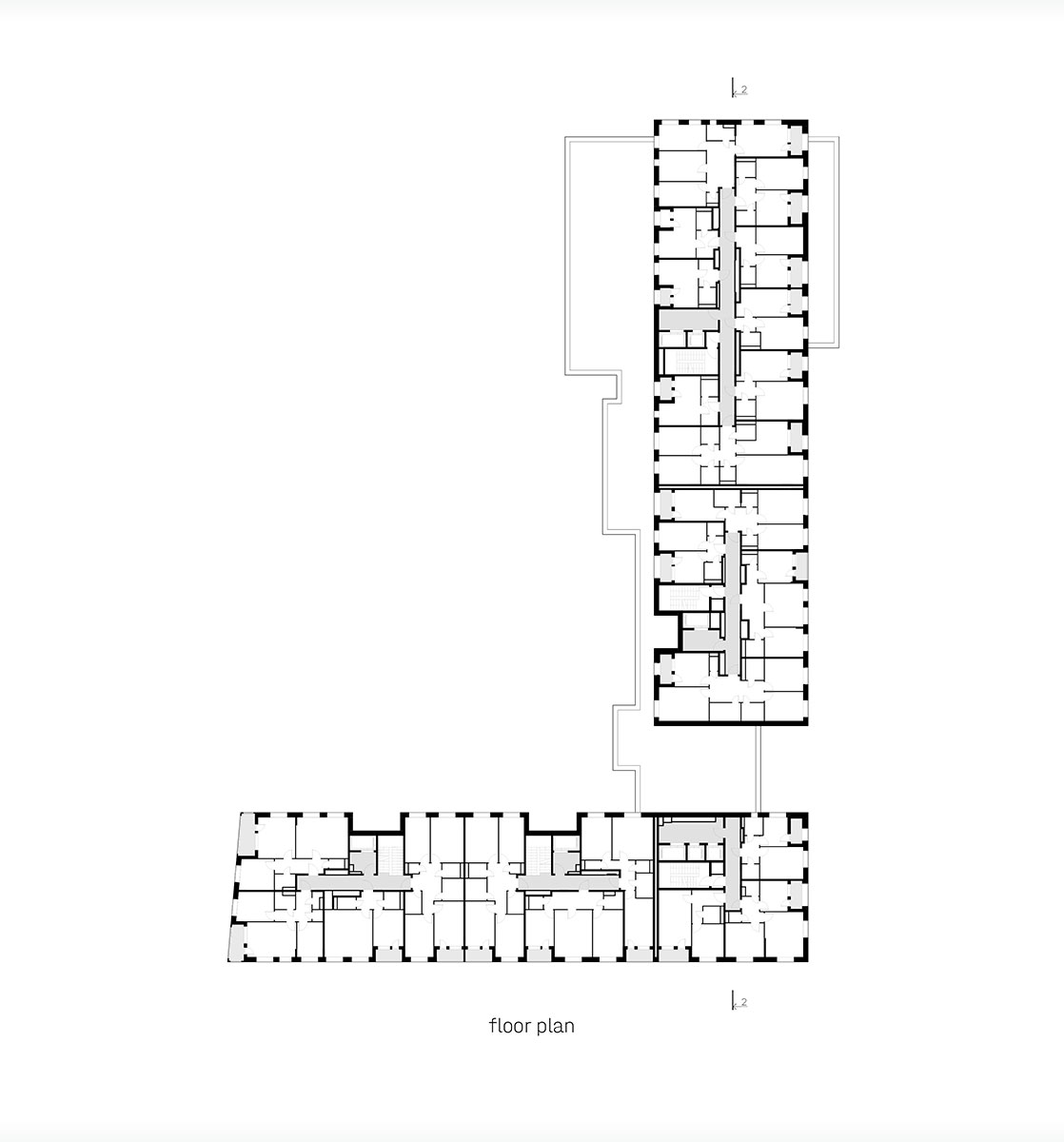
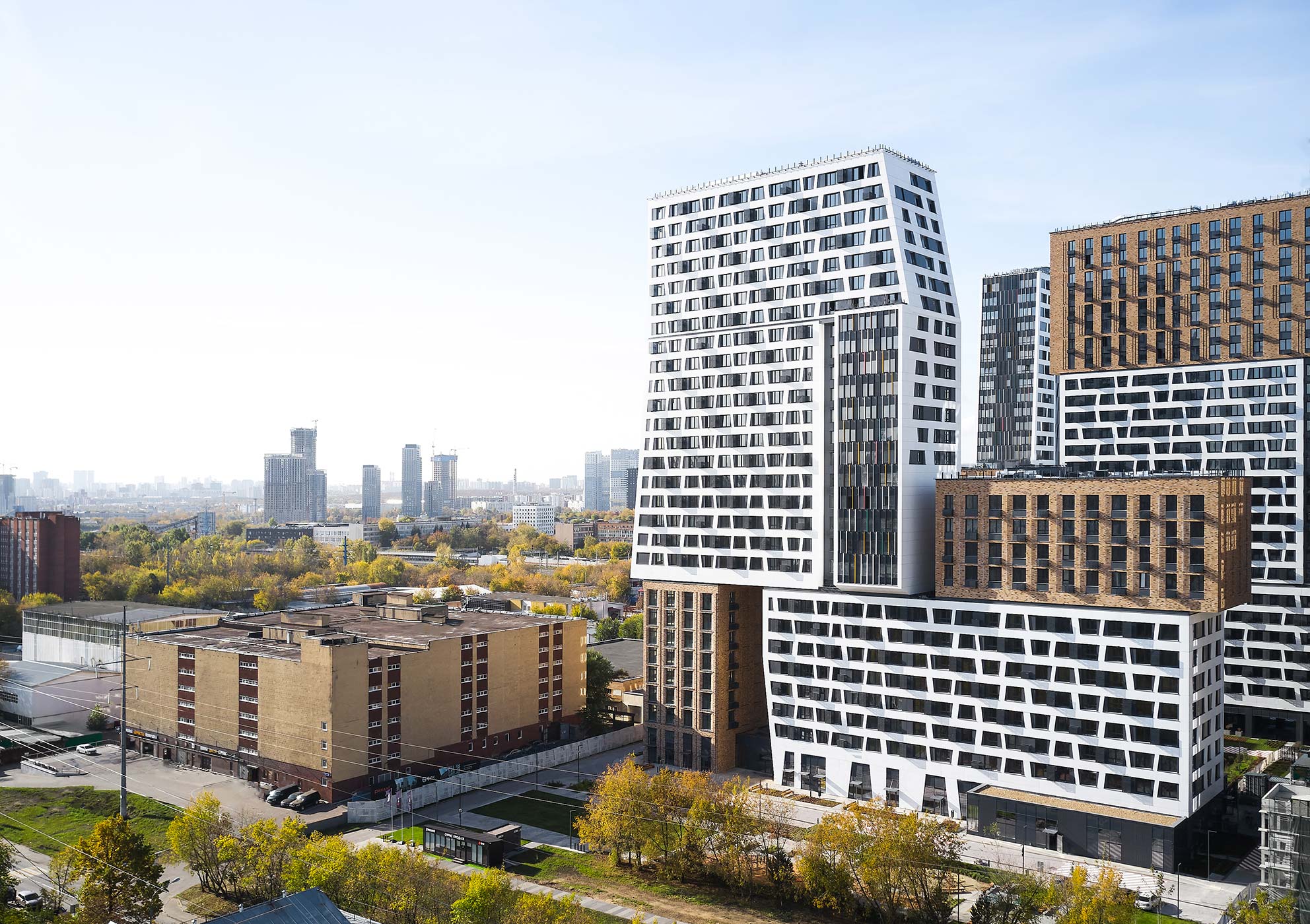
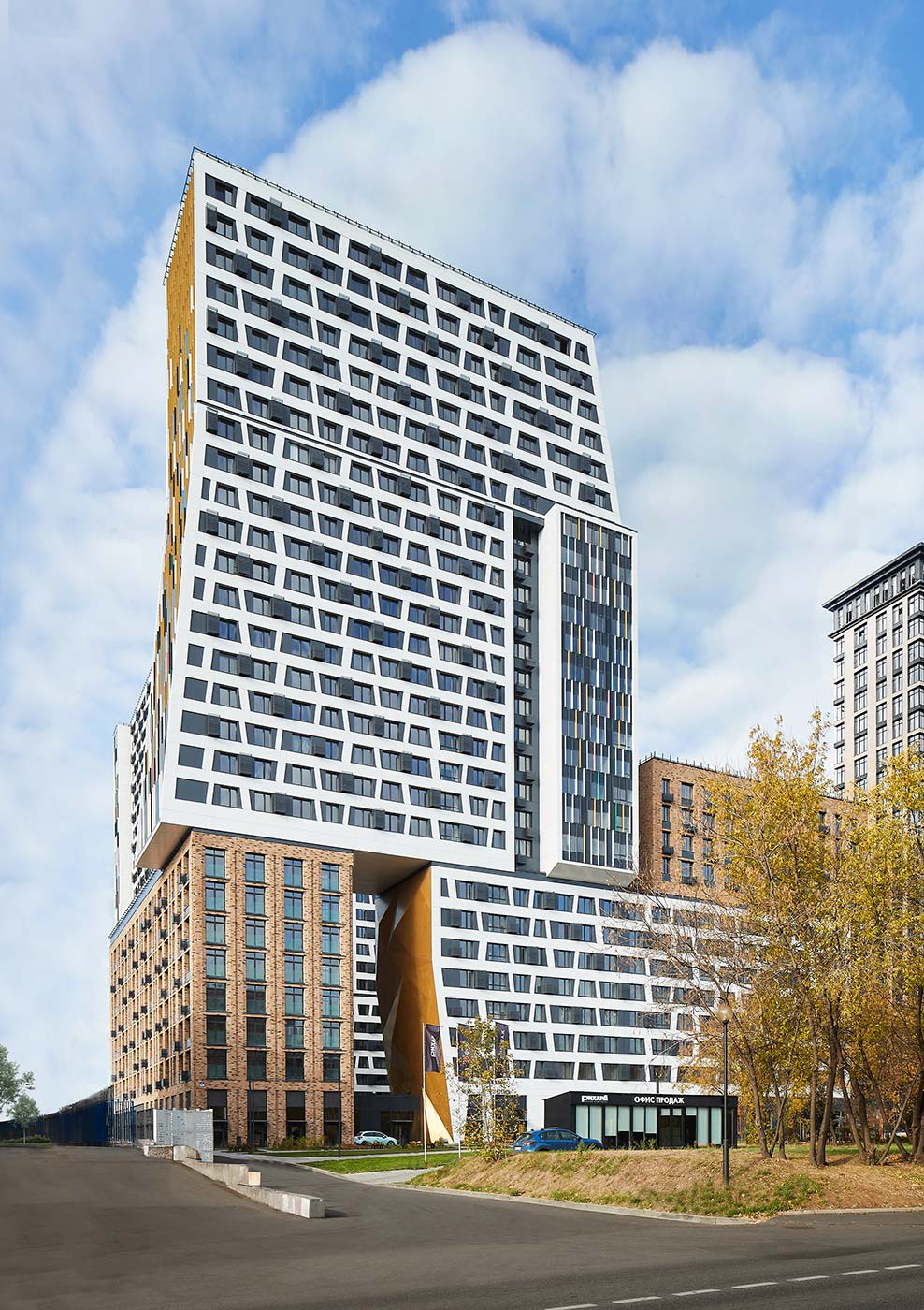
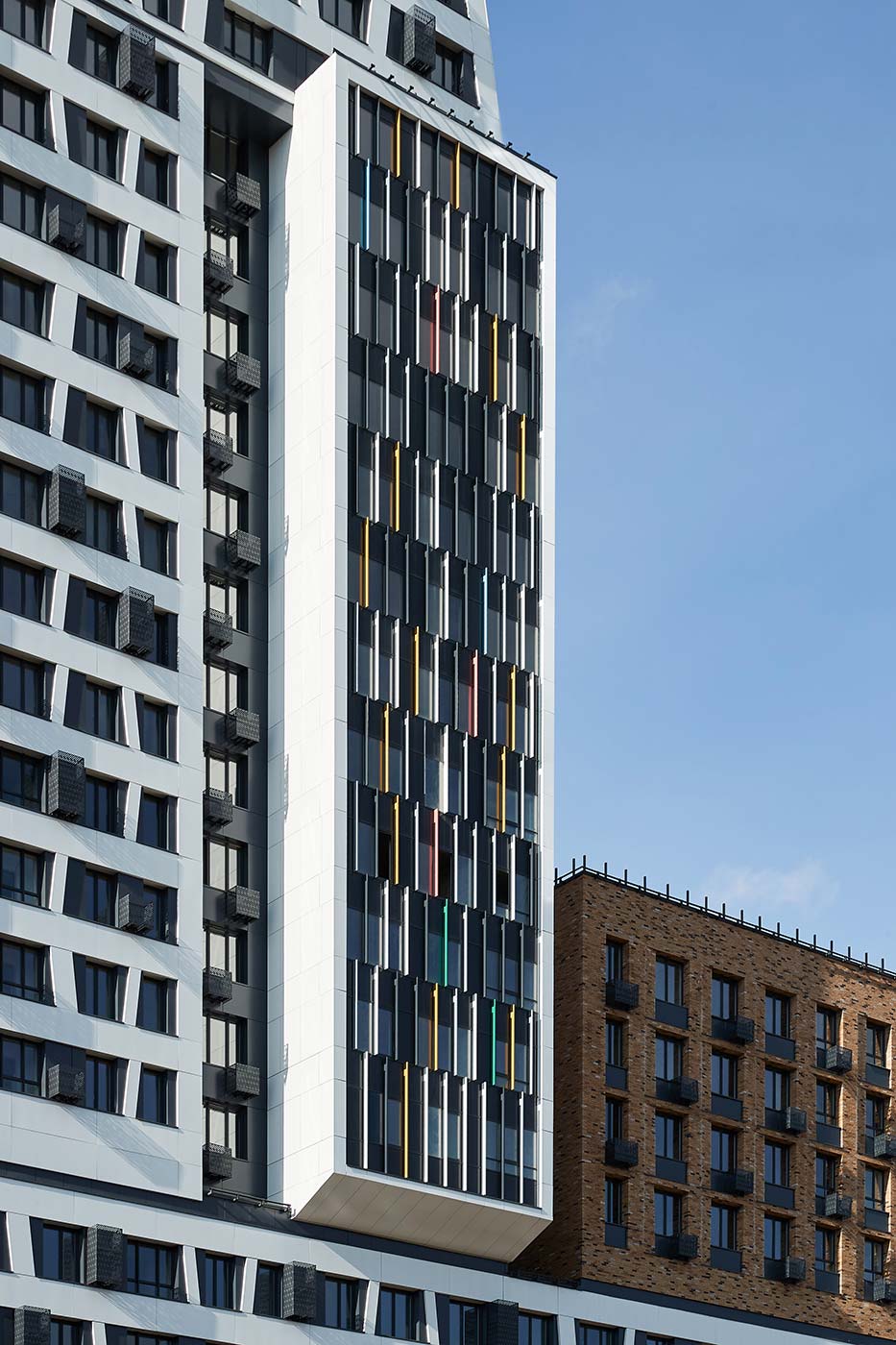
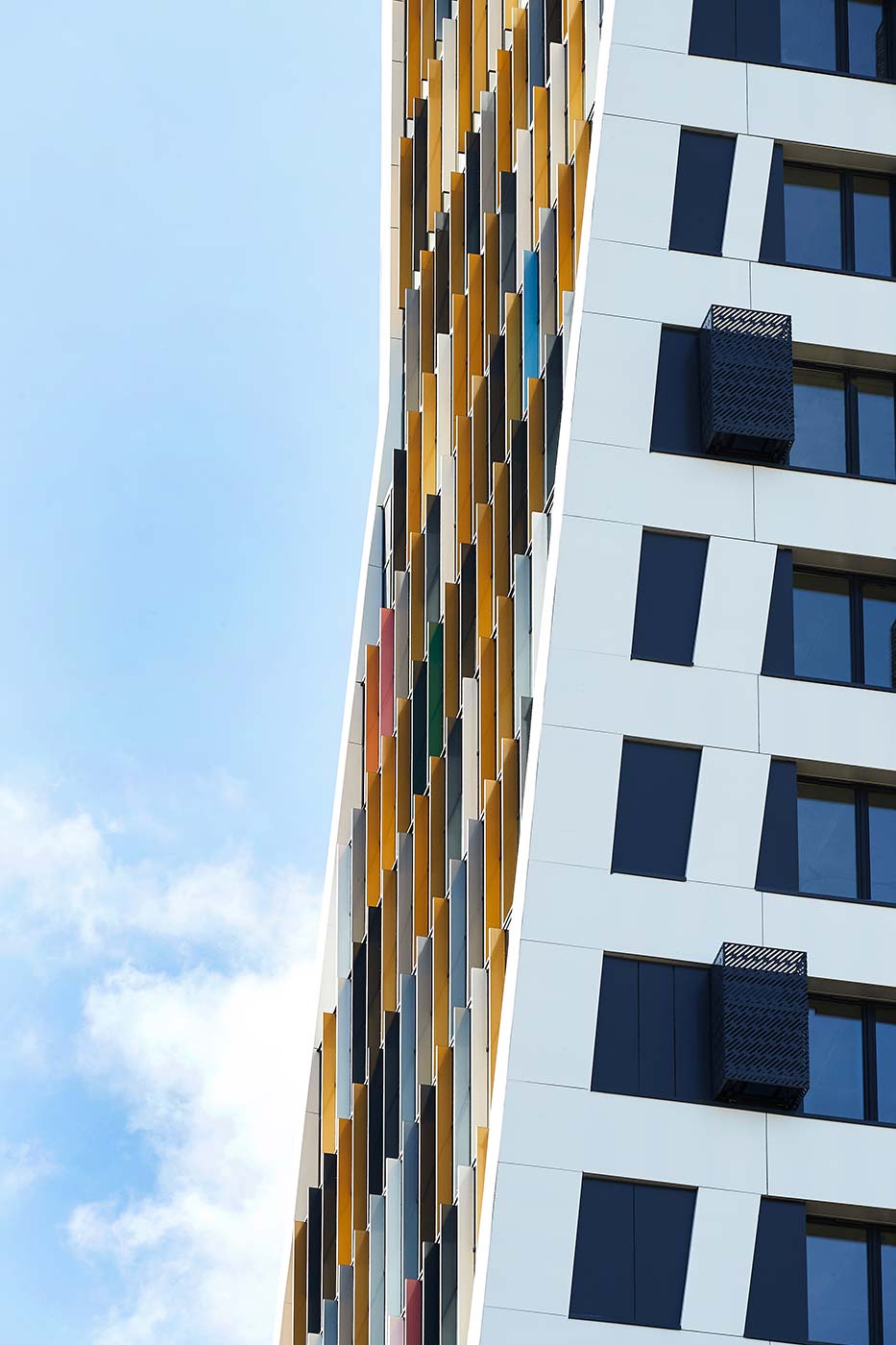
Each of the two buildings is composed as an interplay of several volumes and voids that interpenetrate one another, shifting and turning at different angles, enriching the tectonics of the facades on all sides. The idea goes beyond a mere game of layering and the subdivision of mass into smaller elements. Thus, the first building, with its two towers arranged orthogonally to one another, is designed so that as few large-format apartments as possible face the power plant: the lift and staircase cores are placed on that side. The facades facing the other directions are given a greater degree of articulation, plasticity and glazing, including cantilevered elements, while the building is raised above the ground on “legs”, creating additional recreational spaces beneath it.
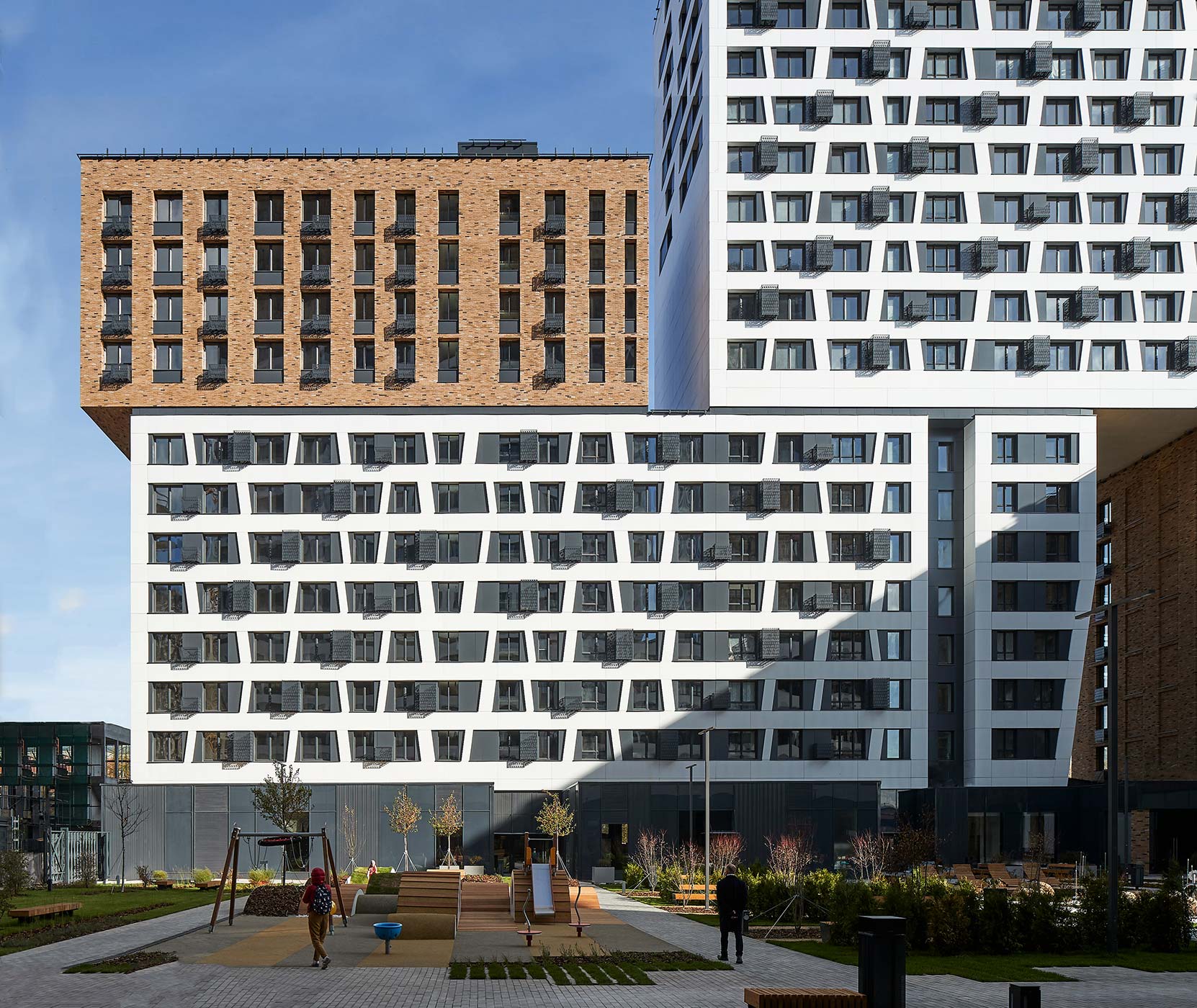
The second building embraces a courtyard with playgrounds arranged directly on the accessible green roof of the underground car park. The lower eight-storey volume facing Sorge Street supports, in scale, the solid Soviet residential buildings in the surrounding area. The high-rise part, by contrast, is resolved in a more contemporary and plastic manner: a curvilinear “arch” draws attention to the central entrance with its ceremonial lobby.
It is interesting that the principle behind the choice of facade materials is based both on aesthetic qualities and on an economic strategy that предполагает? better translated: “allows for a gradual reduction in cost from the lower to the upper parts of the facade.” The proposed cladding materials include clinker brick, brick-effect concrete tiles, aluminium composite panels, fibre-reinforced concrete and fibre-cement panels.
drawings